
Anyone leading commerce strategy today can already feel the shift happening in real time.
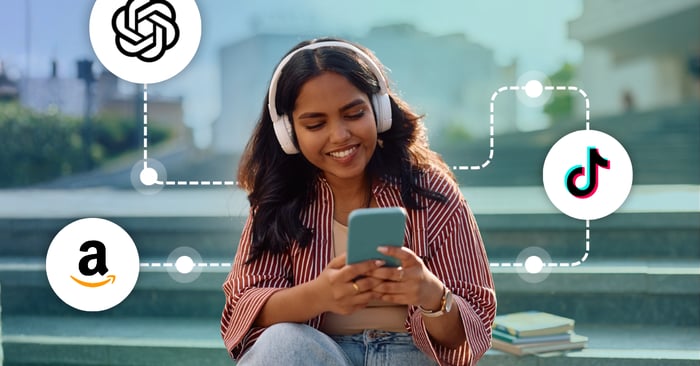
Consumers are moving from discovery to purchase faster and far less linearly than traditional marketing and media models were built to support. A shopper might discover a product on TikTok, compare options on Amazon, encounter a retail media ad later that evening, and finally purchase after asking ChatGPT for recommendations.
As discovery becomes more fragmented across social platforms, streaming environments, retail media networks, retailer ecosystems, and AI-driven interfaces, the line between awareness and conversion continues to disappear.
That shift is forcing brands to rethink how media investment drives business outcomes. Awareness alone is no longer enough. Brands are under increasing pressure to make media more measurable, more actionable, and more connected to commerce performance.
During MikMak’s recent Q2 Customer Connect, we sat down with Jack Slattery, Senior Director of eCommerce at Proximo Spirits, and Simon Rodeiro, VP of Digital Commerce and Omnichannel Marketing at PIM Brands, to discuss how brands are adapting their commerce strategies, measurement approaches, and organizational structures in response.
Turn Awareness Media Into Commerce Opportunities
Historically, brands approached awareness, consideration, and conversion as distinct stages of the funnel. Today, those moments are happening much closer together.
As Simon Rodeiro of PIM Brands explained during the discussion, “The funnel’s not really a funnel anymore… it’s a pancake.”
What that “pancake” looks like in practice is a consumer seeing a product featured during a streaming show, hearing about it from a creator on social media, later encountering it in a retail media placement, and deciding to purchase within minutes instead of days. In many cases, the same media moment that creates awareness is also where consumers expect to be able to take immediate action and purchase.
That shift is changing how brands approach media planning and campaign execution. For Rodeiro, one of the biggest priorities is ensuring campaigns are prepared to capture demand regardless of where they sit in the traditional funnel. As awareness and conversion move closer together, brands are being pushed to think more intentionally about how commerce experiences and shoppable media are integrated into traditionally upper-funnel environments.
What This Shift Reveals
Consumers no longer wait to discover a product and purchase it later. Increasingly, discovery and conversion are happening in the same moment.
Awareness-driving media is now being evaluated on its ability to create measurable commerce outcomes, not just visibility or brand awareness.
The implication for brands is clear: media investment strategies built solely around awareness are becoming harder to justify without clearer commerce visibility and conversion opportunities. Commerce readiness is no longer just an eCommerce concern; it is increasingly becoming part of the media strategy itself.
More brands are investing in shoppable media strategies that allow consumers to move more seamlessly from discovery to action while also generating stronger commerce signals for optimization and measurement.
Shift Media Investment Toward Measurable Outcomes
As discovery becomes more distributed across platforms and environments, measurement becomes significantly more complicated.
Brands today are managing consumer journeys that span retail media networks, social platforms, streaming environments, retailer ecosystems, search engines, and increasingly AI-powered discovery experiences. The challenge is no longer simply driving visibility. Brands are under increasing pressure to understand which media investments are actually influencing commerce outcomes and how upper-funnel activity contributes to downstream performance.
As Jack Slattery of Proximo Spirits noted during the discussion, brands that are able to leverage stronger retail signals and connected commerce intelligence are now in a much better position to understand how media exposure influences commerce outcomes across the consumer journey.
What This Shift Reveals
Many traditional measurement approaches were not built for how consumers discover and shop today. Last-click attribution and siloed reporting often fail to capture how discovery, influence, and conversion now interact across channels.
At the same time, brands are being asked to make faster retailer and media investment decisions in increasingly volatile environments. By the time many reporting systems surface actionable insights, the opportunity to optimize has already passed.
As a result, more brands are shifting investment toward media and measurement strategies that provide clearer commerce signals and more connected views of performance.
That growing need for connected commerce intelligence inspired the development of MikMak’s recent Q2 product releases, including MikMak Aura, which helps brands better connect media investment to retailer performance and commerce outcomes in real time.
Break Down the Walls Between Sales, Marketing, and Commerce
As discovery, media, and commerce become more interconnected, many brands are also rethinking how their teams are structured internally.
For both Proximo Spirits and PIM Brands, commerce no longer sits exclusively within either sales or marketing. Instead, commerce increasingly operates across both functions, with teams balancing brand growth, retailer relationships, media performance, and measurable business outcomes simultaneously.
Retail media, commerce activation, analytics, creative strategy, and retailer planning now require much closer coordination across sales, marketing, commerce, and analytics teams.
What This Shift Reveals
Commerce teams today are being asked to drive immediate revenue outcomes while also supporting long-term brand growth across fragmented media and retailer environments.
Organizations operating in silos may struggle to move quickly enough to keep pace with how consumers now discover and purchase products.
Brands that are breaking down the walls between sales, marketing, and commerce are positioning themselves to make faster decisions, create more connected consumer experiences, and better optimize performance across fragmented commerce environments using shoppable media and connected commerce intelligence.
Optimize for AI-Driven Discovery
AI is not just changing how consumers search. It is beginning to change how discovery itself works.
Instead of receiving a single static result, consumers are increasingly engaging in conversational discovery experiences that evolve in real time based on follow-up questions, personal preferences, shopping needs, and situational context.
That means product visibility may no longer depend on a single keyword, retailer placement, or search ranking. As conversations evolve, the products consumers are shown may evolve as well.
As Jack Slattery of Proximo Spirits explained:
A shopper asking an AI assistant for a tequila recommendation could receive completely different suggestions after refining the conversation around price point, cocktail type, flavor preference, retailer availability, or occasion.
As conversational discovery evolves, product visibility may increasingly depend on how well brands surface across these dynamic recommendation paths rather than a single keyword, retailer placement, or static search result.
What This Shift Reveals
As AI-assisted discovery becomes more dynamic and contextual, brands are beginning to rethink how products surface across conversational commerce environments.
Instead of optimizing for static discovery paths alone, brands are increasingly thinking about contextual recommendations, portfolio-level discoverability, and how products appear across evolving consumer conversations.
At the same time, brands are investing in more connected commerce intelligence to better understand shifting consumer behavior, optimize visibility across fragmented discovery environments, and adapt more quickly as AI-driven experiences continue to evolve.
AI may also accelerate expectations around more personalized and context-aware shoppable media experiences that shorten the distance between discovery and conversion even further.
What Brands Should Do Next
As discovery and conversion continue to move closer together, brands need to rethink how media investment, commerce strategy, and measurement work together.
As you plan future commerce and media strategies, pressure-test your approach against the following questions:
✔ Are your campaigns shoppable at every relevant moment across the consumer journey?
✔ Can you connect upper-funnel media investments to measurable commerce outcomes?
✔ Are you investing in media strategies that provide actionable commerce signals rather than awareness alone?
✔ Are your sales, marketing, and commerce teams aligned around shared business goals and performance metrics?
✔ Can your organization make faster optimization and investment decisions as consumer behavior shifts in real time?
✔ Are your products positioned to surface effectively across AI-driven and conversational discovery environments?
Brands that are building more connected commerce strategies today will be better positioned to adapt as media, discovery, and shopping experiences continue to converge.
Want to hear directly from the leaders navigating this shift?
👉 Watch the full Q2 Customer Connect on demand
Interested in learning more about MikMak Aura, connected commerce intelligence, and MikMak’s latest Q2 product innovations?
👉 Schedule a demo with the MikMak team
