Quarterly Commerce Marketing Benchmarks for Personal Care Brands
Benchmark Overview and KPIs
Personal Care brands operate in a category characterized by frequent purchases and ongoing shopper engagement across digital touchpoints. Understanding when, where, and how shoppers express purchase intent is critical to capturing demand, optimizing media spend, and driving repeat purchases.
MikMak’s quarterly Personal Care commerce marketing benchmarks provide a data-backed view of brand media trends, shopper intent, and retailer engagement across global markets, helping brands contextualize performance and refine commerce-enabled activations across owned and paid channels.
This Q2 benchmark analysis is based on MikMak Shopping Index* data from April 1 to June 30, 2026.
The following proprietary MikMak Commerce KPIs were used:
- Purchase Intent Clicks
Measures high-intent shopper traffic by counting the number of times a shopper clicks through to at least one retailer during a single session within MikMak Commerce-enabled brand content. - Purchase Intent Rate
Measures the percentage of shoppers who click through to at least one retailer within MikMak Commerce-enabled brand content, signaling a strong conversion likelihood.
Q2 Key Findings
- Purchase intent strengthened across both owned and paid experiences, with brand website and media Purchase Intent Rates improving in most markets.
- Shopper engagement remained more consistent throughout H1 compared to last year, highlighting the importance of maintaining an always-on commerce strategy.
- Media investment continued to diversify, with paid video, paid display, and paid social gaining share across different markets.
- Retailer preferences shifted by market, reinforcing the need for localized commerce strategies that align with where shoppers choose to buy.
United States
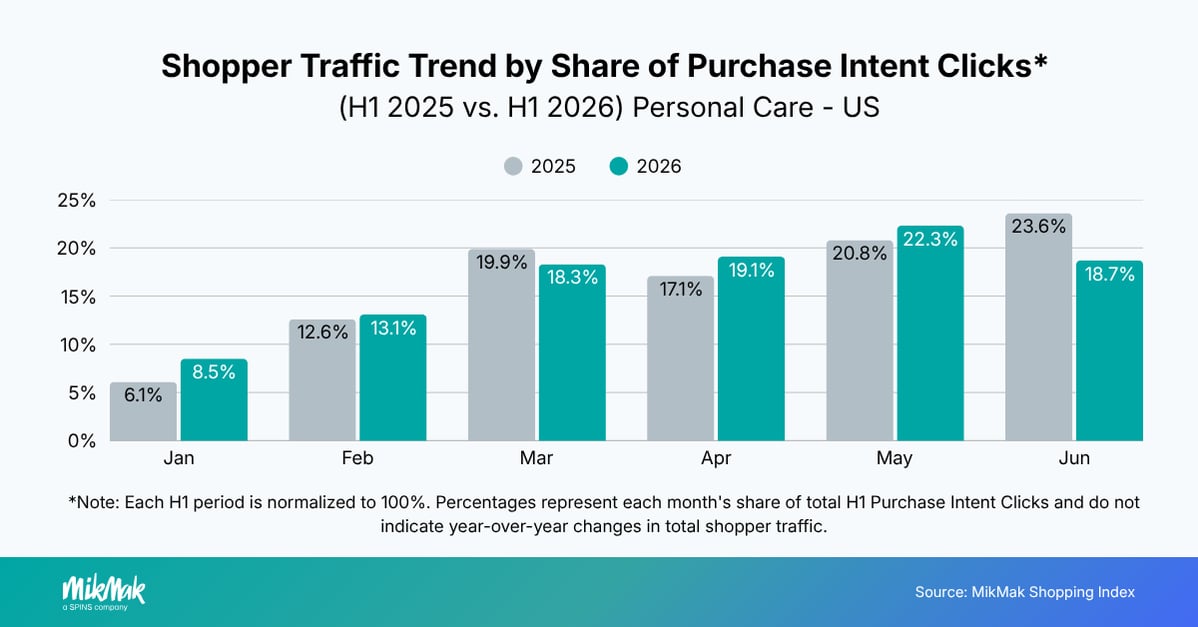
Personal Care shopper traffic to retailers was more evenly distributed across H1 2026 compared to H1 2025. While shopper engagement in 2025 increased steadily toward June, traffic in 2026 was more evenly distributed across the first half of the year, suggesting brands have engaged shoppers more consistently this year.
Conversion likelihood increased across commerce experiences
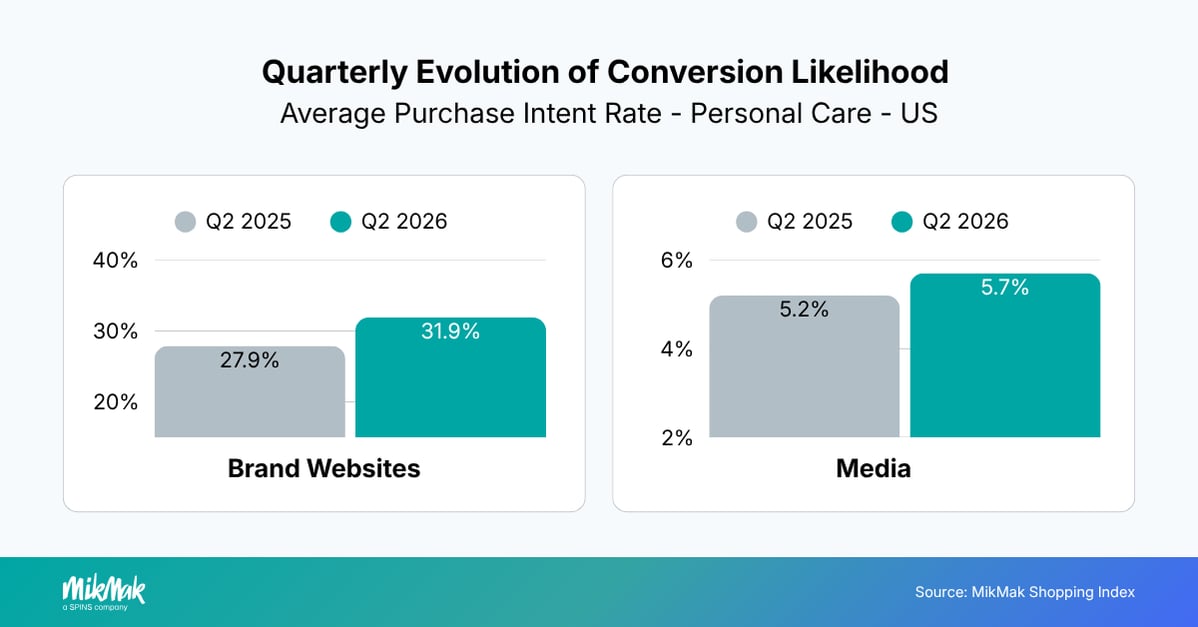
Compared to last year, Purchase Intent Rates improved across both owned and paid experiences in Q2 2026. Brand website Purchase Intent Rates increased from 27.9% to 31.9%, while media Purchase Intent Rates rose from 5.2% to 5.7%.
This suggests Personal Care brands are becoming more effective at generating purchase intent within media experiences while continuing to drive shoppers to retailer partners across multiple consumer touchpoints.
Paid video emerged as a stronger driver of shopper engagement
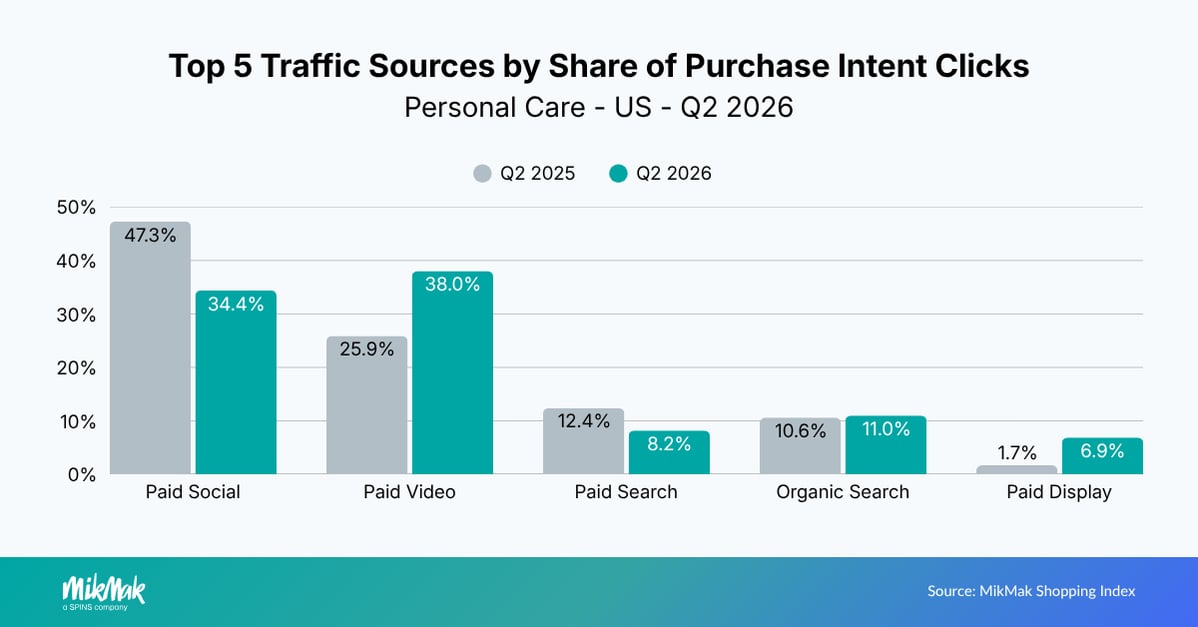
Paid social remained the largest source of Purchase Intent Clicks in Q2 2026, despite its share declining compared to the previous year. Meanwhile, paid video increased substantially from 25.9% to 38.0%, becoming a key driver of shopper engagement. Paid display also gained momentum, highlighting how brands are diversifying commerce investment across social, video, and display.
Meta and Google maintained their leadership
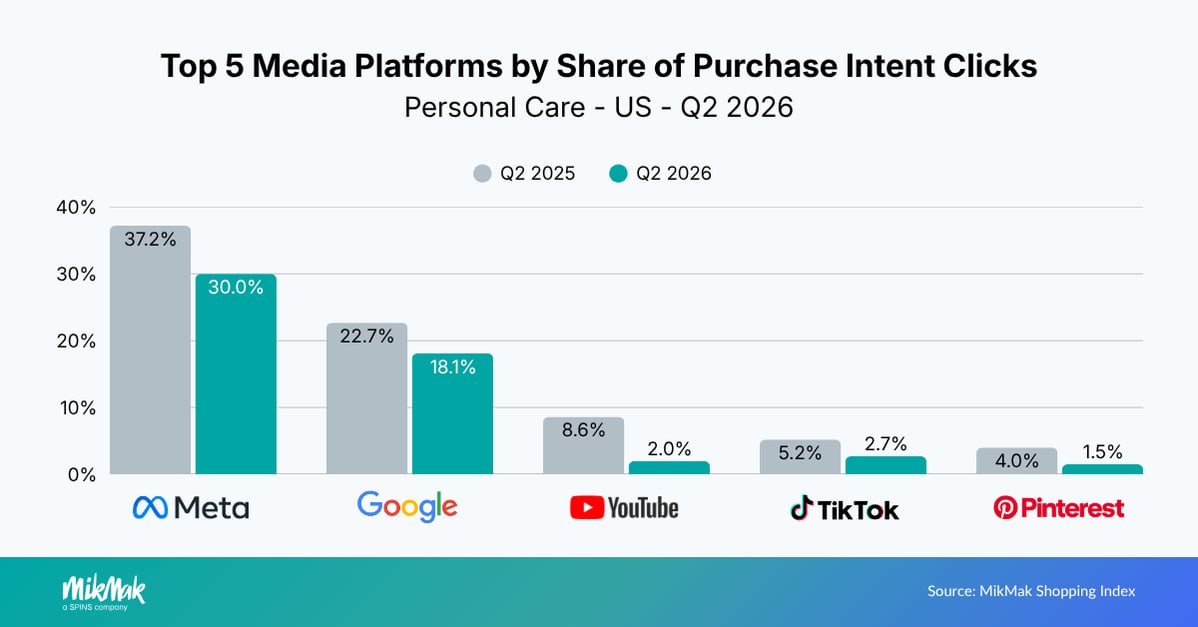
Meta remained the leading commerce-driving platform in Q2 2026, followed by Google. While both platforms saw a smaller share of Purchase Intent Clicks year over year, they continued to account for the largest share of commerce engagement, with YouTube, TikTok, and Pinterest representing a smaller portion of shopper activity than in Q2 2025.
Mass retailers strengthened their leadership
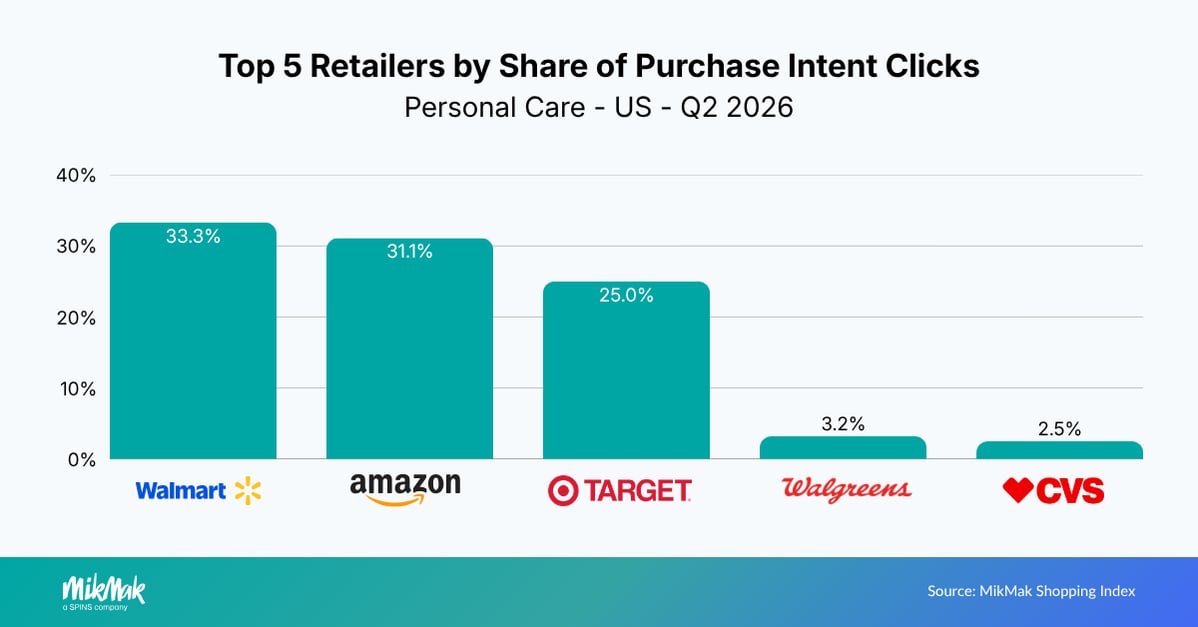
Compared to Q2 2025, Walmart overtook Amazon as the leading purchase destination based on Purchase Intent Clicks in Q2 2026, while Target significantly increased its share to strengthen its position as the third most popular retailer. Together, Walmart, Amazon, and Target accounted for nearly 90% of Purchase Intent Clicks, reinforcing the dominant role of mass retailers in Personal Care purchase journeys.
Canada
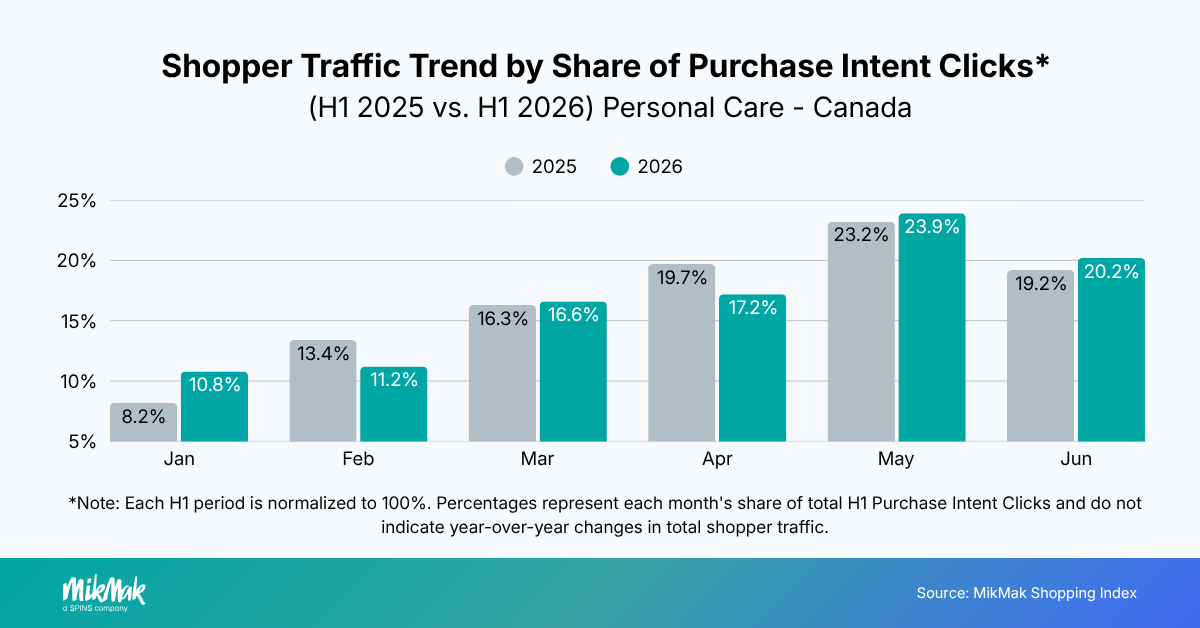
Personal Care shopper traffic to retailers remained relatively consistent across H1 2026 compared to H1 2025. While monthly engagement shifted slightly, shopper traffic followed a similar pattern across the first half of the year, highlighting stable purchasing behavior in the Canadian market.
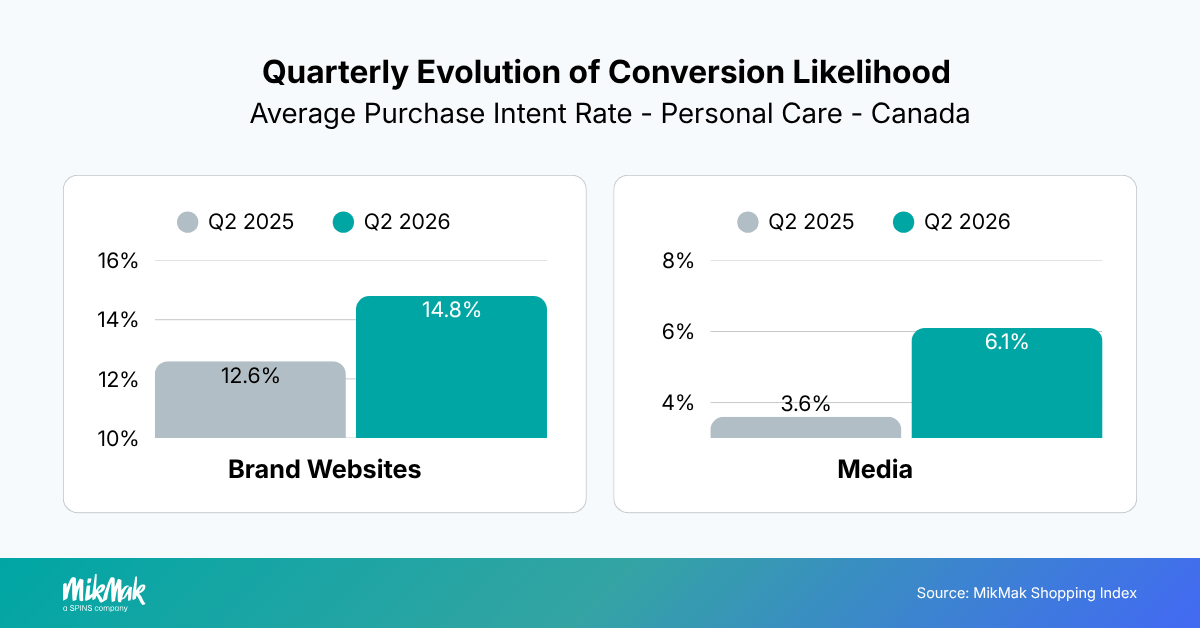
Purchase intent improved across owned and paid channels
Compared to last year, Purchase Intent Rates improved across both owned and paid experiences in Q2 2026. Brand website Purchase Intent Rates increased from 12.6% to 14.8%, while media Purchase Intent Rates rose significantly from 3.6% to 6.1%.
This suggests Personal Care brands are becoming more effective at generating purchase intent within media experiences while continuing to drive shoppers to retailer partners across multiple consumer touchpoints.
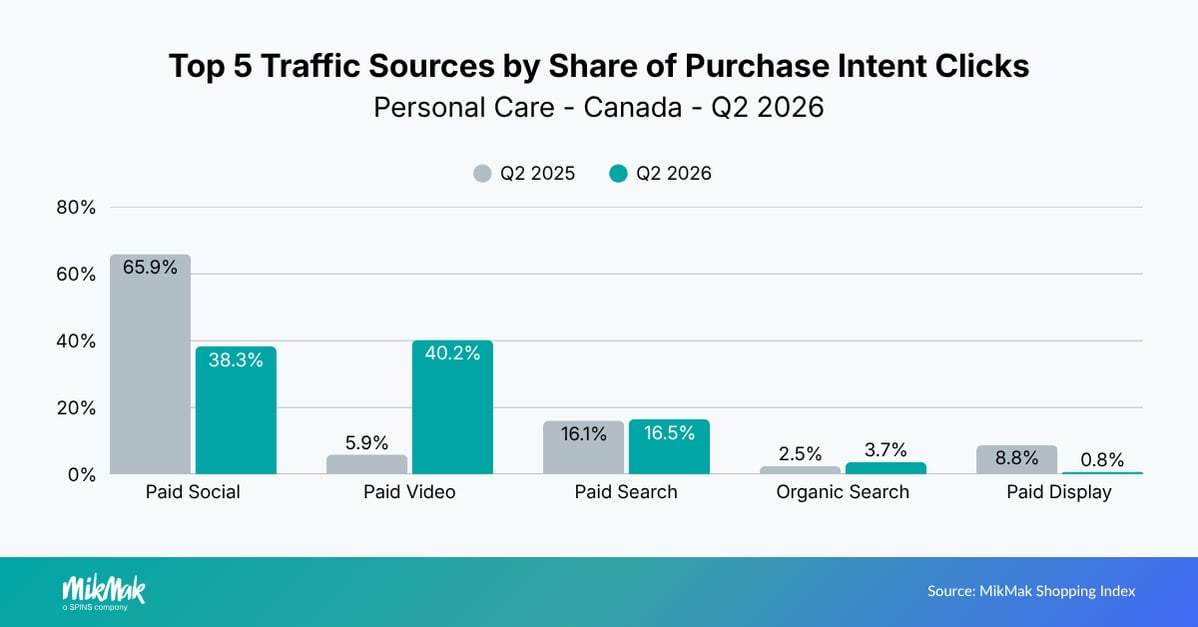
Paid display emerged as a leading shopper acquisition channel
Paid display recorded the strongest year-over-year growth, increasing from 5.9% to 40.2% of Purchase Intent Clicks in Q2 2026. While paid social remained an important driver of shopper traffic, organic search held a steady share. Overall, the results suggest Personal Care brands diversified commerce investment across display, social, and search.
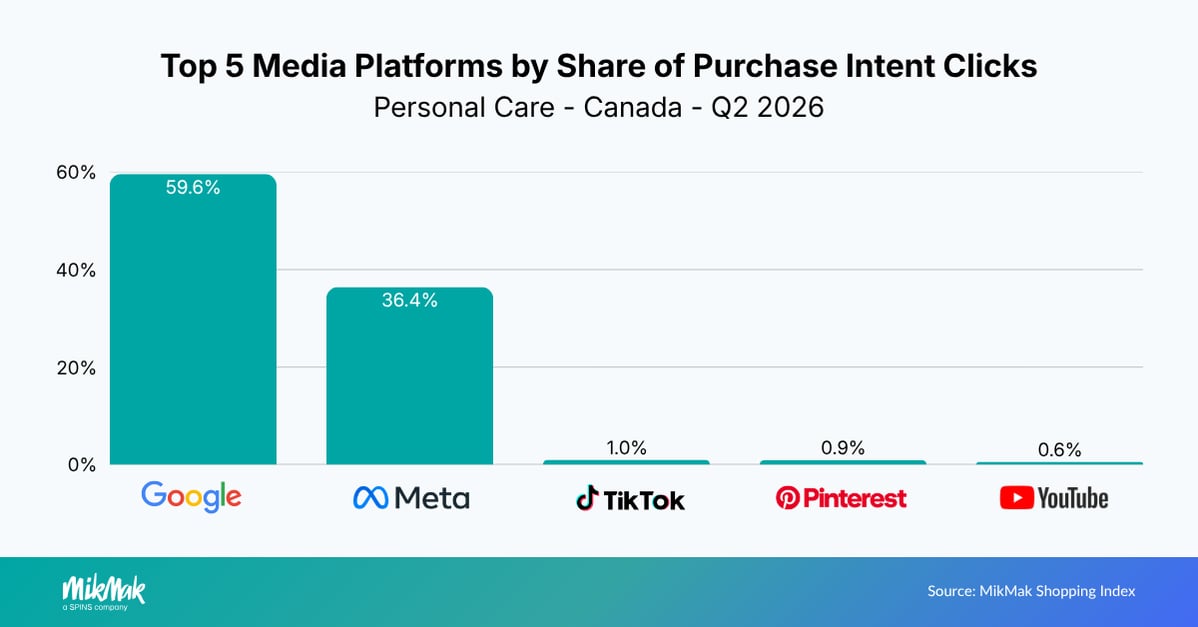
Google overtook Meta as the leading commerce-driving platform
As display and search gained importance within the media mix, Google became the largest commerce-driving platform, increasing its share of Purchase Intent Clicks from 19.3% to 59.6% and overtaking Meta. While Meta remained a significant commerce-driving platform, the results suggest brands expanded investment beyond social to engage shoppers across a broader mix of commerce-enabled media.
Amazon and Walmart continued to dominate purchase journeys
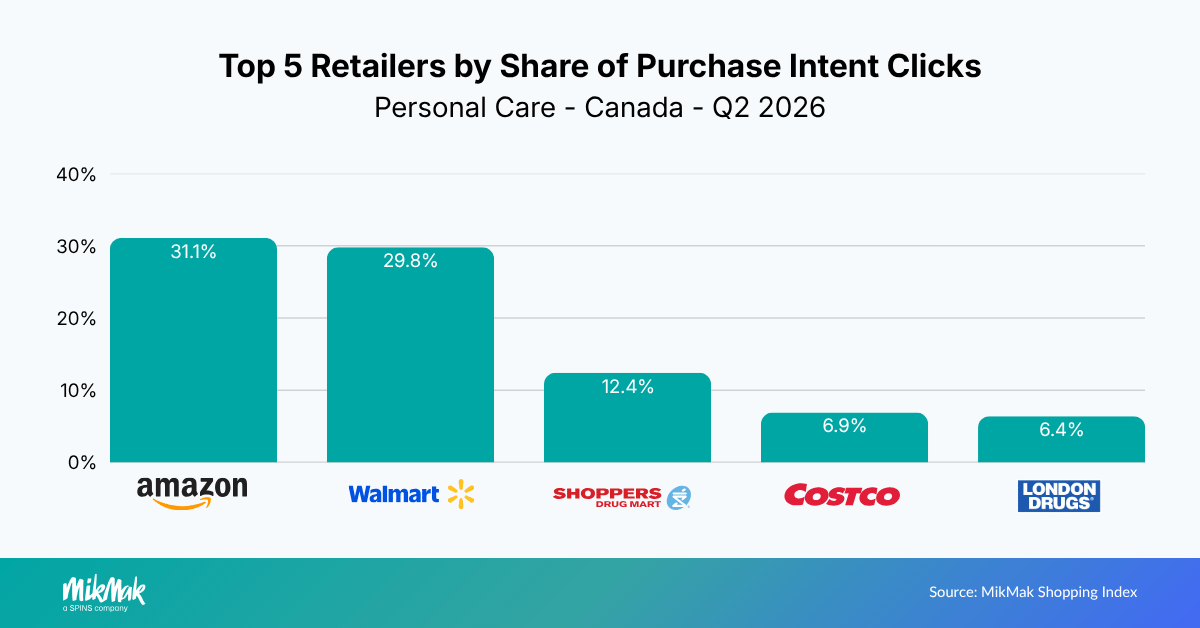
Amazon remained the most popular purchase destination based on the share of Purchase Intent Clicks in Q2 2026, closely followed by Walmart. Shoppers Drug Mart retained the third position, while Costco and London Drugs entered the top five, replacing Jean Coutu and Well.ca. These shifts reinforce the importance of maintaining a strong commerce presence across both mass retailers and pharmacy-led channels.
United Kingdom
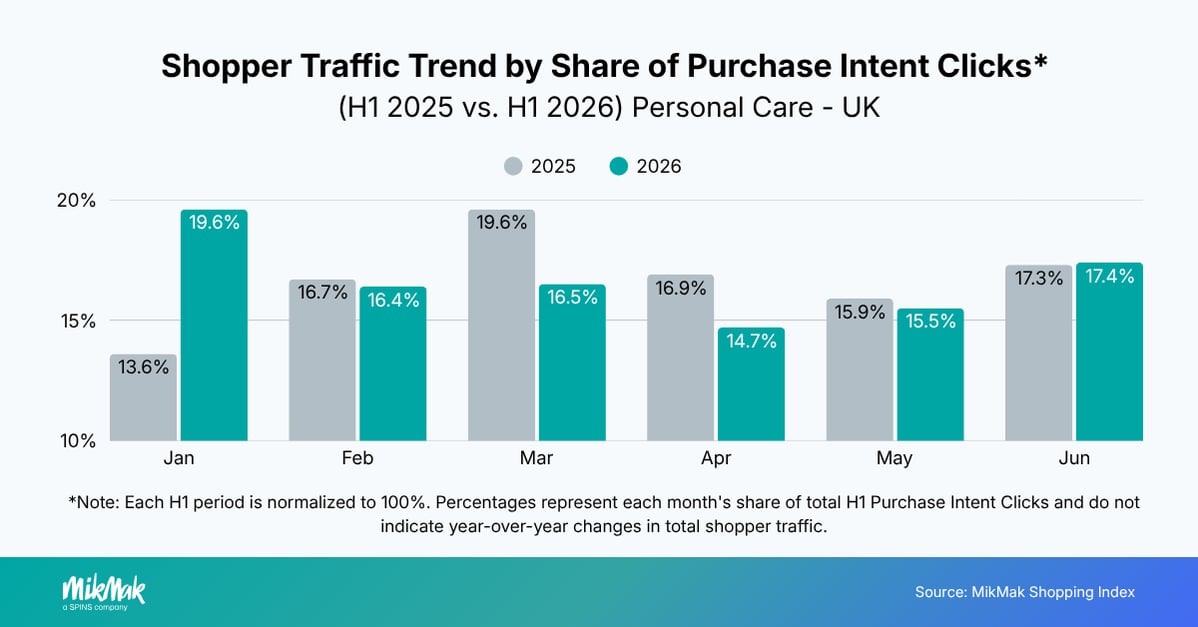
Personal Care shopper engagement remained relatively stable across the first half of the year in both 2025 and 2026. While January accounted for a larger share of Purchase Intent Clicks in 2026, shopper traffic was otherwise distributed similarly across the remaining months, indicating a broadly consistent pattern of engagement year over year.
Purchase intent improved across owned and paid channels
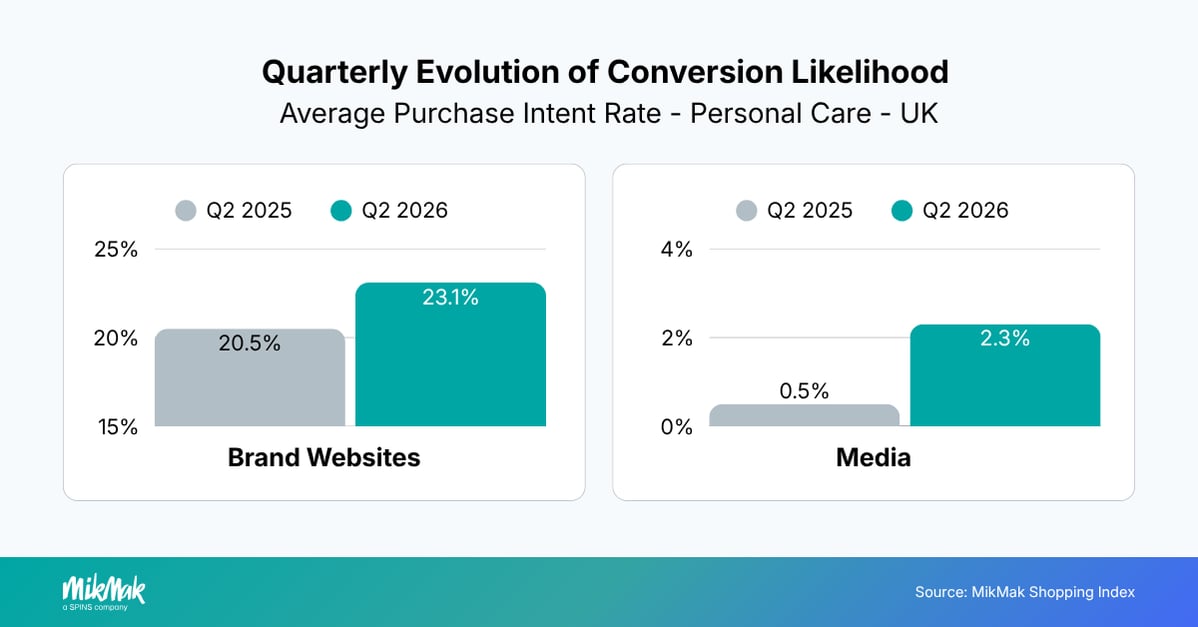
Compared to last year, Purchase Intent Rates improved across both owned and paid experiences in Q2 2026. Brand website Purchase Intent Rates increased from 20.5% to 23.1%, while media Purchase Intent Rates rose from 0.5% to 2.3%.
This suggests Personal Care brands are becoming more effective at generating purchase intent across multiple consumer touchpoints. However, the stronger media Purchase Intent Rates seen in the US and Canada suggest there is still considerable opportunity to expand commerce-enabled media investment and drive more purchase intent directly from media experiences.
Paid social gained momentum alongside search
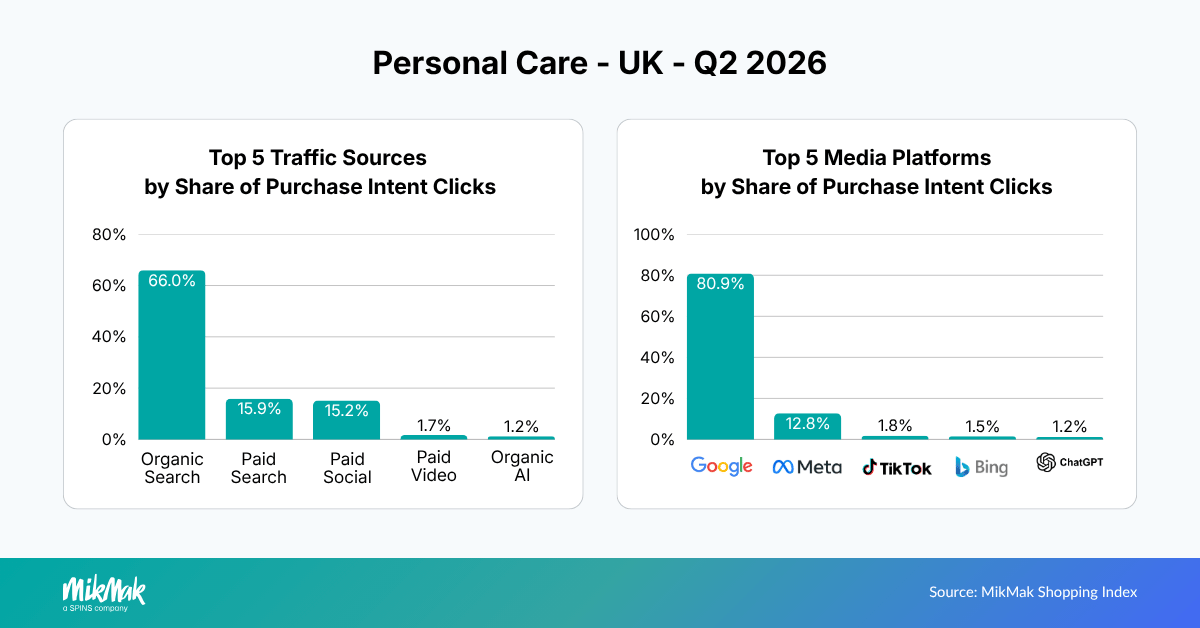
Organic search remained the largest driver of Purchase Intent Clicks in Q2 2026, despite its share declining by nearly ten percentage points year over year. Meanwhile, paid social more than tripled its share, while paid search remained a key driver of shopper traffic. These shifts suggest that Personal Care brands in the UK are broadening commerce investment beyond organic search, although search continues to account for most shopper engagement, indicating further opportunities to grow commerce-enabled social and paid media activation.
As search continued to dominate shopper engagement, Google remained the leading commerce-driving platform, while Meta nearly quadrupled its share from 3.3% to 12.8%. Although the platform mix became more balanced, the results suggest there is still considerable opportunity to diversify commerce investment beyond search.
Boots extended its lead as specialist retail gained momentum
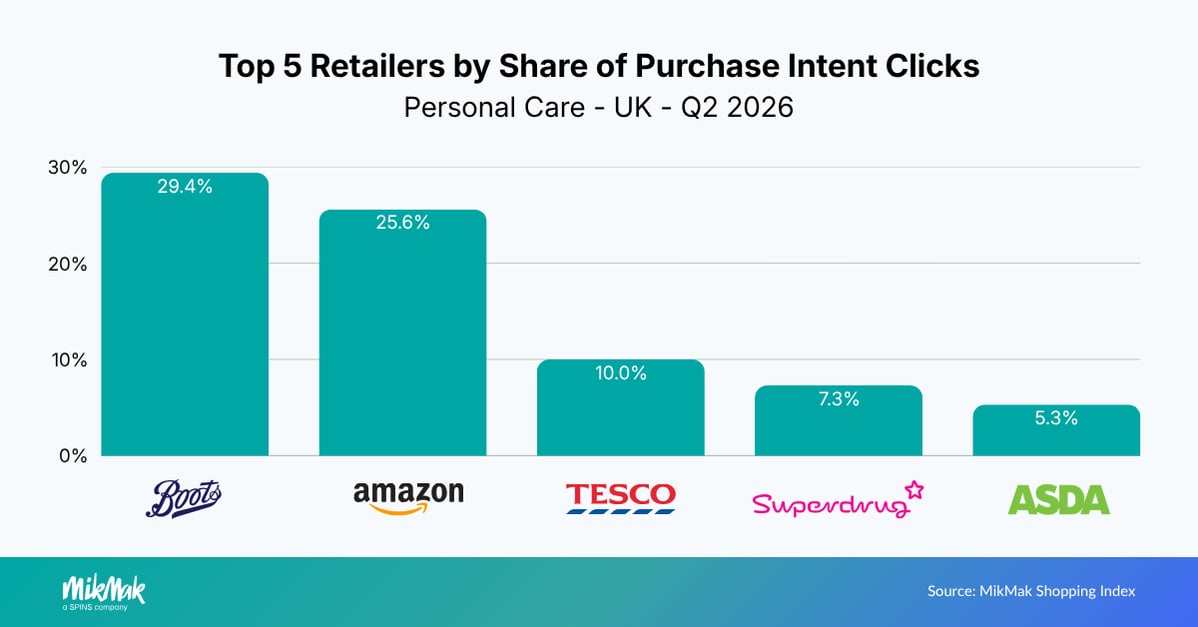
Compared with Q2 2025, Boots increased its share of Purchase Intent Clicks from 26.3% to 29.4%, extending its lead over Amazon, whose share declined from 45.5% to 25.6%. Tesco entered the top three purchase destinations, while Lookfantastic and Ocado dropped out of the top five.
These shifts highlight the continued importance of omnichannel Health & Beauty retailers alongside Grocery destinations in UK Personal Care purchase journeys.
Key Takeaways
- High brand website conversion doesn't tell the whole commerce story: Brand websites consistently generated the highest Purchase Intent Rates across markets, but they represent only one part of the shopper journey. By extending commerce enablement into media, brands can capture shoppers who prefer to purchase directly from retailer sites, improve commerce measurement, and unlock incremental sales opportunities.
- Commerce investment is becoming more diversified: Search remained an important driver of shopper engagement, while paid video, paid display, and paid social gained momentum across different markets. Brands that diversify commerce-enabled media investment are better positioned to capture demand throughout the purchase journey while reducing reliance on a single channel.
- Optimizing retailer experiences drives stronger commerce outcomes: Retailer rankings continued to evolve across markets, with changes in shopper preferences reinforcing the importance of directing consumers to their preferred retail destinations. Continuously optimizing retailer pathways and commerce-enabled experiences helps maximize conversion opportunities and improve measurable business outcomes.
Curious to see how MikMak helps brands connect marketing with commerce and unlock first-party shopper data? Schedule a demo today.

*The MikMak Shopping Index was developed to provide a standardized set of metrics, methodology, and benchmarks to help drive brands’ business results and strategy. It is a collection of key eCommerce KPIs collected across hundreds of brands, over 250 channels, and more than 8,000 retailer integrations worldwide to understand consumer online shopping behavior.
Ready to Grow Your Brand in Real-Time?
View All Resources