Quarterly Commerce Marketing Benchmarks for Food and Beverage Brands
.png?width=1000&height=1000&name=FB25-Hero%20(1).png)
Benchmark Overview and KPIs
Food and Beverage brands operate in a highly competitive, always-on category where shoppers frequently move between inspiration, research, and purchase across digital touchpoints. Understanding when, where, and how shoppers express purchase intent is critical to driving conversion and maximizing return on media investment.
MikMak’s quarterly Food and Beverage commerce marketing benchmarks provide a data-backed view of brand media trends, shopper intent, and retailer engagement across global markets, helping brands contextualize performance and optimize commerce-enabled activations across owned and paid channels.
This Q2 benchmark analysis is based on MikMak Shopping Index* data from April 1 to June 30, 2026.
The following proprietary MikMak Commerce KPIs were used:
- Purchase Intent Clicks
Measures high-intent shopper traffic by counting the number of times a shopper clicks through to at least one retailer during a single session within MikMak Commerce-enabled brand content. - Purchase Intent Rate
Measures the percentage of shoppers who click through to at least one retailer within MikMak Commerce-enabled brand content, signaling a strong conversion likelihood.
Q2 Key Findings
- Shopper engagement patterns evolved across regions, from more evenly distributed traffic in the US and UK to a pronounced June surge in Canada.
- Discovery channels diversified, with paid social remaining strong while organic search, paid video, and paid display gained momentum in various markets.
- Retailer preferences continued to shift, highlighting the importance of market-specific commerce strategies.
United States
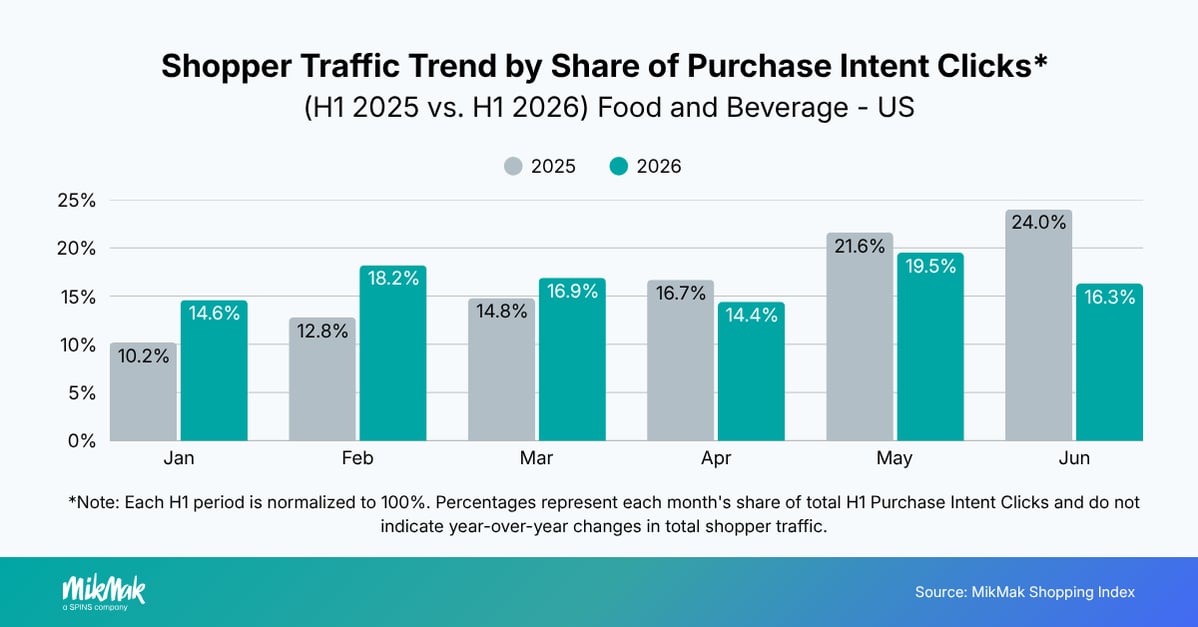
Food and Beverage shopper traffic to retailers was more evenly distributed across H1 2026 than in H1 2025, indicating that shopper engagement remained more consistent throughout the six months.
Conversion likelihood improved across owned and paid channels
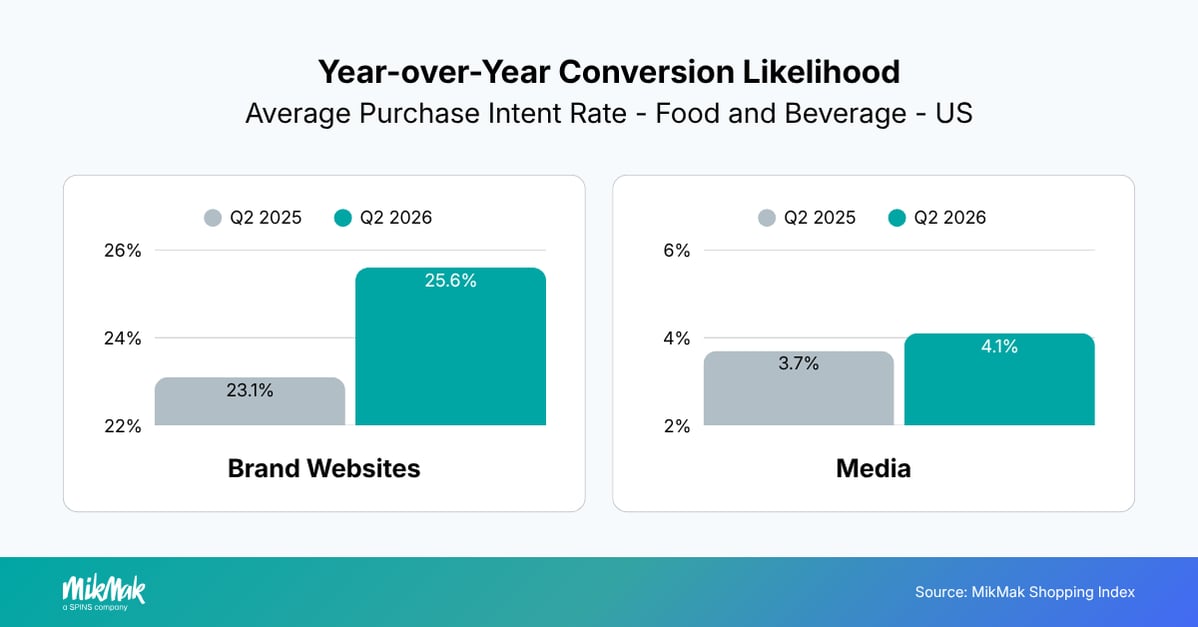
Compared to Q2 2025, Purchase Intent Rates improved across both owned and paid experiences in Q2 2026. Brand website Purchase Intent Rates increased from 23.1% to 25.6%, while media Purchase Intent Rates rose from 3.7% to 4.1%.
The year-over-year increases indicate that a larger share of shoppers clicked through to retailers from both brand websites and commerce-enabled media experiences, signaling that Food and Beverage brands are becoming more effective at generating purchase intent across touchpoints.
Organic search and video gained share alongside paid social
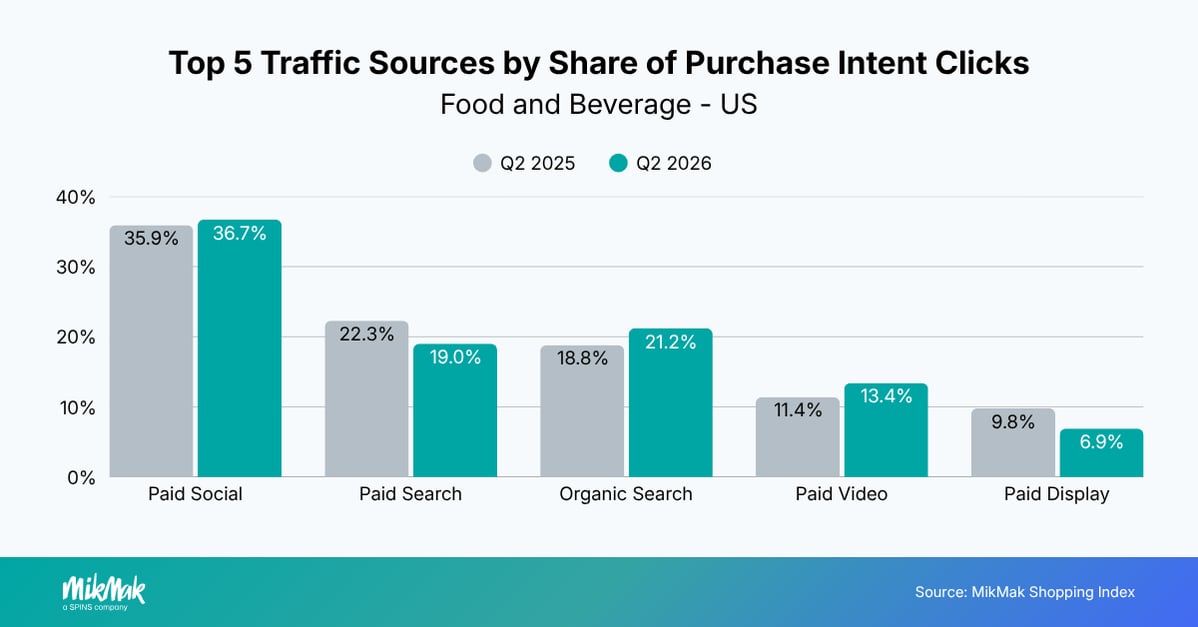
Paid social remained the largest driver of shopper traffic, accounting for 36.7% of Purchase Intent Clicks. Organic search and paid video also gained share year over year, while paid search declined slightly.
Overall, Food and Beverage brands continue to drive shopper engagement through a diverse mix of discovery channels spanning social, search, and video.
YouTube emerged as the leading commerce-driving platform
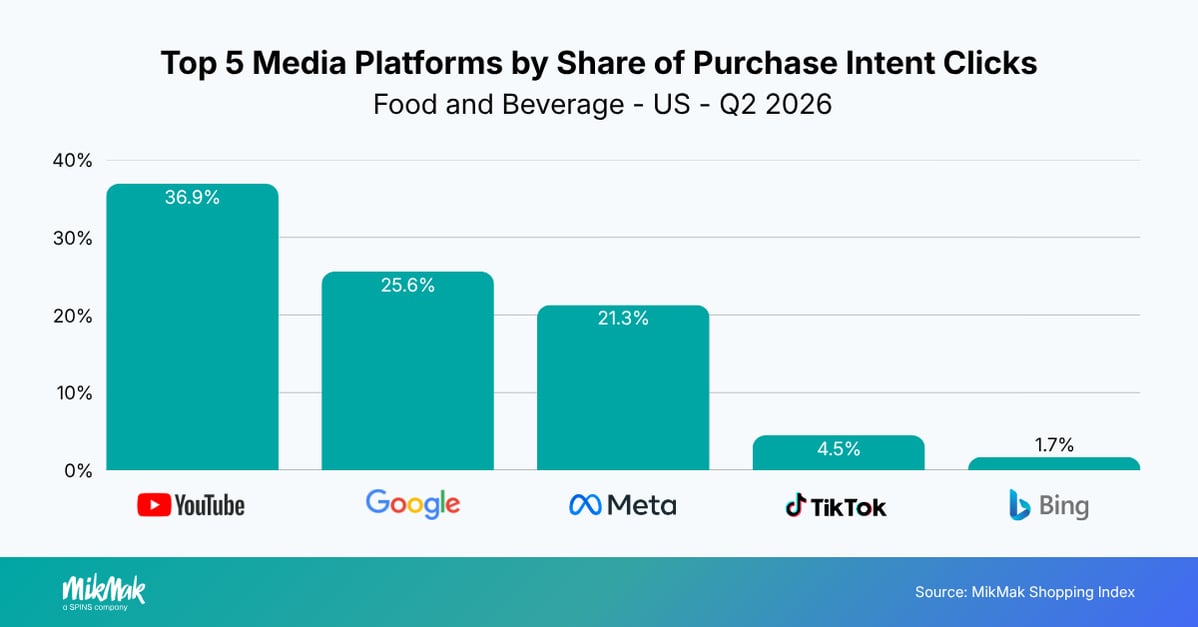
The platform mix shifted significantly between Q2 2025 and Q2 2026. YouTube rose from 5.3% of Purchase Intent Clicks to 36.9%, becoming the largest commerce-driving platform. Google remained a major source of shopper traffic at 25.6%, while Meta maintained a strong position with 21.3%. Meanwhile, TikTok's share declined from 7.9% to 4.5%. The results point specifically to YouTube’s growing role in Food and Beverage commerce engagement.
Instacart gained share while Walmart remained the leading purchase destination
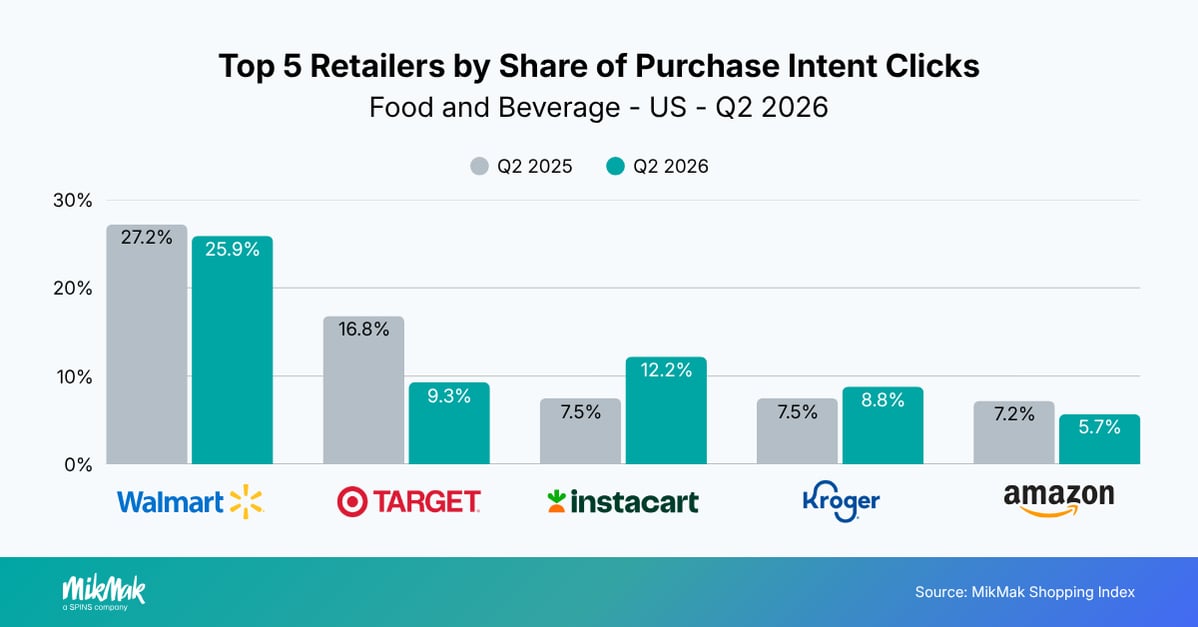
Walmart remained the leading destination for retailer-directed shopper traffic, accounting for 25.9% of Purchase Intent Clicks in Q2 2026. Instacart recorded the strongest year-over-year growth, becoming the second most popular purchase option, while Kroger also gained share. Target saw the largest decline, while Amazon’s share decreased more modestly.
Canada
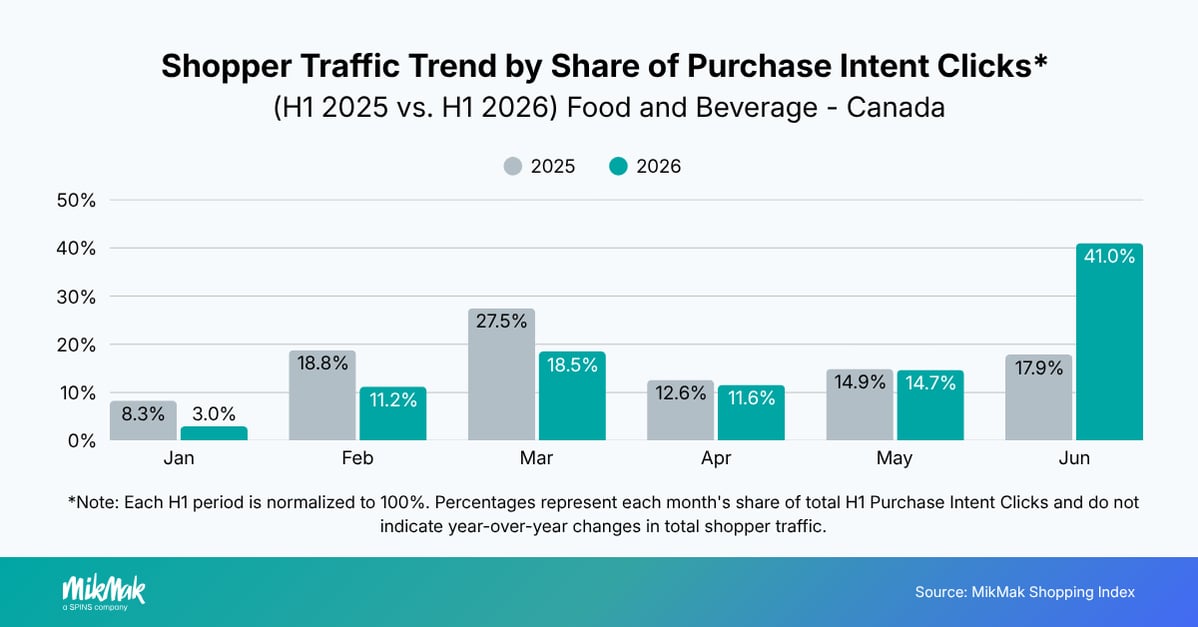
Food and Beverage shopper traffic to retailers became more concentrated toward the end of H1 2026 compared to H1 2025. While shopper engagement was more evenly distributed during the first half of 2025, June accounted for a substantially larger share of H1 shopper traffic in 2026, highlighting a strong late-half surge in shopper engagement.
Purchase intent improved across owned and paid channels
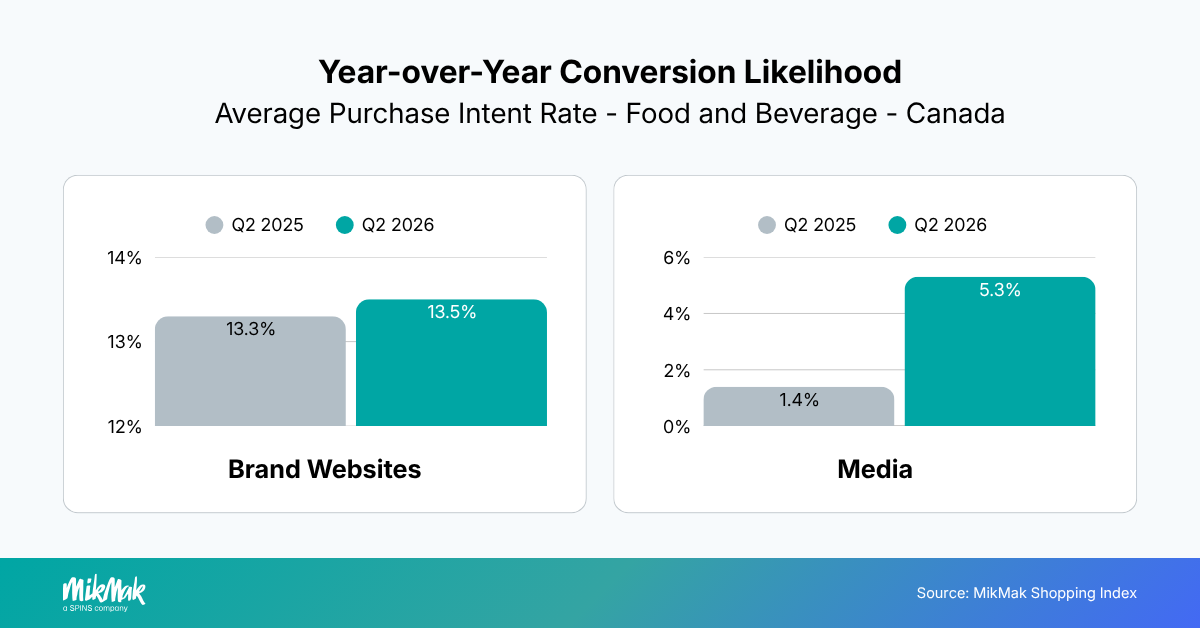
Compared to last year, Purchase Intent Rates improved across both owned and paid experiences in Q2 2026. Brand websites saw a slight increase from 13.3% to 13.5%, while media placements experienced a significant rise from 1.4% to 5.3%.
This suggests that Food and Beverage brands are becoming more effective at generating purchase intent within media experiences without sacrificing brand website efficacy.
Paid display emerged as a major driver of shopper traffic
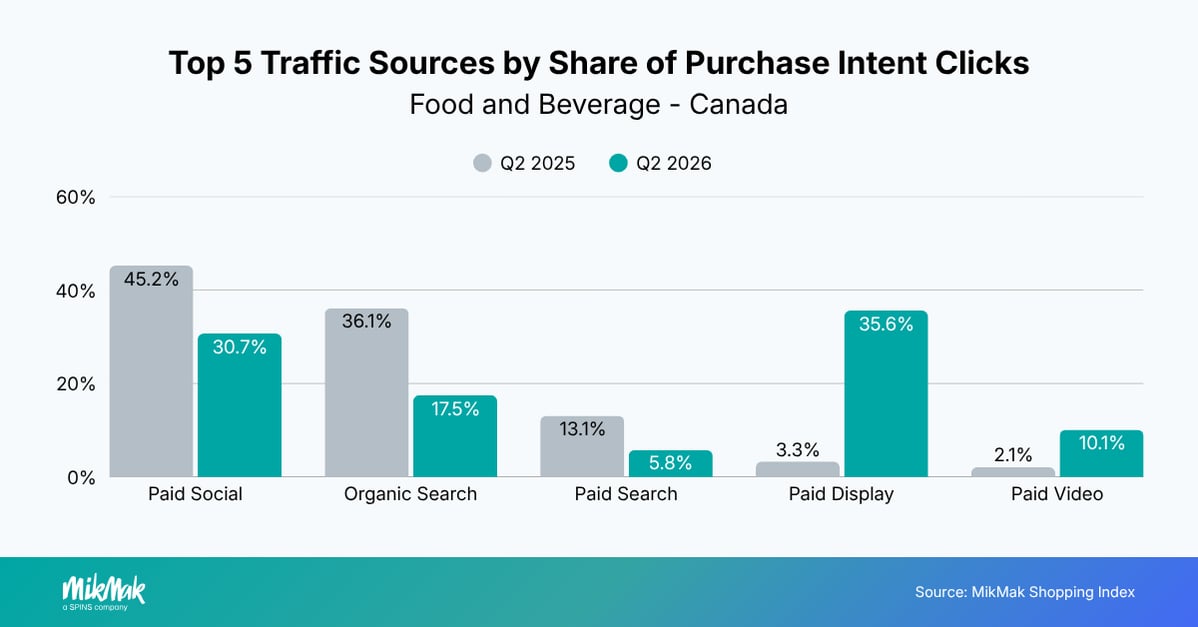
Paid social remained the largest traffic source in Q2 2026, while paid display recorded the strongest year-over-year growth, becoming the second-largest driver of Purchase Intent Clicks. Paid video also gained share, whereas both organic search and paid search declined.
Overall, commerce engagement became more diversified, with display, video, social, and search each contributing meaningful shopper traffic.
Meta overtook Google as the leading commerce-driving platform
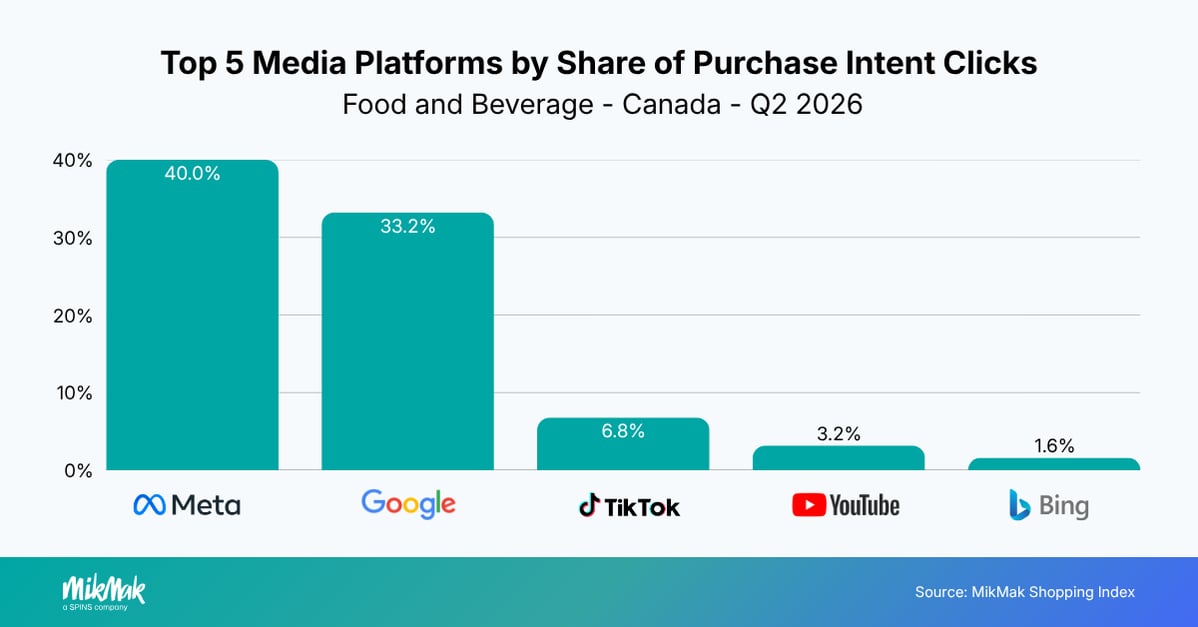
Meta became the biggest driver of Purchase Intent Clicks in Q2 2026, increasing its share from 30.0% to 40.0% and overtaking Google, which led in Q2 2025. TikTok also gained share year over year, increasing from 4.8% to 6.8%. Overall, the results reflect an evolving platform mix, with social platforms capturing a larger share of commerce engagement.
Amazon and Costco entered the top retail destinations
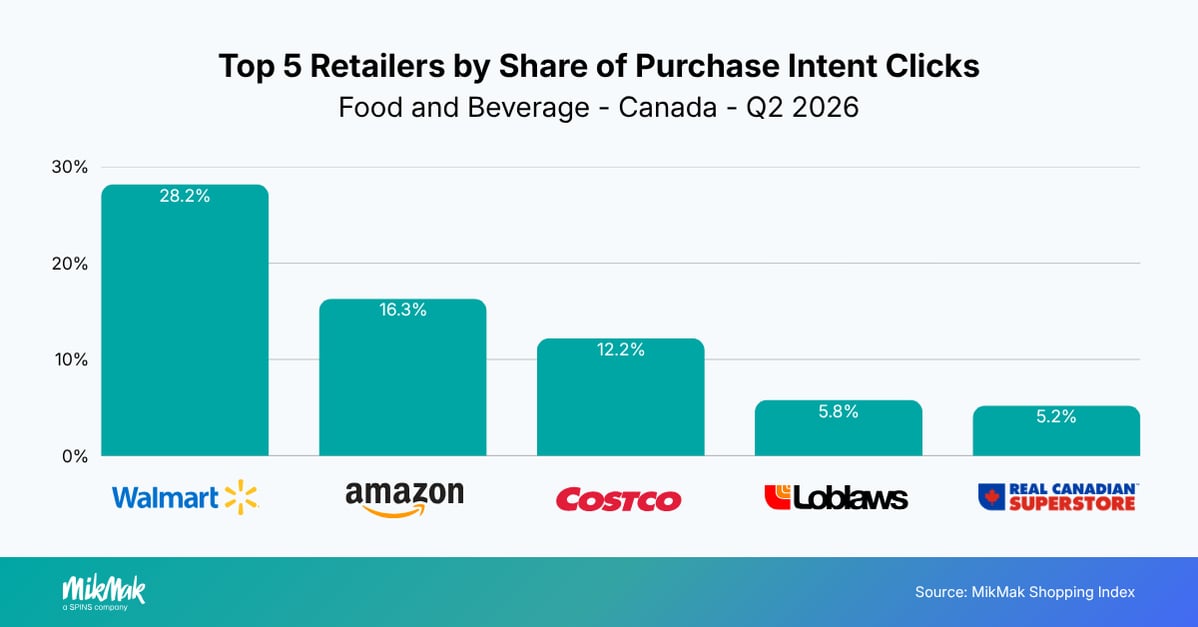
Walmart remained the leading retailer for Purchase Intent Clicks in Q2 2026, despite its share declining from 37.3% to 28.2% year over year. Amazon became the second-largest purchase destination, while Costco entered the top three. Meanwhile, Metro, Voilà, and Instacart dropped out of the top five, reflecting a notable shift in where Canadian shoppers chose to complete their purchase journeys.
United Kingdom
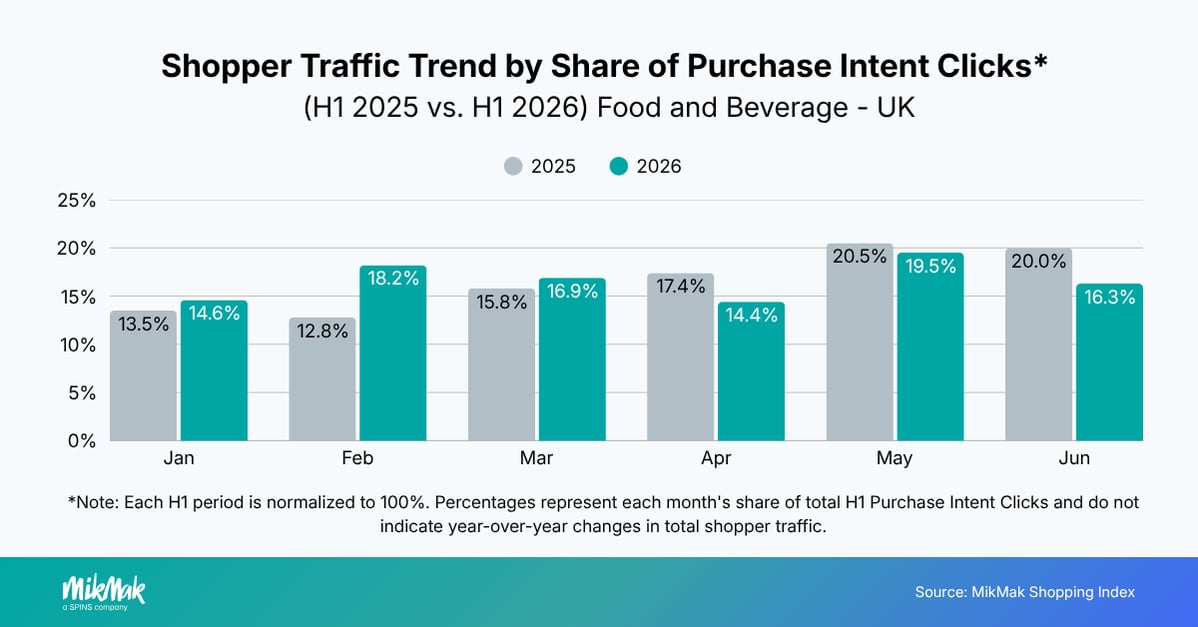
Food and Beverage shopper traffic to retailers was more evenly distributed across H1 2026 compared to H1 2025. While shopper engagement in 2025 increased steadily toward the end of the first half of the year, traffic in 2026 was more evenly distributed across the six months, suggesting brands have engaged shoppers more consistently this year.
Purchase intent improved across owned and paid channels
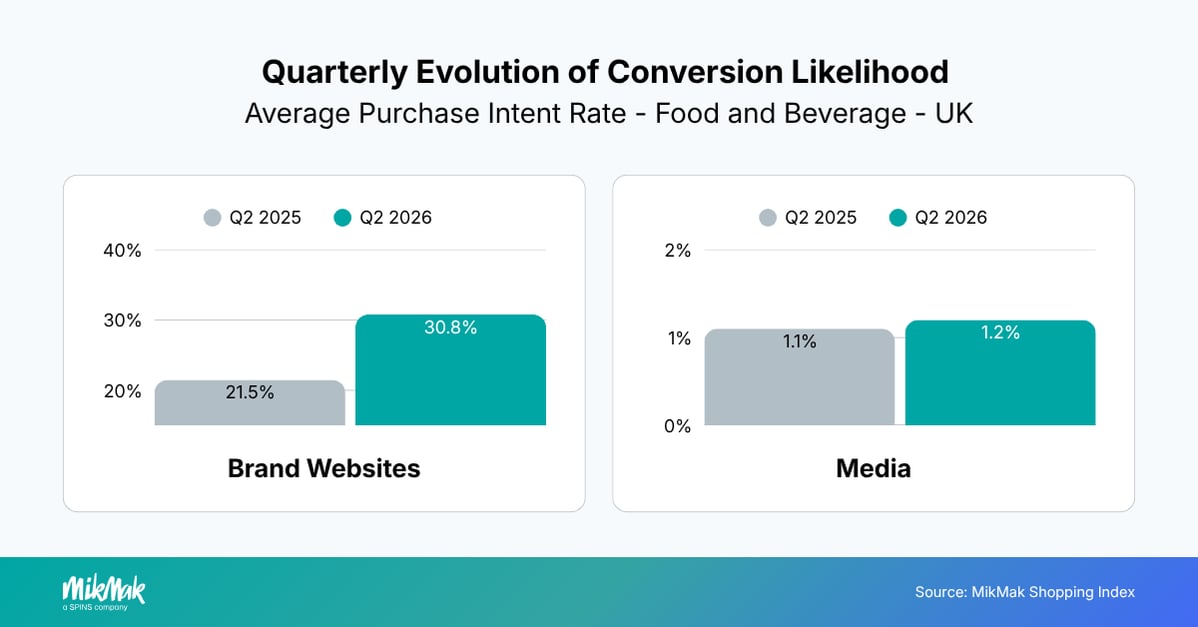
Compared to last year, Purchase Intent Rates improved across both owned and paid experiences in Q2 2026. Brand website Purchase Intent Rates increased from 21.5% to 30.8%, while media Purchase Intent Rates also rose slightly from 1.1% to 1.2%.
While this reflects steady progress, the comparatively low media Purchase Intent Rate compared to markets such as the US and Canada suggests Food and Beverage brands in the UK have an opportunity to expand commerce-enabled media investment and optimize shopper journeys that convert more discovery into measurable purchase intent.
Search and social media remained the leading drivers of shopper traffic
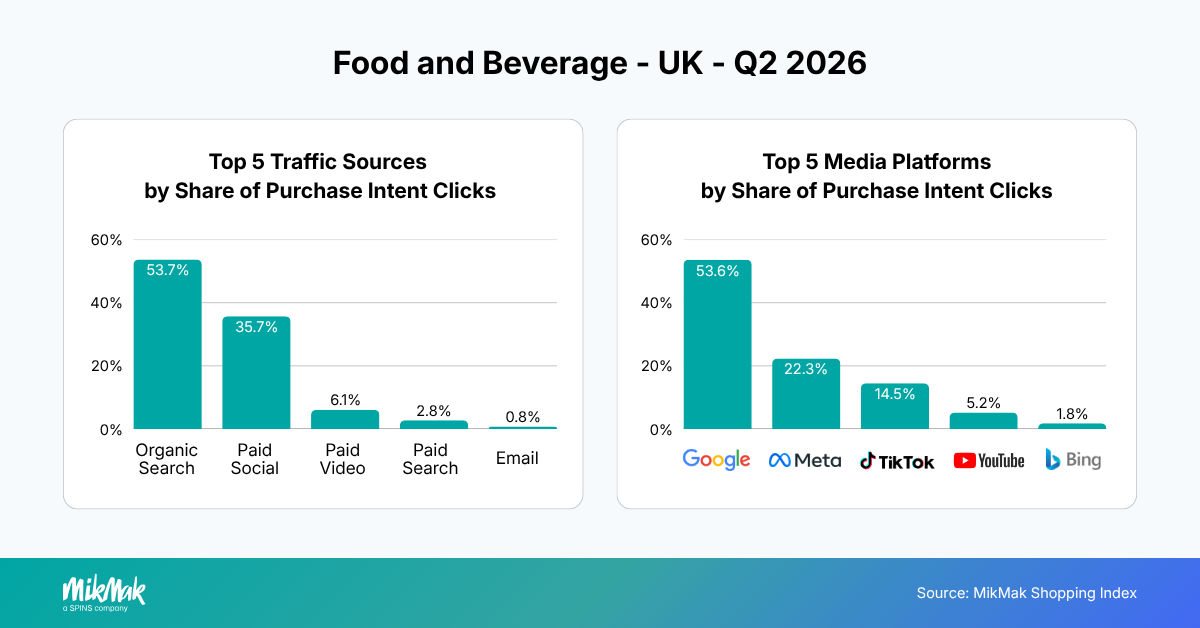
Organic search continued to account for the largest share of Purchase Intent Clicks in Q2 2026 at 53.7%, despite declining from 65.9% the previous year. Paid social increased its share from 29.9% to 35.7%, while paid video entered the top three traffic sources. Overall, the results highlight a more balanced mix of search, social, and video driving shopper engagement.
Google remained the leading commerce-driving platform in Q2 2026, increasing its share from 47.6% to 53.6%. Meta remained the second-largest platform, while TikTok also gained share year over year, rising from 12.9% to 14.5%. Overall, the platform mix highlights the continued importance of search alongside growing shopper engagement across social platforms.
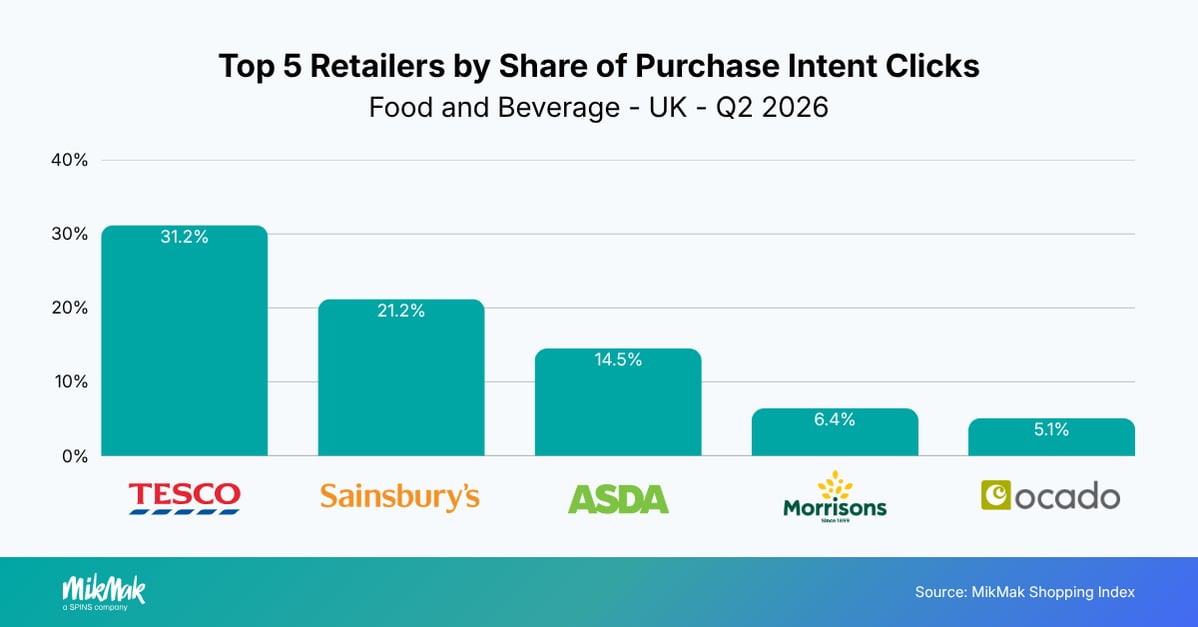
Tesco extended its lead as Sainsbury's gained momentum
Tesco remained the most popular purchase destination based on Purchase Intent Clicks in Q2 2026, increasing its share from 29.2% to 31.2%. Sainsbury's moved into second place after increasing its share significantly from 14.2% to 21.2%, while Asda remained a strong third. Meanwhile, Amazon and Deliveroo dropped out of the top five, highlighting the continued strength of traditional Grocery retailers in the UK's omnichannel commerce landscape.
France
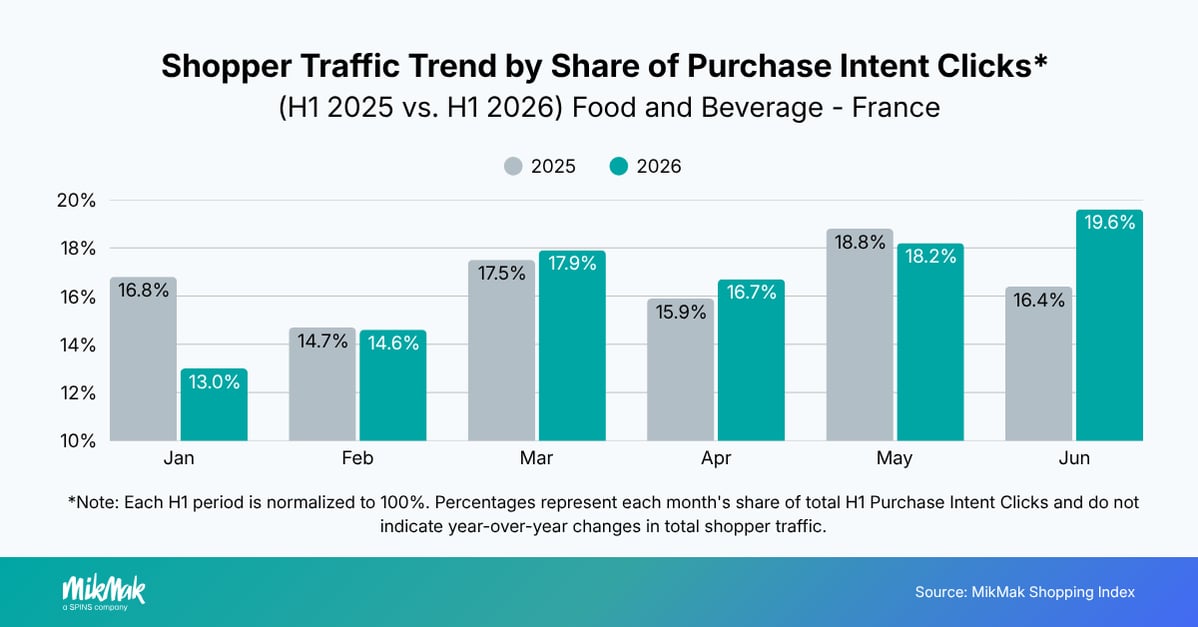
Food and Beverage shopper traffic to retailers remained relatively consistent across H1 2026 compared to H1 2025. While January accounted for a smaller share of H1 shopper traffic, engagement gradually increased through the first half of the year, with June representing the largest share of retailer-directed traffic.
Brand websites continued to lead conversion likelihood
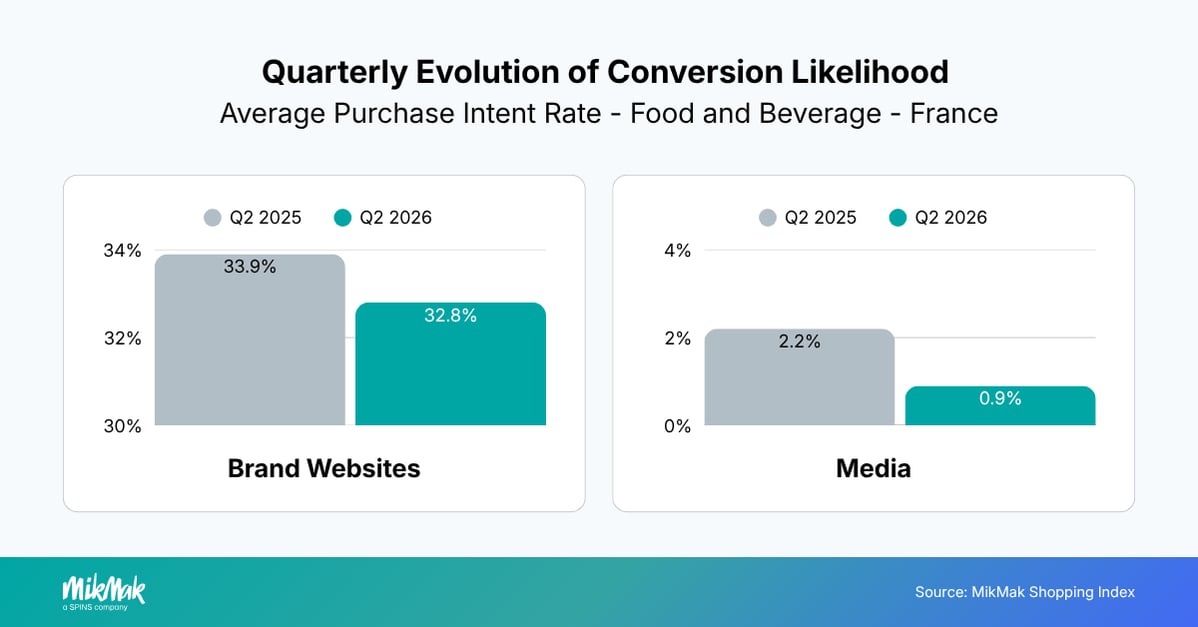
Brand websites recorded a strong 32.8% Purchase Intent Rate in Q2 2026, while the Purchase Intent Rate for commerce-enabled media declined year over year. Together, these trends may indicate that brands are relying more heavily on their websites to connect shoppers with retailers rather than creating direct paths to purchase within media placements.
As a result, brands risk losing visibility into shoppers who bypass brand websites altogether, limiting both commerce measurement and conversion opportunities.
Search continued to dominate shopper discovery
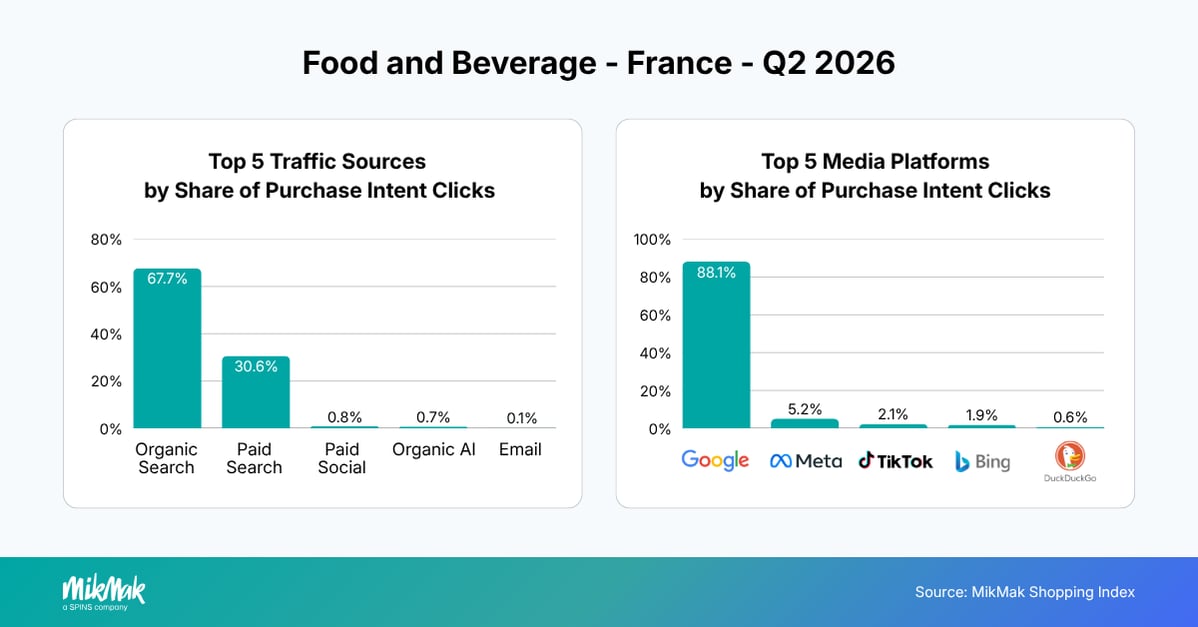
Organic search remained the leading driver of Purchase Intent Clicks in Q2 2026, while paid search gained significant share compared to the previous year. Google remained the leading commerce-driving platform in Q2 2026, with Meta maintaining the second position and TikTok entering the top three.
While search continues to play a central role in driving shopper engagement, the relatively small share of paid social suggests there may be opportunities to broaden commerce-enabled media investment and capture incremental demand earlier in the shopper journey.
Carrefour and Intermarché widened their lead
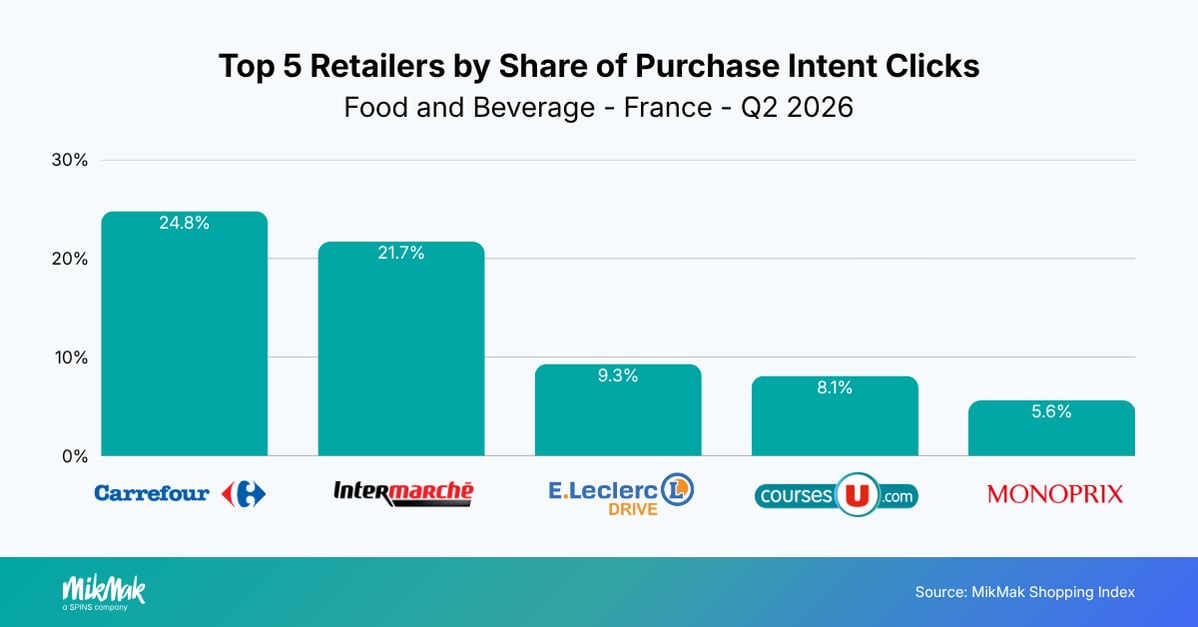
Carrefour and Intermarché strengthened their leadership in Q2 2026, increasing their share of Purchase Intent Clicks from 15.5% to 24.8% and from 12.4% to 21.7%, respectively. E.Leclerc Drive also gained share year over year, while Courses U entered the top five purchase destinations. Overall, the results highlight the continued strength of France's leading Grocery retailers in driving omnichannel shopper engagement.
Key Takeaways
- Commerce enablement shouldn't stop at your brand website: Brand websites remain valuable conversion touchpoints, but shoppers increasingly discover and purchase through a much broader commerce ecosystem. Shoppable media allows brands to reach shoppers earlier, guide them directly to their preferred retailers, and measure commerce outcomes that would otherwise remain invisible.
- Commerce discovery requires a balanced media mix: Search remains essential, but social, video, and display each play important roles across different markets. Brands that diversify commerce-enabled media investment are better positioned to capture shopper demand throughout the purchase journey.
- Retailer strategies require continuous optimization: The leading purchase destinations shifted across markets, with changes in retailer rankings highlighting evolving shopper preferences. Monitoring retailer performance helps brands optimize Where to Buy experiences and direct shoppers to their preferred purchase destinations.
Curious to see how MikMak helps brands connect marketing with commerce and unlock first-party shopper data? Schedule a demo today.

*The MikMak Shopping Index was developed to provide a standardized set of metrics, methodology, and benchmarks to help drive brands’ business results and strategy. It is a collection of key eCommerce KPIs collected across hundreds of brands, over 250 channels, and more than 8,000 retailer integrations worldwide to understand consumer online shopping behavior.
Ready to Grow Your Brand in Real-Time?
View All Resources