If there’s one thing we learned from Black Friday 2025, it’s this: peak shopping season isn’t a weekend anymore. Shoppers are browsing earlier, comparing more retailers, and increasingly letting AI help them make decisions.
So while Black Friday weekend, or Cyber 5, may be behind us, the insights are incredibly valuable for what’s coming next, from Boxing Day and Valentine’s Day to spring refresh moments and all the way through Black Friday 2026.
Let’s break down what we saw across the industry and within MikMak’s own commerce ecosystem, and how brands can use these signals to plan for the year ahead.
The $79B Snapshot: A Quick Look at the 2025 Industry Trends
To set the stage, here are the three key macro takeaways drawn from Salesforce Peak Holiday Insights:
- $79B in global Black Friday online sales (+6% YoY), with U.S. sales reaching $18B. Growth was driven largely by higher prices, not unit volume.
- AI mattered: More than $14.2B in global online sales were influenced by AI-driven shopping referrals.
- Holiday shopping started early: From Oct 1–Nov 15, global digital traffic nearly tripled YoY as shoppers shifted research and gift planning forward.
MikMak Black Friday Data Deep Dive: Regional Insights in an Omnichannel World
The big industry shifts tell us shoppers are moving earlier, moving faster, and embracing AI. But when we zoom into MikMak Shopping Index data, we see how those shifts look across regions, and what they signal for the next wave of shopping events.
🇺🇸 United States: TikTok Takes the Traffic Lead, AI Becomes a Shopping Tool
The U.S. delivered some of the most dramatic platform and behavioral shifts this year:
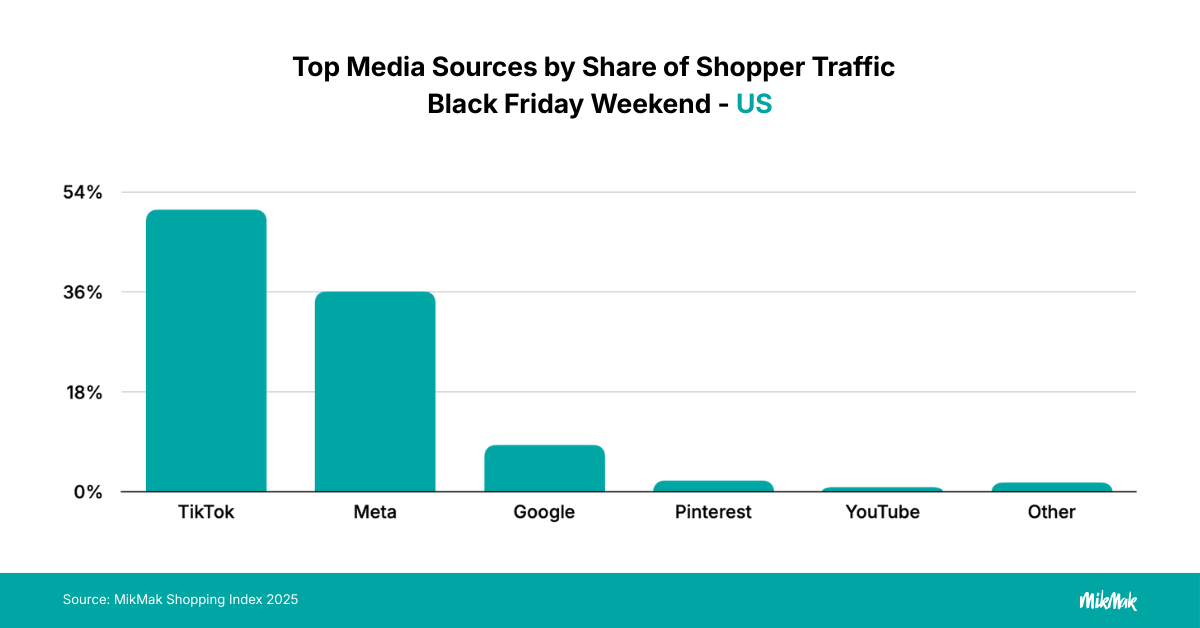
- TikTok surged to #1 in traffic: TikTok became the #1 driver of ad-powered shopping traffic in the U.S., with a 50.8 percent share, which is a complete inversion of 2024's ranking when Meta led.
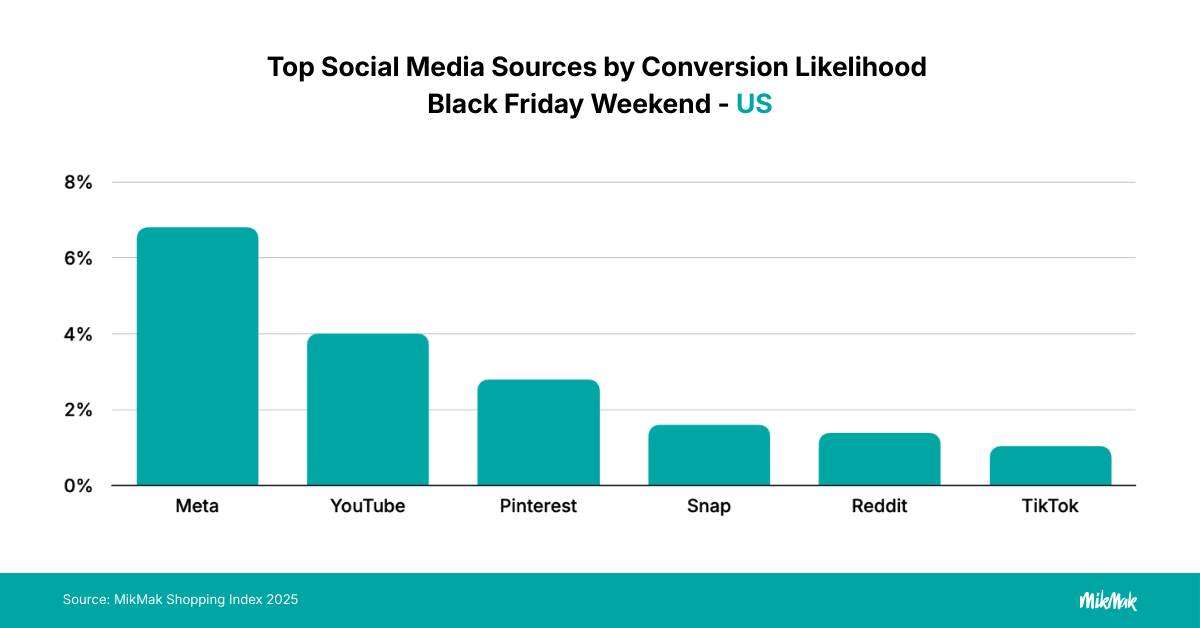
- Meta still wins in conversion likelihood: Among social media platforms, Meta remained the most reliable place to turn interest into checkout, with a 6.8 percent Purchase Intent Rate, compared to only 1.1 percent for TikTok.
- AI goes mainstream: ChatGPT-driven Black Friday weekend shopping traffic jumped an astonishing 5,385% YoY. Shoppers are increasingly asking AI what to buy.
- Beauty prevails, Alcohol drops: Beauty climbed to the top of the category charts and alcohol fell out of the top 5 altogether, replaced by Toys & Games, which came in at #3.
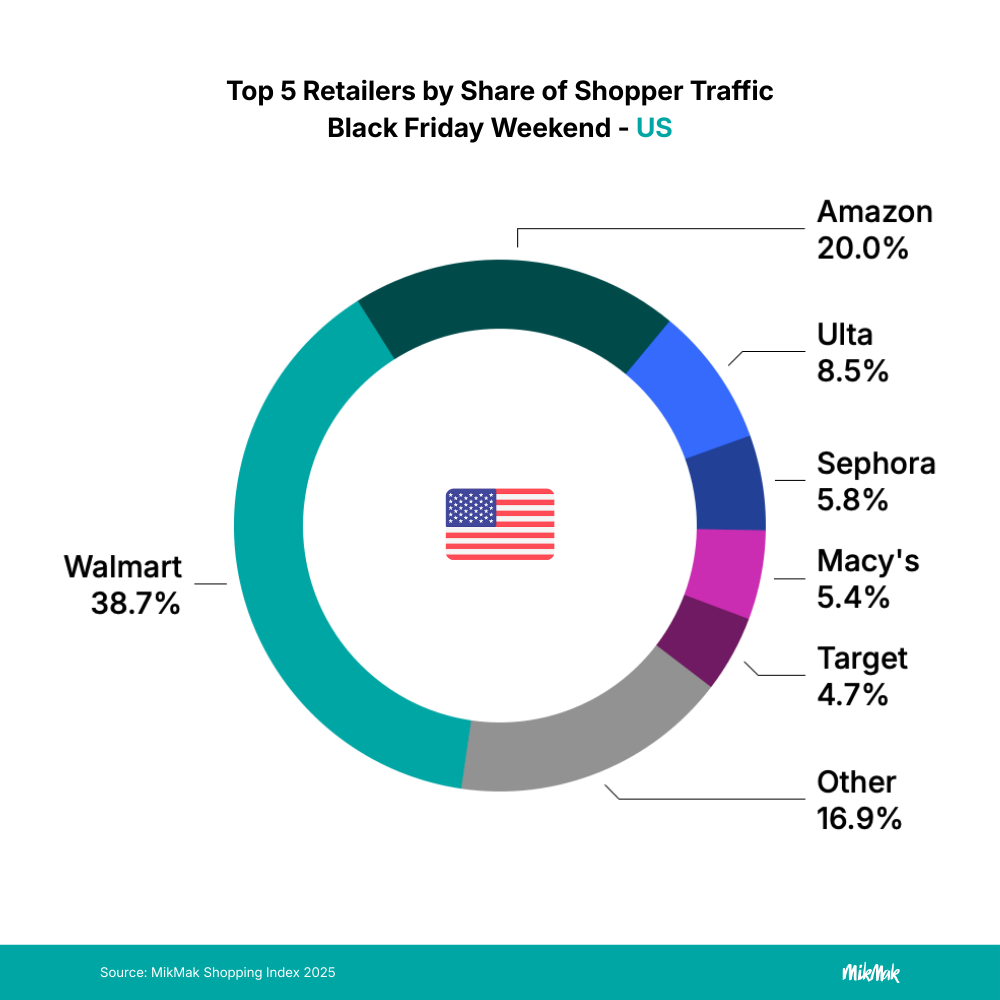
- Walmart remains the checkout winner: Walmart dominated as the top checkout destination with a 38.7 percent share of shopper traffic, ahead of Amazon (20 percent). But both of them lost traffic share this year as shoppers diversified their retailer selections.
For a breakdown of what these platform shifts and AI trends mean for brand strategy, watch MikMak’s Founder and CEO, Rachel Tipograph’s, Cyber 5 analysis:
🇨🇦 Canada: Meta Wins Traffic, Google Wins Conversion
Canada told a different platform story when looking at paid media performances.
- Meta took the top spot in shopper traffic: Meta platforms drove the largest share of paid media shopper traffic, capturing 53 percent of Purchase Intent Clicks, followed by TikTok (27.8 percent), and Pinterest (12.1 percent).
- Google was the most likely channel to convert: With a 10.4 percent Purchase Intent Rate, Google outperformed the social platforms. This could signal that Canadian shoppers rely heavily on search, price-checking, and retailer comparison before purchasing.
- Category leaders shifted: FMCG, Beauty, and Luxury were the top three categories for shopper traffic. Toys & Games slipped from #1 position to fourth place this year. Personal Care secured the fifth spot. Food & Beverage lost its place in the top 5 altogether, replaced by Beauty in 2025.
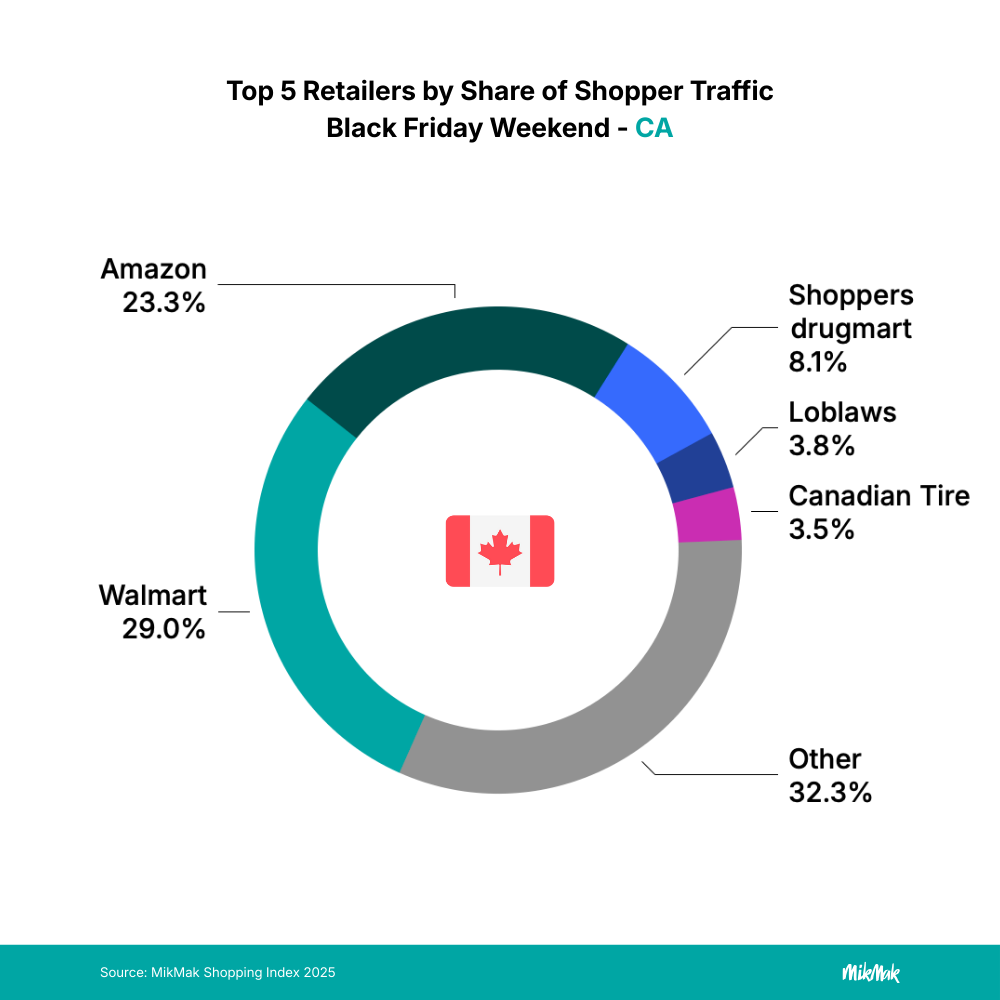
- Walmart remains the checkout leader: Walmart continued to dominate as the top checkout destination, followed by Amazon, though Canadians also showed strong loyalty to local retailers.
🇪🇺🇬🇧 Europe: TikTok Leads, Meta Converts, and AI Accelerates
- TikTok dominated paid media traffic: Mirroring the U.S., TikTok became the top source of paid media shopping traffic across major European markets.
- Meta remained the strongest converter: Despite TikTok’s traffic surge, Meta once again delivered a higher conversion likelihood. With a 7.1 percent Purchase Intent Rate, Meta proved to be an efficient driver of checkout-bound shoppers.
- AI adoption accelerated: ChatGPT-driven shopper traffic increased 1,197% YoY, indicating that European consumers are increasingly comfortable using AI to compare products, evaluate retailers, and seek purchase recommendations.
- Category trends shifted: FMCG led shopper traffic across the region, followed by Beauty and Luxury. Home Appliances saw meaningful growth as consumers used promotional windows for high-value upgrades.
- Retailer dynamics varied by market: Amazon held a significant presence across Europe, but local retailers remain deeply influential, making localized strategies essential for winning conversions country by country.
.png?width=1000&height=1200&name=large-BlackFriday25-TopMediaSourcesbyTraffic%20(2).png)
🇦🇺🇳🇿 Australia & New Zealand: New Category Leaders Emerge
Australia and New Zealand delivered interesting category and platform shifts this season.
- Meta dominated paid media shopper traffic: Meta platforms drove the largest share of paid media shopping traffic in ANZ, capturing a 78% share of Purchase Intent Clicks, far ahead of other social channels.
- Google led in conversion likelihood: With an 11.2% Purchase Intent Rate, Google proved to be the most effective channel at turning shopper interest into action.
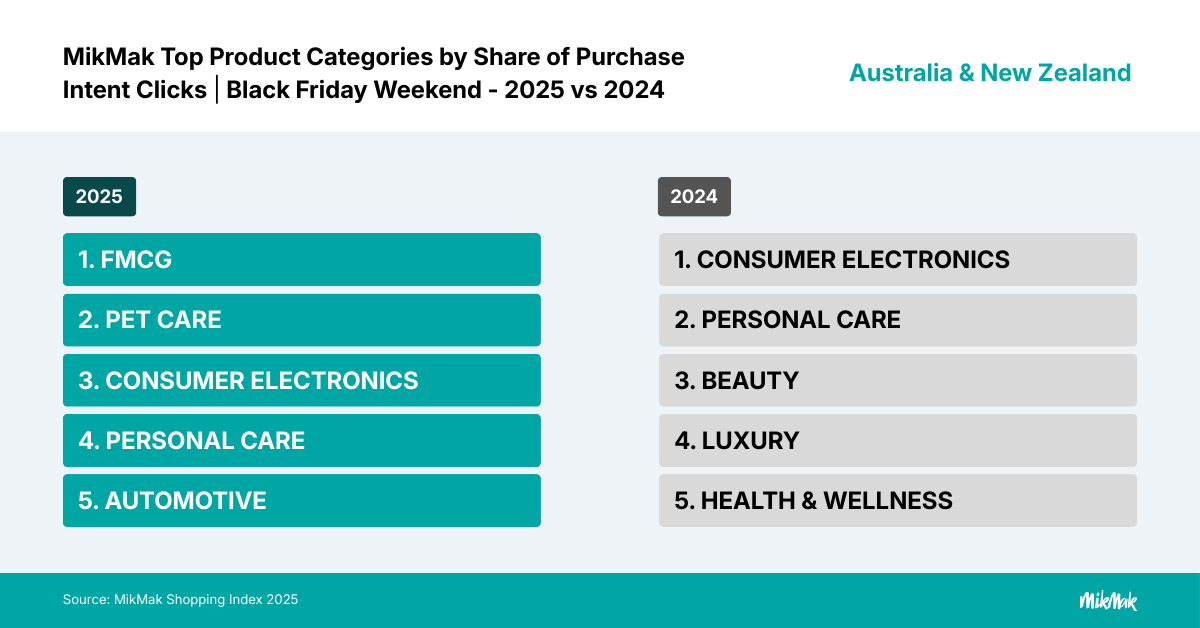
- Category shake-up: FMCG, Beauty, and Luxury emerged as the top three categories for shopper traffic. Consumer Electronics dropped from #1 in 2024 to #3 in 2025, and Automotive rose to fifth place.
What This Means for Boxing Day, Valentine’s Day, and Every Shopping Moment Ahead
Cyber 5 isn’t just something to recap. It’s something to forecast from. Here are three key takeaways brands should bring into 2026:
1. Start Holiday Marketing Early and Make Everything Shoppable
Shoppers begin browsing weeks (and often months) before big moments like Valentine’s Day, Mother’s Day, or Prime Day. These events now behave more like mini seasons than single days.
Because discovery and conversion happen across multiple channels, every touchpoint matters. When your content is shoppable everywhere you show up, you can:
- Capture intent in real time
- Identify which audiences and formats convert
- Optimize targeting long before your peak moment arrives
2. Treat AI as a Commerce Channel, Not a Trend
AI is influencing billions in product consideration, and shoppers are actively asking AI what to buy next.
To win the AI shelf, brands should:
- Maintain structured, accurate product data
- Ensure consistent retailer availability
- Optimize content so AI agents can easily interpret your catalog
3. Turn Seasonal Traffic Into Your Most Valuable Audience
Black Friday brings an influx of high-intent shoppers. Instead of letting that demand fade, use it to fuel your 2026 strategy.
By tracking intent signals, from first impression to retailer clicks, you can see:
- Which channels and campaigns are driving conversions
- Which retailers matter most to your shoppers
- Which SKUs are gaining momentum
The brands that win next year will treat Black Friday insights as a starting point, not a finish line. Start earlier, diversify platforms, lean into AI-powered discovery, and tailor retailer strategies by market.
MikMak can help you do it. 👉 Schedule a demo to learn how.