

Expanding into a new market is exciting. It's also where many brands unintentionally create more complexity.
A regional team builds a workflow that works well locally. Another market adopts a different reporting approach. A third introduces new technology to solve a specific challenge. Each decision makes sense on its own, but together they create disconnected ways of working.
Eventually, it becomes difficult to answer simple questions. Which markets are performing best? Can successful campaigns be replicated elsewhere? Why does every new market launch feel like starting from scratch?
The issue isn't that local teams are doing things differently. Local flexibility is often what drives better shopper experiences. The challenge is making that flexibility work at global scale.
Leading global organizations are doing this by creating consistency where it matters most. Rather than asking every market to operate the same way, they're building a shared commerce foundation that creates fluidity behind the scenes while giving local teams the flexibility to execute for their customers.
Global scale isn’t built by making every market operate the same way. It’s built by creating a foundation strong enough to support local differences without multiplying complexity. The six building blocks below are what allow leading brands to expand with confidence, adapt to each market, and turn global growth into a repeatable capability rather than a series of reinventions.
A scalable global commerce foundation is built through a series of capabilities that help brands expand steadily, adapt locally, and continue growing over time. The six building blocks below are common characteristics we see in organizations that are scaling global commerce successfully.
Start with a Shared Foundation
Consistency doesn't mean every market should look the same.
Different retailers, shopper behaviors, languages, and regulations require different approaches. The goal is not to standardize every campaign or customer experience. It's to give every market the same foundation to build from.
That starts with the capabilities every market relies on. A strong commerce foundation helps teams connect to retailers cohesively, measure performance the same way, and launch into new markets without having to rebuild processes from scratch. It gives leadership a clearer view across brands and regions while allowing local teams to make the decisions that are right for their shoppers.
Local teams should own execution. Global teams should own the foundation.
Everything else builds from there.
6 Building Blocks of Scalable Connected Commerce
1. Standardize the Foundation, Not Every Experience
As brands expand, the same core commerce needs show up across markets: retailer connectivity, measurement, reporting, and governance. Rebuilding those capabilities market by market creates unnecessary work and makes it harder to scale.
Instead, brands can establish a common approach to the capabilities every market needs. A global commerce platform can provide that shared infrastructure, giving markets access to the same core capabilities without requiring each team to assemble its own technology stack.
This reduces duplicate work, makes performance easier to compare, and gives new markets a stronger starting point. It also means teams don't have to start from scratch every time the business grows. New retailers, channels, and markets can build on what's already in place.
Standardize what helps the organization scale. Adapt what helps each market succeed.
2. Measure Success the Same Way Everywhere
As organizations expand, measurement is often one of the first things to diverge.
Different markets naturally evolve different reporting processes based on local priorities, retailer relationships, or business goals. While those decisions make sense individually, they make it much harder to understand performance across the organization.
Shared KPIs don't take flexibility away from regional teams. They create a common language that helps leadership compare markets, identify what's working, and make better investment decisions.
When every market measures success differently, it's difficult to know which ideas are actually worth scaling.
3. Empower Local Teams Within Clear Guardrails
Local teams are often best positioned to make decisions about their markets. They understand regional retailers, shopper behaviors, promotional calendars, and cultural nuances that can shape performance.
But local autonomy works best when everyone is clear on where it starts and stops. Global organizations should define which decisions need to stay consistent across markets and where local teams have the authority to lead.
For example, global teams might establish shared technology, measurement standards, and governance, while local teams own decisions around retailer priorities, promotions, and market-specific execution. Where that line falls will look different for every organization, and it may shift as the business and its markets evolve.
Clear roles empower both sides. Global teams can maintain alignment across the organization, while local teams have the freedom to move quickly, apply their market expertise, and make decisions closer to their shoppers.
The goal is alignment without unnecessary control.
4. Make Expansion Repeatable
No two market launches are exactly the same, but brands can still carry what they've learned from one market into the next.
Too often, organizations rebuild retailer connections, reporting processes, and commerce workflows every time they enter a new market. What could become a repeatable process turns into another custom project.
Instead, brands can use what they've already built and learned as a starting point. Proven processes, technology, retailer connections, and learnings can be carried forward, then adapted to the needs of each new market.
That repeatability matters because speed matters. The faster teams can activate in a new market, retailer, or channel, the faster they can reach shoppers and start driving results. When operational complexity slows expansion, brands risk missing demand and leaving revenue opportunities on the table.
Over time, expansion becomes less about rebuilding and more about refining what already works. BIODERMA shows what this can look like at scale.
In Practice:
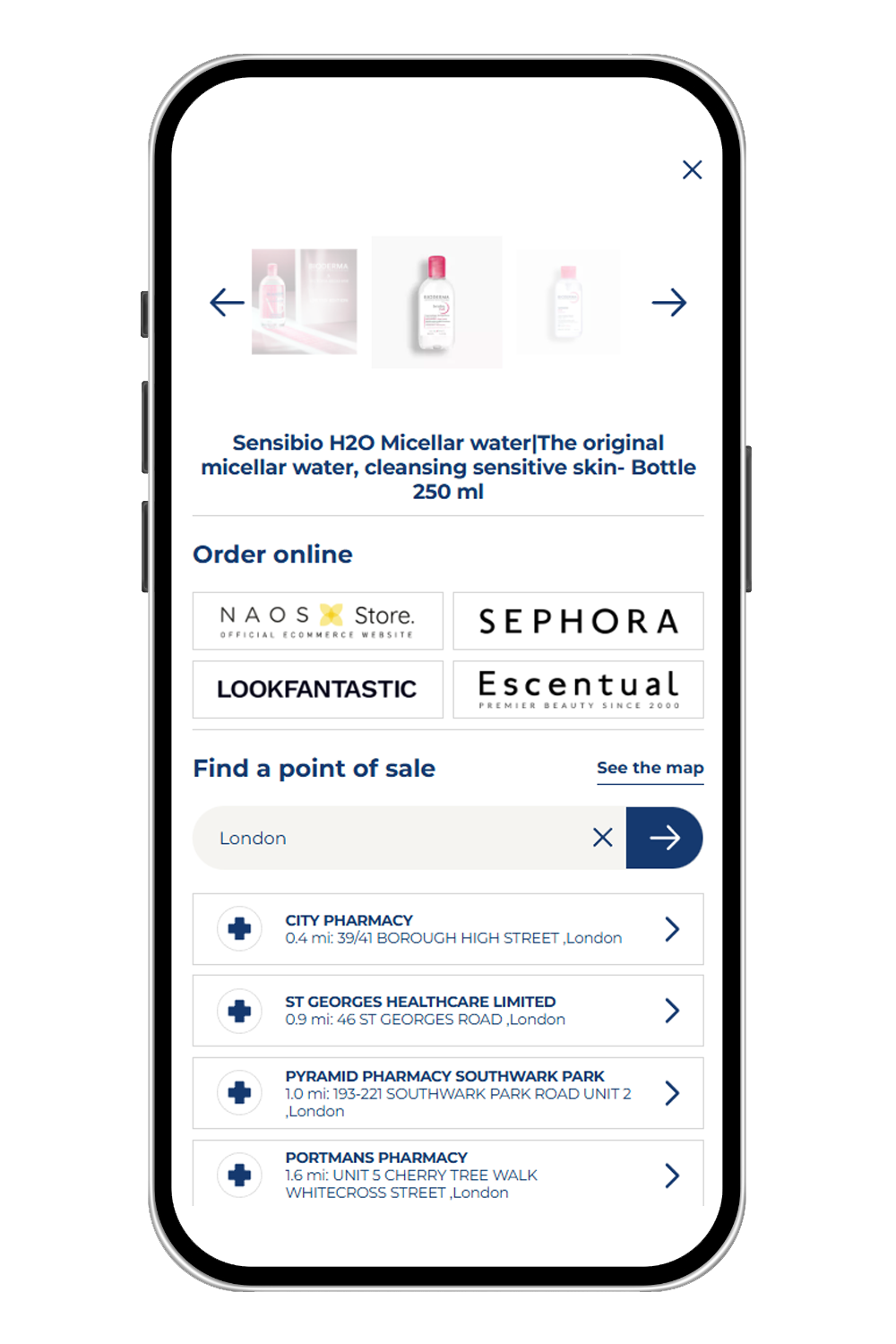
BIODERMA was looking for a single partner that could support its omnichannel business on a global scale.
By implementing a shared commerce approach across 32 countries, 307 retailers, and more than 2,500 products, the brand created a common foundation for global commerce while giving local teams the flexibility to support regional retailer relationships.
5. Share Learnings Across Markets
One of the biggest advantages of operating globally is the ability to learn from multiple markets. Too often, though, those learnings stay local.
A campaign performs well in one region, a retailer strategy drives stronger results in another, or a team finds a better way to solve a common challenge. Without a way to share those insights, other markets may end up solving the same problems on their own.
Leading organizations create simple ways for those learnings to travel. That might mean sharing successful tests, retailer insights, performance benchmarks, or approaches that other teams can learn from and adapt for their own market.
The key is making that exchange part of the process, not an afterthought. Create regular opportunities for teams to share what they're learning and an expectation that useful insights will be carried across the organization.
The opportunity isn't to replicate what worked. It's to make sure every market can learn from it.
6. Create One Source of Truth
Consistent measurement only goes so far if the information is siloed.
As organizations grow, commerce data can become spread across markets, retailers, agencies, and platforms. Without a consistent approach to omnichannel reporting, teams end up piecing together reports to understand performance, while global leaders struggle to get a clear view across the business.
At global scale, that fragmentation isn't just a reporting problem. It makes it harder to spot opportunities, compare performance, and know where to invest next.
This is where a unified commerce platform becomes critical. Bringing commerce data together across markets, retailers, and channels creates a shared source of truth, rather than requiring each team to piece together performance from different systems.
A connected commerce approach brings performance into one place, giving global and local teams a shared view across brands, regions, retailers, and campaigns. Instead of spending time reconciling different reports, teams can focus on understanding what's driving results and where there is an opportunity to improve.
The goal isn't simply better reporting. It's giving every team access to the commerce intelligence they need to make faster, more confident decisions.
What Changes When Global Commerce Is Built to Scale?
When global commerce is built to scale, teams can move into new markets faster, build on proven processes, and spend less time navigating disconnected systems and reports. Local teams have more freedom to focus on their shoppers, while global teams gain the visibility they need to understand performance across brands, regions, and retailers.
That combination of speed and visibility has a direct impact on growth. Brands can respond to opportunities faster, make more informed investment decisions, and reduce the operational friction that can leave revenue on the table.
And as commerce becomes more complex, that foundation becomes even more valuable. With connected data and a clearer view of what's driving performance, teams can move beyond understanding what happened to making smarter decisions about where to invest, what to optimize, and where the next opportunity may be.
A strong foundation doesn't remove complexity. It gives organizations a better way to manage it as they grow. Rather than creating a new process with every expansion, teams can build on the capabilities, knowledge, and ways of working already in place.
The goal isn't simply to expand globally. It's to make every future expansion easier than the last.
Is Your Global Commerce Foundation Built to Scale?
Building a scalable global commerce strategy requires more than getting the technology right. It requires looking at how teams, data, processes, and decision-making work together across markets.
For global and regional commerce leaders, these questions can help uncover where your organization is ready to scale and where complexity may be getting in the way:
✔ Expansion: Could we launch into a new market without rebuilding our commerce workflows?
✔ Measurement: Can we compare performance across regions using a shared set of core metrics?
✔ Ownership: Do global and local teams have a clear understanding of which decisions they own?
✔ Knowledge Sharing: Can teams easily access and apply what's working in other markets?
✔ Visibility: Do we have one clear view of commerce performance across the business?
✔ Scalability: As we grow, are we scaling our commerce capabilities—or our operational complexity?
Connect with us to see how MikMak helps global brands connect commerce across markets, retailers, and channels while creating a clearer view of performance.
