
How Alcohol Brands Drive Retail Sales in a Fragmented Commerce Landscape
The Evolving Challenges in Alcohol Marketing and Commerce
The global Alcohol industry is facing a tightening growth environment. According to IWSR, total beverage alcohol volumes declined 2% in 2025, while value fell 4%, as inflation, tariffs, and shifting consumer behavior reshaped major markets.
In this context, every marketing dollar is under greater scrutiny, yet proving impact has become more complex as purchase journeys span multiple channels.
Today’s consumers discover Alcohol products through social media, search, retail media, influencers, and brand sites, before purchasing across retailers, delivery platforms, marketplaces, Grocery chains, and local liquor stores. At the same time, brands must navigate evolving regulations around advertising, sponsorships, age verification, and retailer visibility, which vary by market and platform.
This creates a clear challenge: how do you connect marketing investment to retail sales across a complex and heavily regulated commerce ecosystem?
The opportunity lies in bringing commerce closer to every shopper touchpoint. By connecting media, brand sites, retailer experiences, and commerce intelligence, brands can better understand what drives purchase intent and optimize investment more effectively.
In this guide, you’ll learn how leading Alcohol brands:
- Connect media to retail outcomes
- Navigate evolving shopper journeys
- Use commerce intelligence to optimize performance
- Activate commerce across every touchpoint
- Capitalize on seasonal demand moments
How Global Alcohol Shoppers Actually Buy
Alcohol purchase journeys move across media, social, search, brand sites, and retail environments before ending at a chosen retailer.
MikMak Shopping Index data shows that media drives most global Alcohol shopper traffic to retailers (69.7%), while brand websites capture fewer shoppers but with stronger conversion likelihood (10.2% vs. 7.1%).
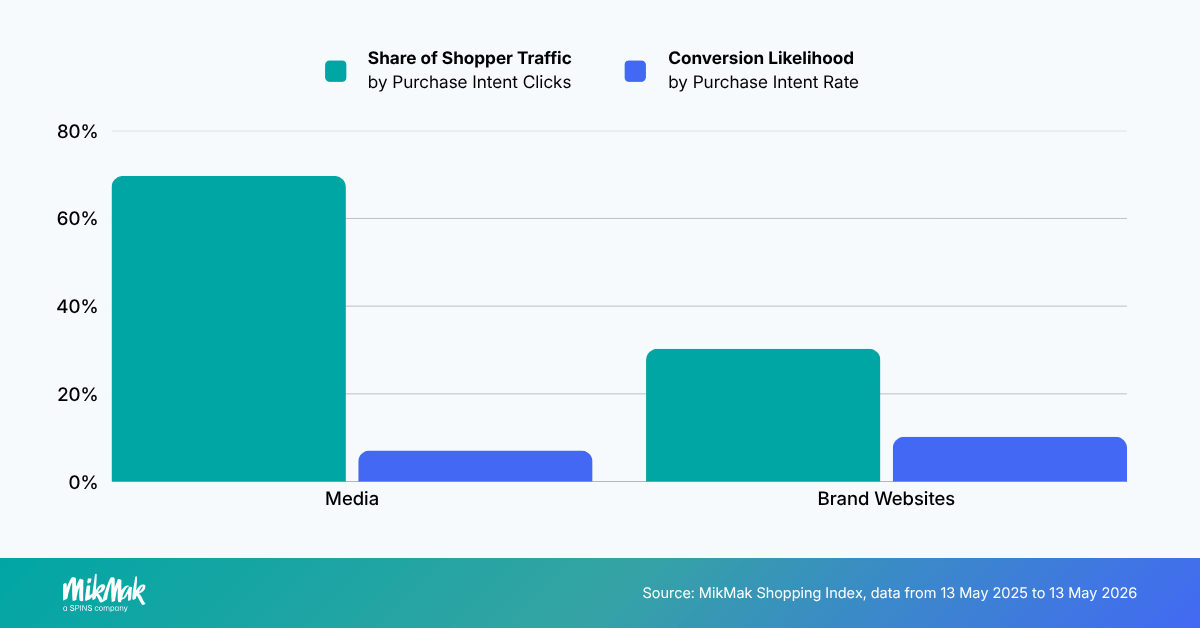
*Purchase Intent Clicks: Measures high-intent shopper traffic by counting the number of times a shopper clicks through to at least one retailer during a single session within MikMak Commerce-enabled brand content.
*Purchase Intent Rate: Measures the percentage of shoppers who click through to at least one retailer within MikMak Commerce-enabled brand content, signaling a strong conversion likelihood.
Commerce performance depends on two complementary tactics:
- Enabling Commerce in Media = Demand Generation
Shoppable media captures intent where consumers spend time, such as social and search platforms. - Enabling Commerce on Brand Websites = Demand Capture
Brand websites support validation and decision-making before purchase.
Aligning these tactics improves efficiency and overall media performance.
High-performing Alcohol brands increasingly treat media, brand websites, and retailer destinations as interconnected parts of a single omnichannel commerce ecosystem rather than separate marketing channels.
“Historically, upper funnel media was more difficult to connect to commerce outcomes, but with better retail signals and commerce intelligence tools like MikMak, we can better understand which touchpoints are actually contributing to conversion in a meaningful way, especially in Alcohol, where we don’t always see the final step in the purchase journey. We need to understand each moment throughout the funnel.”
Jack Slattery, Senior Director, eCommerce

The Halo Effect of Commerce-Enabled Media
Shoppable media improves performance across the broader brand ecosystem, stretching far beyond direct retailer clicks.
Case Study: Rémy Martin Unlocked Cross-Channel Sales Lift
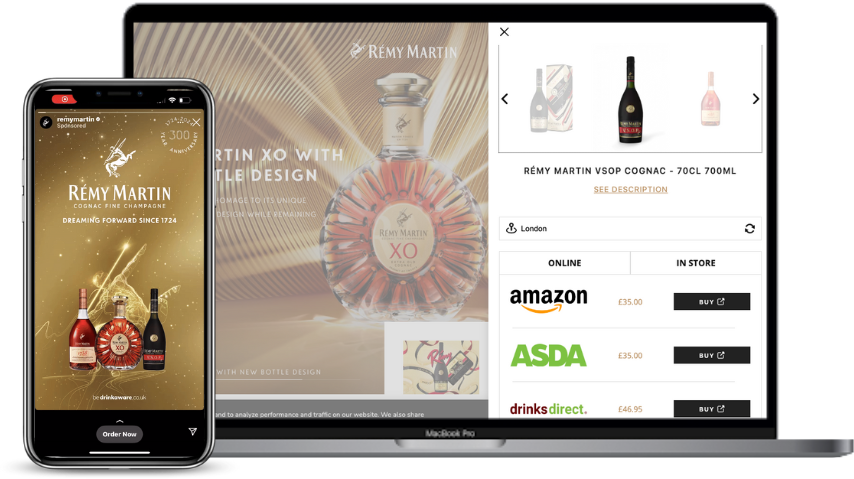
Rémy Martin extended MikMak Commerce from its brand website into media in the UK during the holiday period, creating a consistent cross-channel path to purchase across social media, brand website, and retail platforms.
Results
- 3.2x attributable sales lift on brand website during media activation
- 3.7x attributable sales lift on Amazon during media activation
- 88% of traffic driven by media, reinforcing cross-channel halo effect
Retailer Fragmentation in Alcohol Commerce
Alcohol shoppers rarely rely on a single retailer, with demand spanning a mix of Grocery retailers, quick commerce and delivery platforms, specialist Alcohol retailers, and local stores.
MikMak data clusters this behavior into three ecosystems based on Purchase Intent Clicks from MikMak Commerce-enabled content.
|
Alcohol Shopper Traffic by Retailer Channel Type* By Share of Purchase Intent Clicks |
||||
|
US |
Canada |
UK |
Retailer Examples |
|
|
Quick Commerce / On-demand Delivery |
~33% |
~18% |
~3% |
Instacart, DoorDash, Uber Eats, Gopuff, etc. |
|
Grocery Retailers |
~18% |
~7% |
~44% |
Walmart, Kroger, Safeway, Tesco, Asda, etc. |
|
Specialist Alcohol Retailers |
~23% |
~52% |
~16% |
Total Wine, ReserveBar, Caskers, Whisky Exchange, etc. |
|
*Note: Percentages are directional groupings based on MikMak Purchase Intent Click retailer classifications. Some retailers operate across multiple fulfillment models or categories depending on market structure. Source: MikMak Shopping Index, data from 13 May 2025 to 13 May 2026 |
||||
Market structure differences:
- US: Balanced distribution across delivery, Grocery, and specialist retail
- Canada: Concentrated in regulated liquor boards and specialist retailers
- UK: Grocery-led ecosystem, with supermarkets driving most conversion
Aligned with IWSR findings, these trends reflect the growing role of delivery-led convenience, Grocery eCommerce, and continued strength in specialist Alcohol retail.
Fragmentation Persists Within Dominant Retail Structures
Even within established retail systems, demand remains highly distributed.
In the US, the top five retailers capture just 42.8% of shopper traffic, leaving a 57.2% long tail spread across local independent liquor stores and regional Grocery chains. Canada (48.4% outside the top five) and the UK (33.6% outside the top five) show similar patterns.
This highlights the importance of multi-retailer commerce strategies in capturing demand across complex purchase paths.
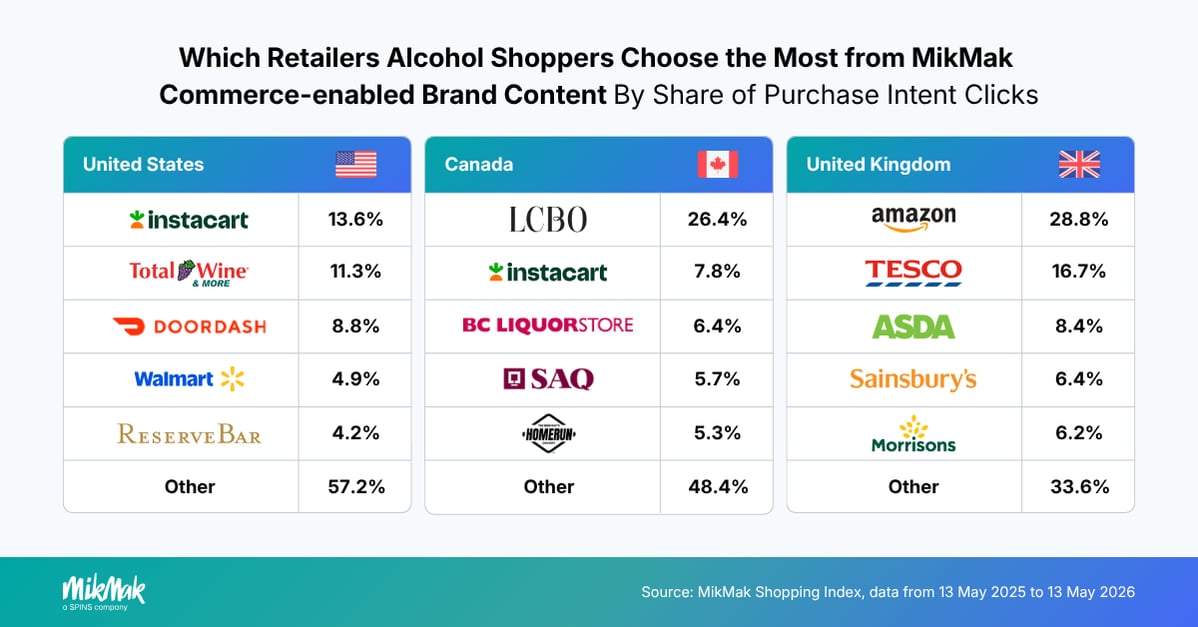
Retailer-level performance data creates value beyond commerce optimization. By quantifying retailer demand, first-party shopper intent data strengthens joint business planning (JBP) and provides a more objective foundation for retailer negotiations, assortment discussions, and shelf-space decisions.
“A very powerful feature that we've been able to use in sales presentations (with retailers) is how much traffic and conversion we are driving through Purchase Intent Clicks (with MikMak) to that retailer itself. And they really only care about what we have done for them lately, and we were able to show it.”
Rob Cordes, Head Marketing Dude

Which Channels Drive Shopper Traffic and Conversions
Omnichannel marketing performance reflects both where brands invest and how consumers naturally discover products across the digital ecosystem.
Media is increasingly functioning as a direct commerce layer, not solely a top-of-funnel channel or a pathway to brand-owned sites.
Brands Drive Most Alcohol Shopper Traffic Through Paid Social
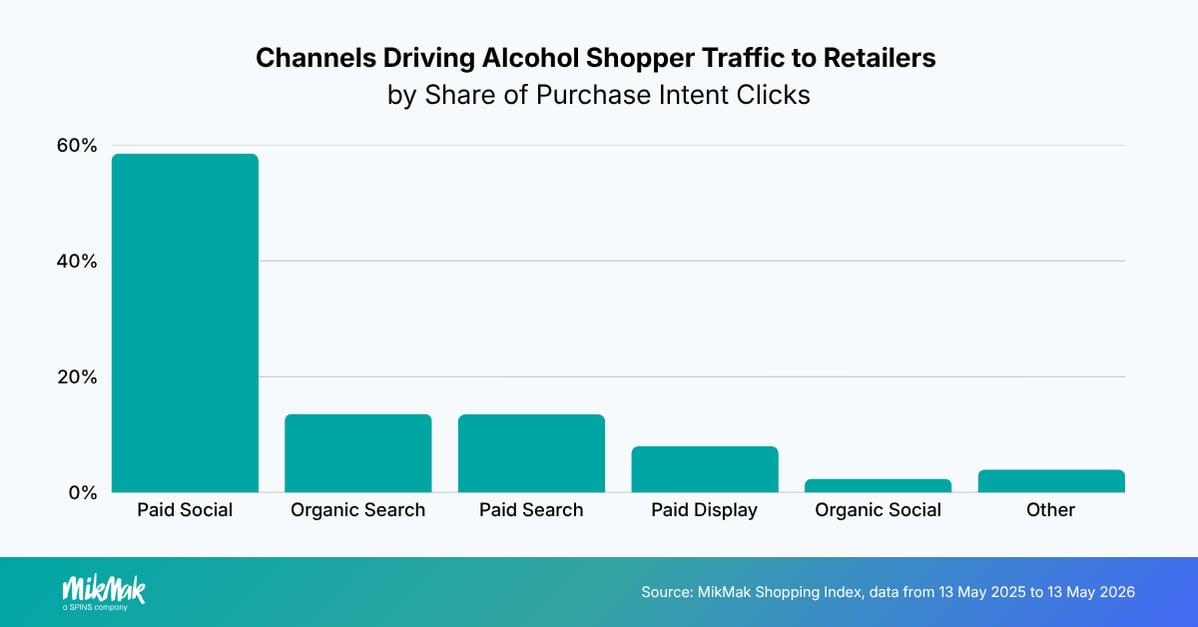
Today, paid social drives nearly 60% of global Alcohol shopper traffic to retailers from MikMak Commerce-enabled content, followed by organic search (13.6%) and paid search (13.5%). Display and other channels contribute smaller shares.
This reflects where Alcohol brands are currently concentrating investment while reinforcing that commerce impact often begins earlier in the consumer journey than traditional measurement captures.
Commerce Performance Varies by Campaign Objective
Awareness, consideration, and conversion campaigns each play a different role in driving shopper engagement. Campaign objectives, alongside the design of the shoppable experience itself, have a significant impact on commerce performance.
MikMak data shows that Awareness campaigns currently generate the largest share of commerce engagement for Alcohol brands, accounting for 50.3% of Commerce Loads* from MikMak-enabled media. Conversion campaigns represent 42.4%, while Consideration campaigns account for 7.3%.
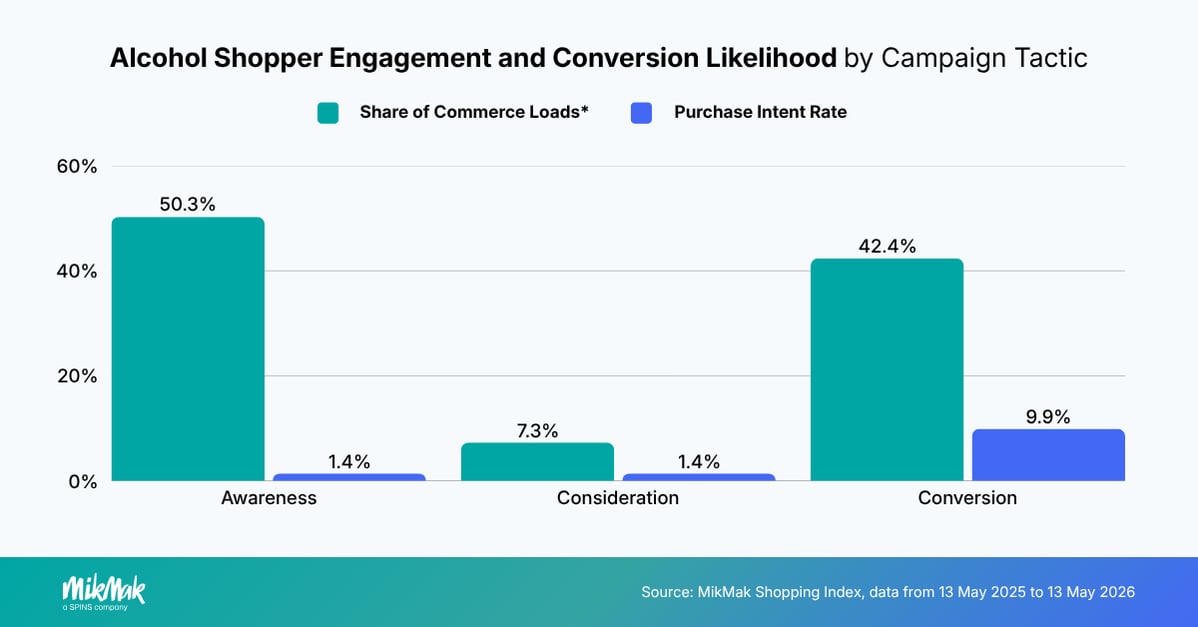
*Commerce Loads indicate the number of times a MikMak Commerce experience is opened.
The data highlights two important dynamics for Alcohol marketers:
- Awareness campaigns drive meaningful commerce engagement, reinforcing the value of making upper-funnel media shoppable.
- Conversion campaigns generate substantially higher Purchase Intent Rates. At 9.9%, they nearly match the average conversion likelihood seen on Alcohol brand websites (10.2%) while benefiting from significantly broader reach.
Together, this signals a major opportunity for Alcohol brands to drive incremental retailer traffic directly from media environments rather than relying primarily on brand websites as the commerce destination.
More broadly, media, brand websites, and retailer destinations are increasingly operating as interconnected conversion paths rather than isolated funnels.
“The funnel is no longer a linear thing, and consumers can really turn into shoppers virtually anytime, anywhere. I see it as our job to be visible and present in all of those moments, while also enabling consumers to shop in those moments.”
Jack Slattery, Senior Director, eCommerce
Paid Social Efficiency Depends on Campaign Objective
Meta currently delivers the highest overall Purchase Intent Rate among major paid social platforms at 6.8%, followed by Pinterest (2.7%) and YouTube (1.6%).
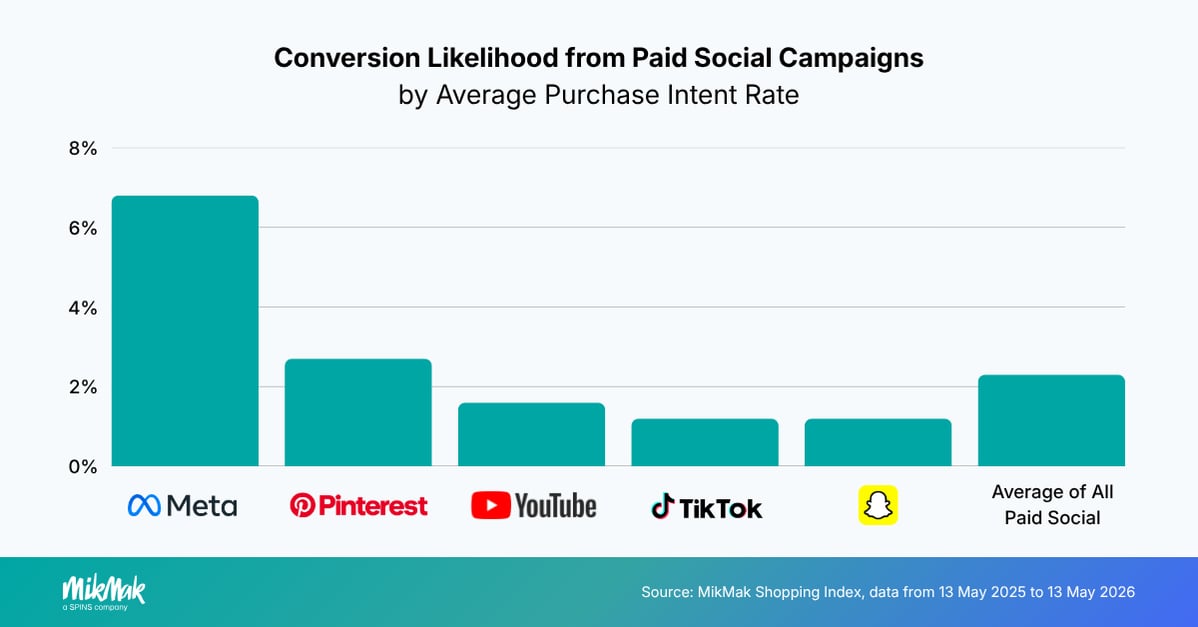
However, conversion efficiency varies by campaign objective. This year, Pinterest demonstrates the strongest performance within upper-funnel campaigns, while Meta outperforms across Conversion campaigns.
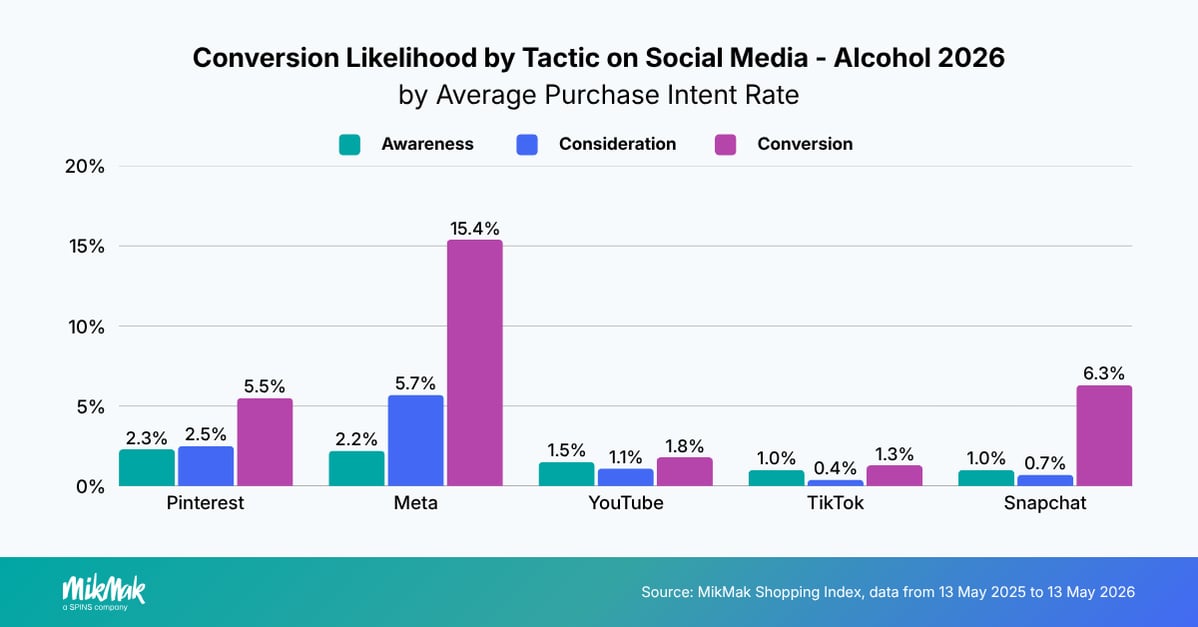
These trends highlight the importance of aligning commerce activation strategies with both platform behavior and campaign objectives rather than evaluating channels solely on traffic volume.
Seasonality and Demand Moments in Alcohol Commerce
MikMak Shopping Index data shows a consistent pattern in Alcohol shopper traffic, with demand building through summer and peaking during the year-end holiday season.
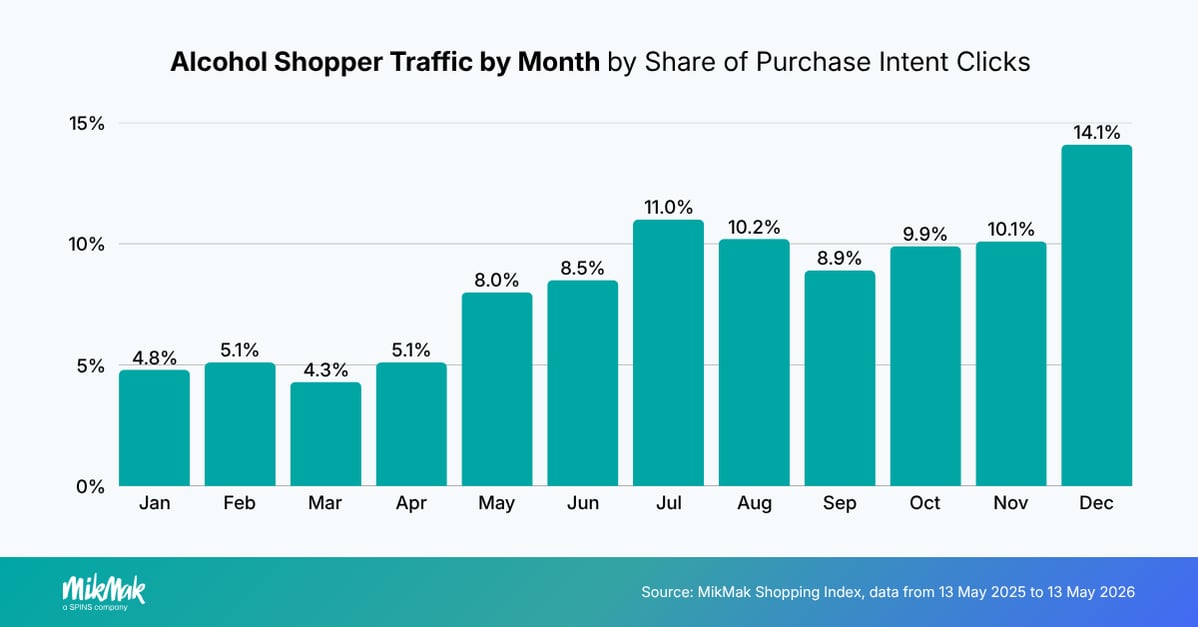
These peaks create opportunities for Alcohol brands to align media investment, messaging, and retailer activation with high-intent periods. However, demand patterns vary across markets and categories, making continuous performance visibility essential for optimization.
Cultural and Event-Driven Demand
Across markets, Alcohol demand is shaped by overlapping cultural, sporting, and seasonal cycles such as the Super Bowl, FIFA World Cup, summer sporting calendars, and year-end holidays. MikMak data shows shopper intent typically builds 1–2 weeks ahead of major consumption occasions.
As an illustration, May 2026 shows early pre-event demand patterns across markets:
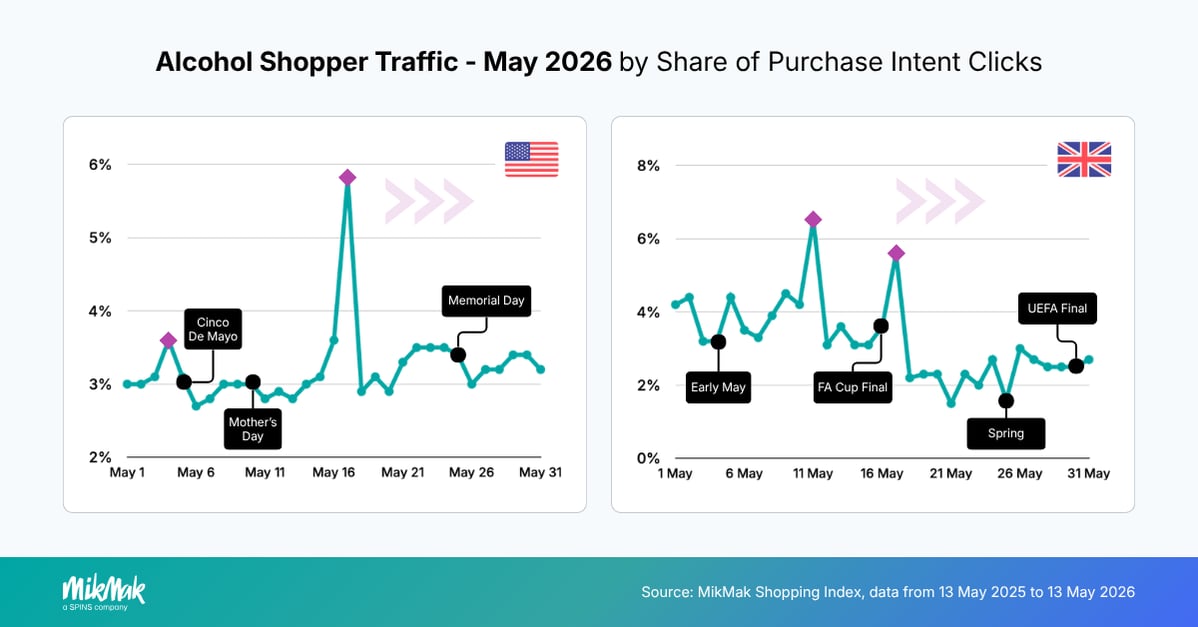
Monitoring seasonality alongside real-time purchase intent signals enables Alcohol brands to detect demand shifts early and allocate budgets dynamically, rather than relying on static planning calendars.
Navigating Compliance in Alcohol Commerce Marketing
Alcohol brands operate in one of the most highly regulated commerce environments. Advertising rules, retailer visibility, marketplace participation, and age-gating vary across countries, states, platforms, and retailer types. This creates a core challenge: scaling commerce performance while remaining compliant across all digital touchpoints.
Why Compliance Shapes Commerce Performance
Compliance directly shapes how Alcohol brands can activate omnichannel commerce experiences across markets and retailer ecosystems. It determines:
- Which retailers can be shown
- How many retailer options are displayed
- Whether marketplaces or delivery partners are eligible
- How age restrictions are enforced
- How compliance messaging is communicated
Because these rules vary by geography and channel, they shape how commerce experiences are designed and delivered.
Enabling Compliant Commerce at Scale
To scale effectively, brands need to be able to easily adapt commerce experiences to local requirements. MikMak enables this through configurable controls aligned with regional regulations:
- Tied-House Control: Adjust retailer availability by state
- Marketplace Control: Prioritize or restrict approved partners
- State Retailer Control: Configure retailer visibility by state and category
- Retailer Display Control: Standardize formats, including text-only where required
- Compliance Messaging: Localize messaging when options are limited
- Age Gate Control: Enforce market-specific verification (e.g., 18+ France, 21+ US)
Compliance enables consumer choice while meeting regulatory requirements.
“What MikMak does so well is you click our ad, and it will tell you where you can buy online, and it actually tells you which (retailer) is close by or the time it takes to deliver. It lets you have that option as a consumer while still being compliant with the respective laws and regulations around Alcohol.”
Kathleen Braine, CMO

Commerce Intelligence for Smarter Alcohol Marketing
Alcohol brands are increasingly expected to prove how media drives retail outcomes across omnichannel, multi-retailer ecosystems. But without clear visibility, optimization often defaults to surface-level engagement metrics.
MikMak Commerce connects media exposure to retailer engagement and collects first-party purchase intent data, helping brands understand performance across channels, retailers, and markets.
Moving Beyond Last-Click Measurement
Most Alcohol purchases are shaped across multiple touchpoints. Last-click attribution often undervalues upper-funnel influence. Commerce intelligence, with tools like MikMak, reveals which channels generate the most qualified shopper traffic and how each contributes to downstream retail outcomes.
Case Study: A Whiskey Brand Improved Media Performance Through Purchase Intent Optimization
By shifting its Meta conversion event to the MikMak Purchase Intent Click, a whiskey brand improved targeting precision and optimized media toward higher-quality commerce outcomes.
Results
- 1.5x higher click-through rate to retailers
- 3.8x higher performance vs their company average across activations
- 2.2x higher performance vs category benchmark
From Insight to Action
When used effectively, commerce data becomes a continuous optimization loop across channels, audiences, and retail partners. Brands use it to:
- Reallocate media toward higher-performing channels
- Refine audience targeting using purchase intent signals
- Optimize creative based on conversion behavior
- Strengthen retailer negotiations with first-party demand data
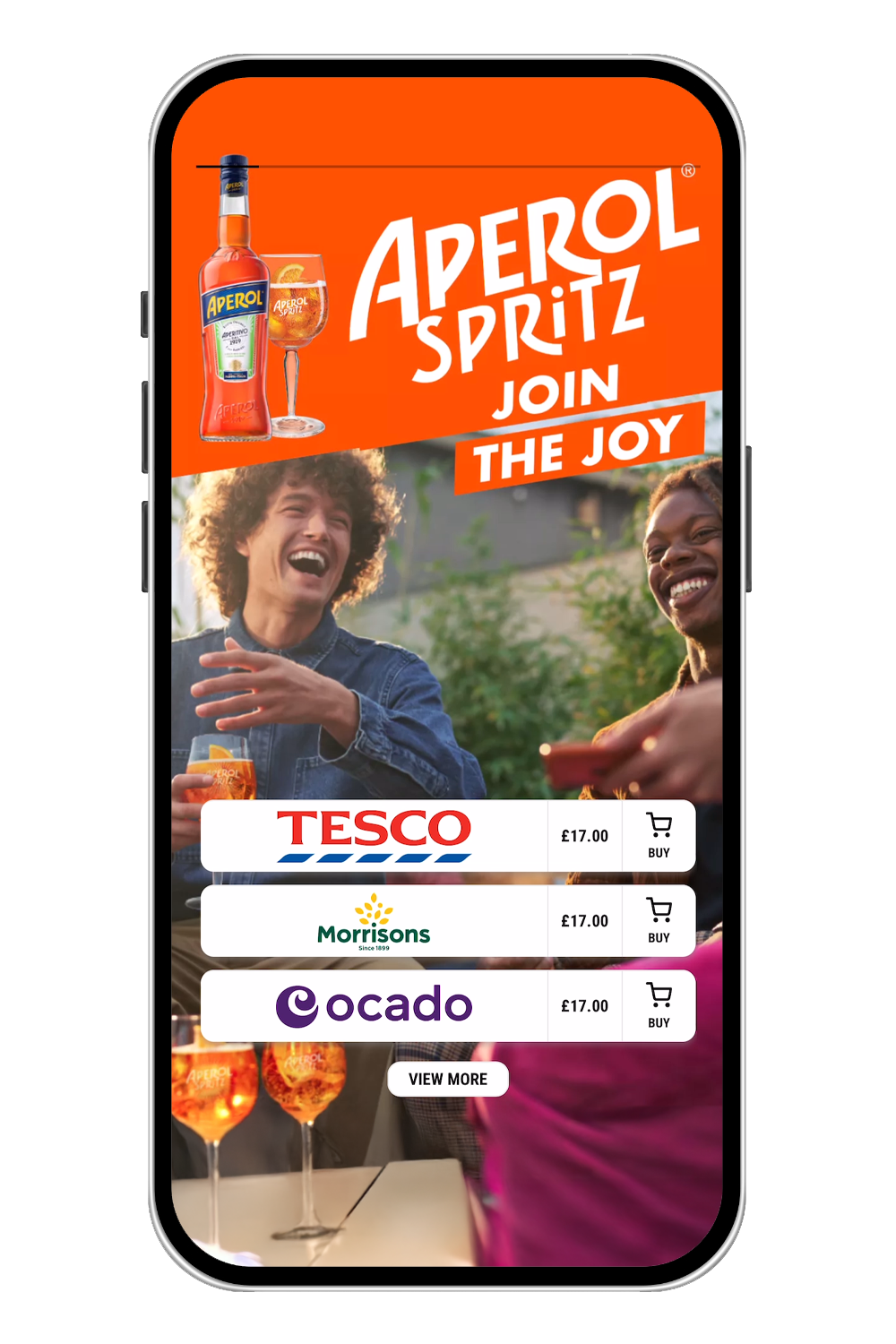
Case Study: Aperol Optimized Campaign Conversion Performance in Real Time
Aperol UK used MikMak Commerce insights to compare channel and creative performance and adjust its media strategy mid-campaign based on conversion behavior.
Results
- 2x more shopper traffic to retailers from in-feed ads vs reels
- 3.7x increase in click-through rates to buy from retailer partners
- 37% of shoppers chose Tesco as their preferred retailer
Centralizing Commerce Data for Faster Decisions
Commerce data delivers the most value when unified across channels, campaigns, audiences, and retailers. A centralized view enables brands to understand what is truly driving performance and where to adjust investment.
MikMak Insights brings this data together in a single global dashboard, enabling faster and more consistent decision-making across teams and markets. Recent innovations, including AI-assisted querying and predictive analytics capabilities such as MikMak Aura and Ask Mak, further reduce the time required to access and interpret performance data, accelerating the path from insight to action.
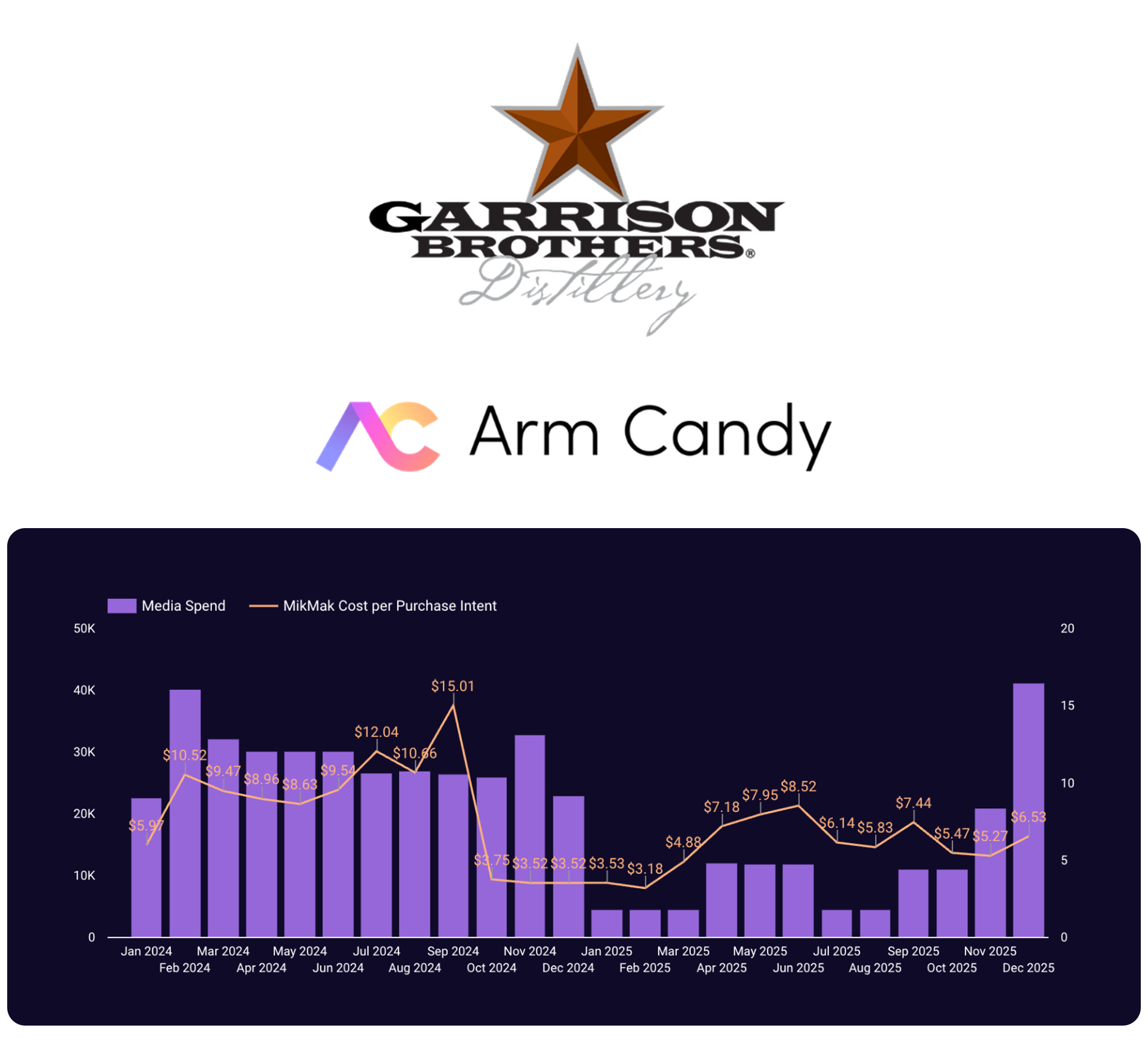
Case Study: Garrison Brothers Unified Commerce and Media Data for Faster Optimization
Garrison Brothers and their agency Arm Candy centralized commerce media performance and media spend reporting into a unified view via the MikMak Insights API.
This created a single source of truth for performance, enabling faster, more informed optimization across campaigns and seasonal shifts.
Results
- Unified data ecosystem
- 1 hour per week saved on reporting
- 10.7% decrease in costs
How High-Performing Alcohol Brands Activate Commerce
For Alcohol brands, high-performing commerce activation seamlessly connects discovery to retailer purchase paths across websites, media, and organic channels.
Building Commerce on Brand Websites
Brand websites are a key validation and conversion touchpoint. The goal is to make retailer options easy to find and act on throughout the journey.
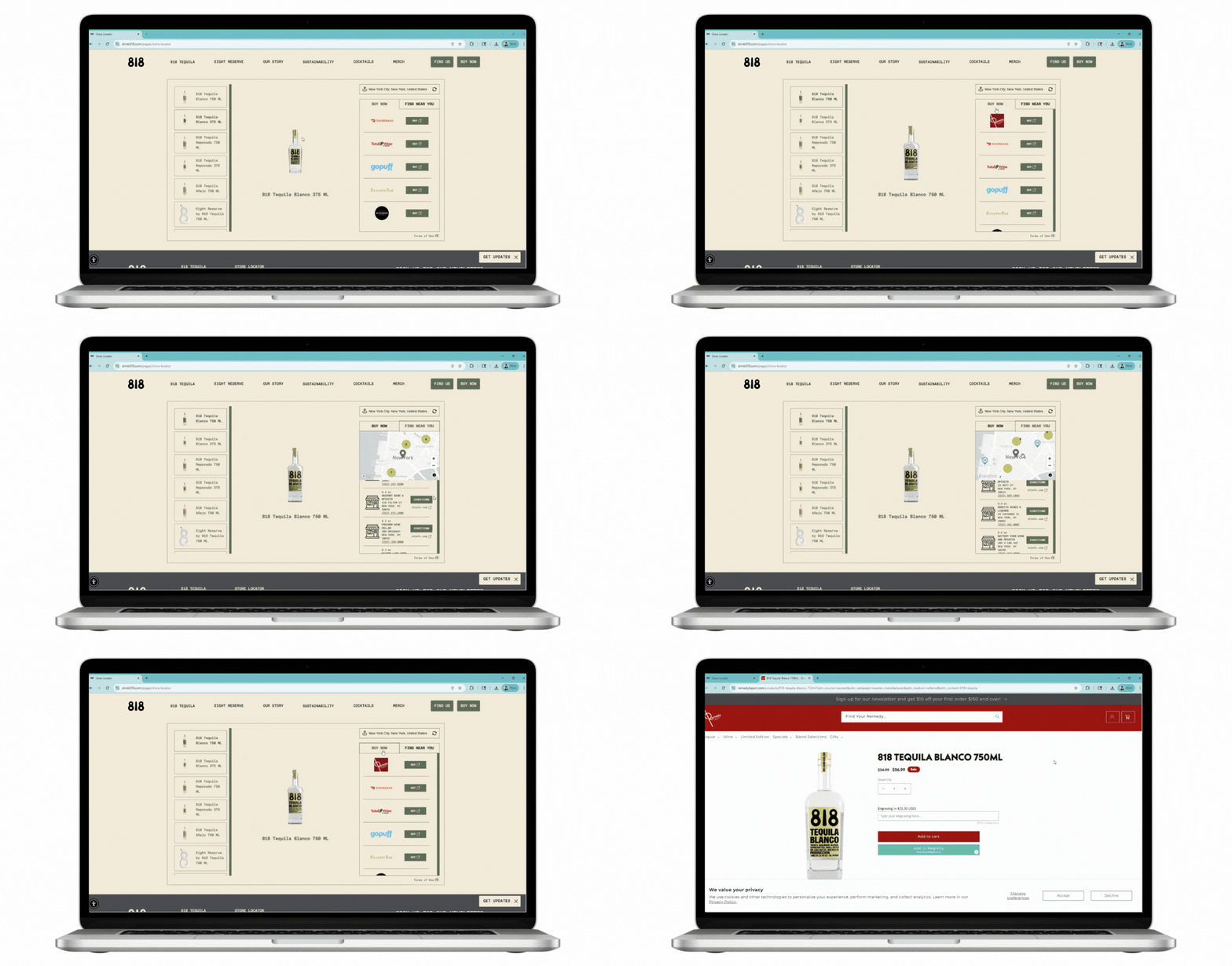
With MikMak Commerce, brands deploy “Where to Buy” experiences through:
- Dedicated landing pages
- Embedded product modules
- Pop-ins and slide-out drawers
These formats work together to create a consistent path to purchase across the website.
Watch how Alcohol brands enable commerce with MikMak on their brand websites.
Activating Commerce Within Media
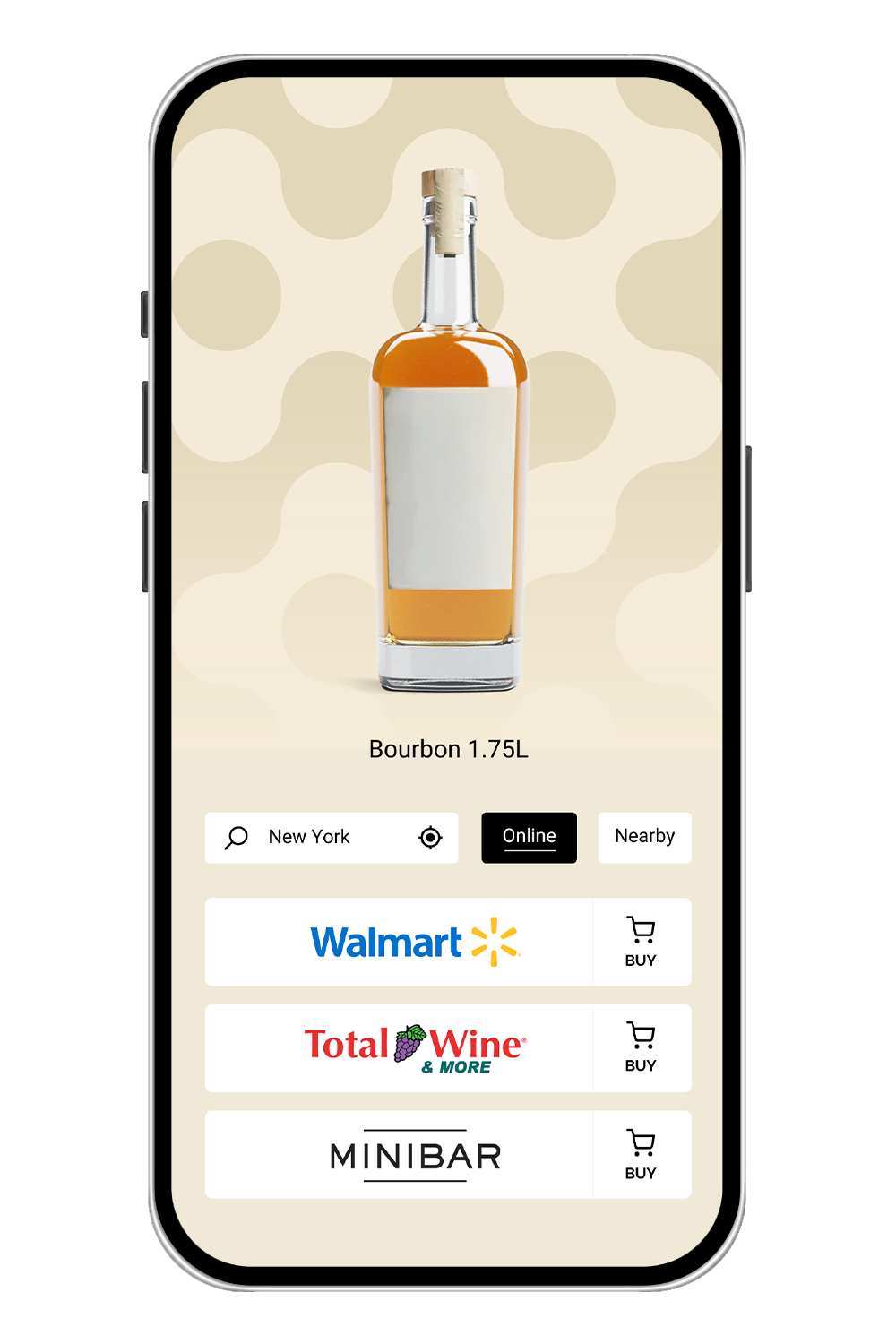
Shoppers increasingly discover Alcohol brands through multiple media touchpoints, yet many campaigns still stop at awareness. Leading brands enable commerce in media by:
- Embedding multi-retailer pathways directly in ads
- Reducing steps from discovery to purchase
- Optimizing for mobile-first experiences
- Testing creative and retailer configurations
MikMak Commerce enables shoppable experiences across social, video, display, and retail media, while capturing purchase intent before shoppers reach a brand website.
Examples
- Angry Orchard: Instagram activation with online and offline retailer options
- Don Julio Canada: Facebook activation with video-led checkout experiences

Extending Commerce Beyond Paid Media
Leading Alcohol brands extend commerce into organic and owned channels to capture intent without incremental media spend.
This includes:
- Link-in-bio experiences
- Influencer and creator pathways
- Shoppable organic social content
- CRM and email integration
By embedding retailer access across organic touchpoints, brands reduce friction and turn engagement into measurable commerce action.
Brand Example: On The Rocks activated shopping options from both Link in Bio and Story Highlights
As Alcohol purchase paths diversify, the strongest-performing brands build connected commerce experiences across every touchpoint into a unified omnichannel commerce experience.
Turning Commerce Marketing Into a Competitive Advantage
Consumer journeys now span media, retail, marketplaces, and owned channels, while regulatory and economic pressures increase expectations for measurable marketing performance.
Media drives discovery and traffic at scale, while brand websites capture higher-intent shoppers closer to conversion. Retailer choice varies significantly by market and occasion, and seasonal and cultural moments create predictable demand spikes. Commerce intelligence is essential for navigating this complexity and improving performance.
The Alcohol brands winning today aren't simply investing more. They're building connected commerce ecosystems that link every touchpoint to measurable retail outcomes.
They understand:
- Media creates demand
- Brand websites capture demand
- Retailers fulfill demand
- Commerce intelligence connects it all
As shopper journeys become more fragmented and regulations become more complex, brands that can connect marketing performance to retail sales will gain a significant competitive advantage.
The question is no longer whether commerce should be part of your marketing strategy.
It's whether your current strategy gives you enough visibility to optimize and scale.
Explore our full guide to eCommerce Enablement for best practices in building a connected, multi-retailer commerce strategy.
