
Tesco Outlook: What Shopper Intent Data Reveals About How Consumers Shop
As the UK’s largest Grocery retailer, Tesco is capturing a growing share of shopper traffic from brands’ shoppable content, according to MikMak Shopping Index data. Over the past year, its share of Purchase Intent Clicks among UK Food and Beverage retailers increased by nearly 40%.
But where that purchase intent comes from, and when it peaks, is changing too. Social platforms are gaining ground, category demand is shifting, and seasonal patterns aren't necessarily repeating year over year.
We looked at the signals shaping shoppers' paths to Tesco and what they could mean for brands planning media, commerce and retailer strategies.
Tesco Captures the Most UK Food and Beverage Shopper Traffic from Shoppable Brand Content
In MikMak’s Food and Beverage Commerce Outlook 2026, Tesco captured the largest share of shopper traffic from MikMak Commerce-enabled brand content among UK Grocery retailers. Its share of Purchase Intent Clicks* increased from 24.6% to 34.4% year over year, highlighting Tesco’s growing role in the path to purchase for Food and Beverage brands.
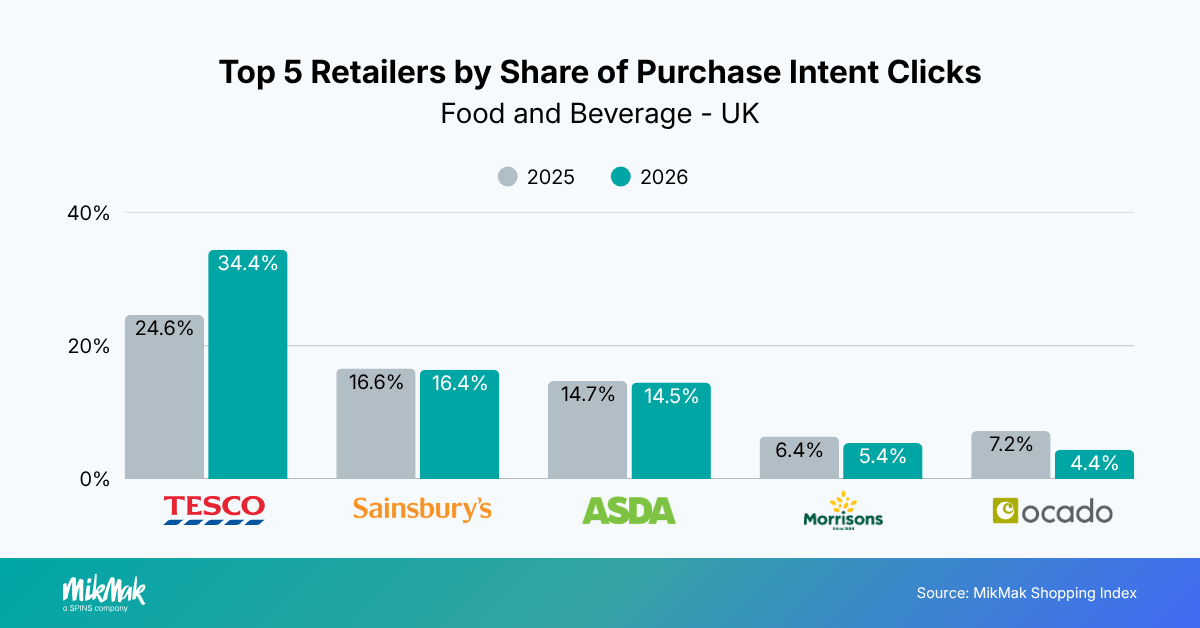
*Purchase Intent Clicks: Measures high-intent shopper traffic by counting the number of times a shopper clicks through to at least one retailer during a single session within MikMak Commerce-enabled brand content.
Understanding which channels, products, and campaigns drive shopper traffic to retailers helps multichannel brands identify growth opportunities and make more informed decisions with key retail partners such as Tesco.
Paid Social Now Drives Half of Shopper Traffic to Tesco
Paid social increased its share of Purchase Intent Clicks to Tesco from 45.0% to 50.5% year over year, making it the largest source of shopper traffic from MikMak Commerce-enabled brand content from October 2025 to September 2026.
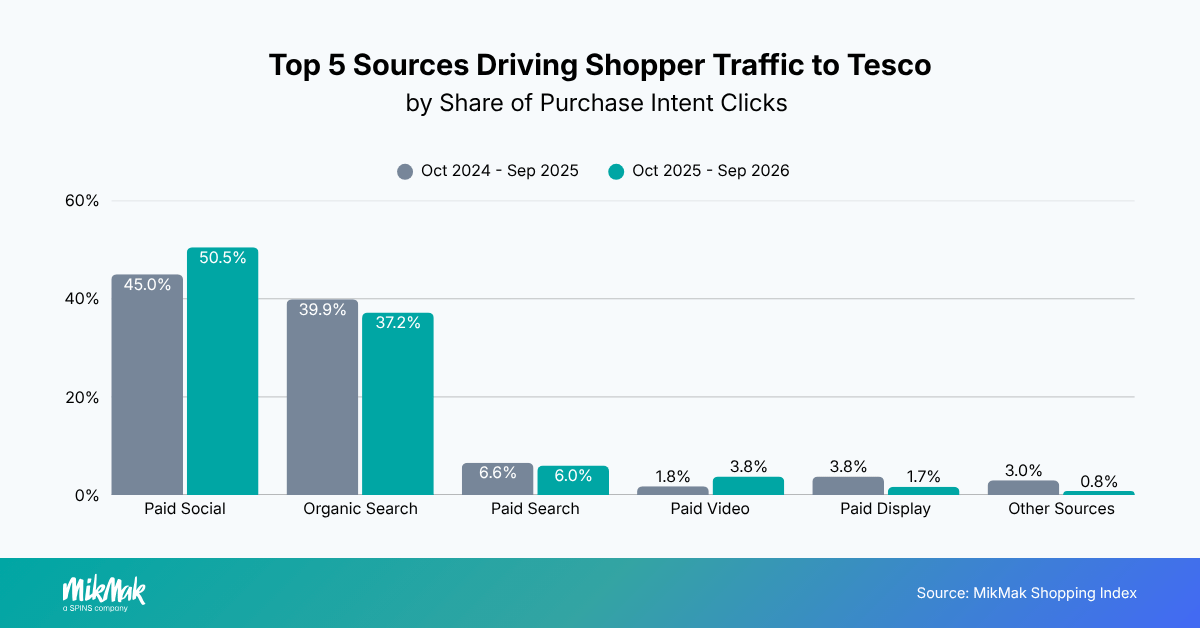
Organic search remained the second-largest source, generating 37.2% of Purchase Intent Clicks, although its share declined from 39.9%. Together, paid social and organic search accounted for 87.7% of all Purchase Intent Clicks to Tesco this year, highlighting the role of both social discovery and active product search in the path to purchase.
Other paid channels played smaller but changing roles. Paid video more than doubled its share of Purchase Intent Clicks, from 1.8% to 3.8%, while paid display declined from 3.8% to 1.7%. Paid search remained relatively stable at 6.0%, compared with 6.6% in the previous year.
These shifts reflect both changes in brand investment across channels and differences in how shoppers engage with those channels on their path to Tesco.
Meta and TikTok Are Gaining Ground on Google
Looking at individual media platforms, Google remained the largest source of shopper traffic to Tesco, accounting for 42.1% of Purchase Intent Clicks in the past 12 months. However, its share fell from 47.3% previously.
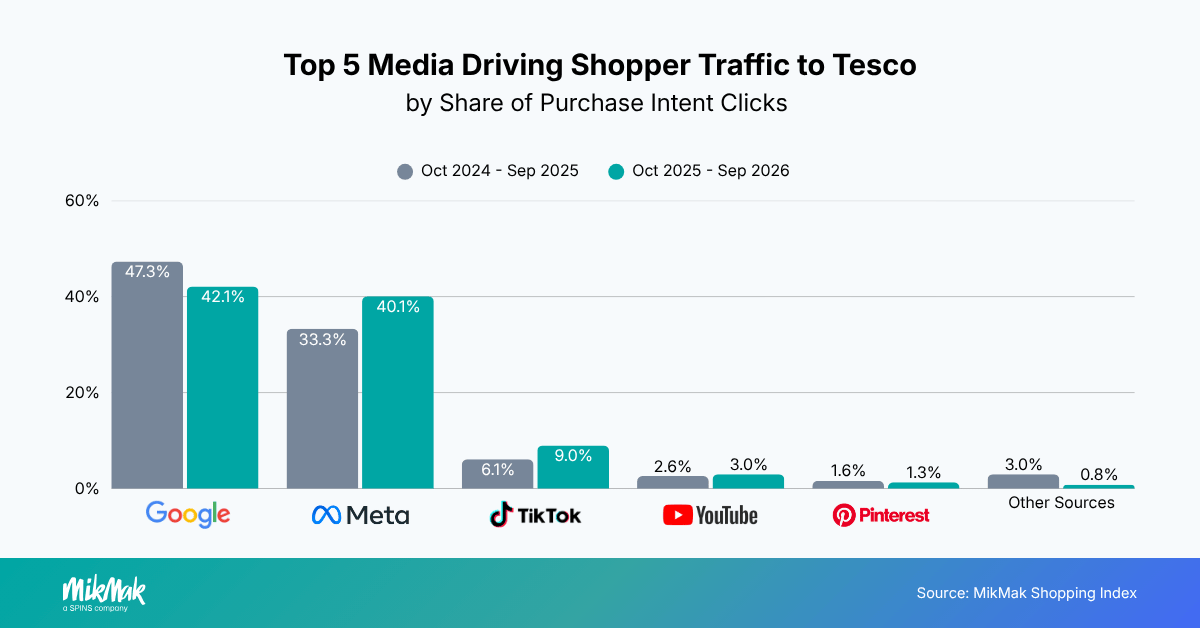
Meanwhile, Meta increased its share from 33.3% to 40.1% year over year, narrowing the gap with Google. TikTok also grew, from 6.1% to 9.0%, while YouTube remained relatively stable at 3.0%.
The trend indicates a growing role for social platforms in driving shopper traffic to Tesco. Search continues to account for a significant share of shopper traffic to Tesco, while Meta and TikTok are capturing a larger share of traffic from shoppable brand content.
Food and Personal Care Continue to Lead Shopper Traffic to Tesco, but Other Categories Are Moving
The categories driving shopper traffic from brands’ shoppable content to Tesco remained fairly consistent year over year. Food and Personal Care held the top two positions, continuing to account for the largest share of Purchase Intent Clicks.
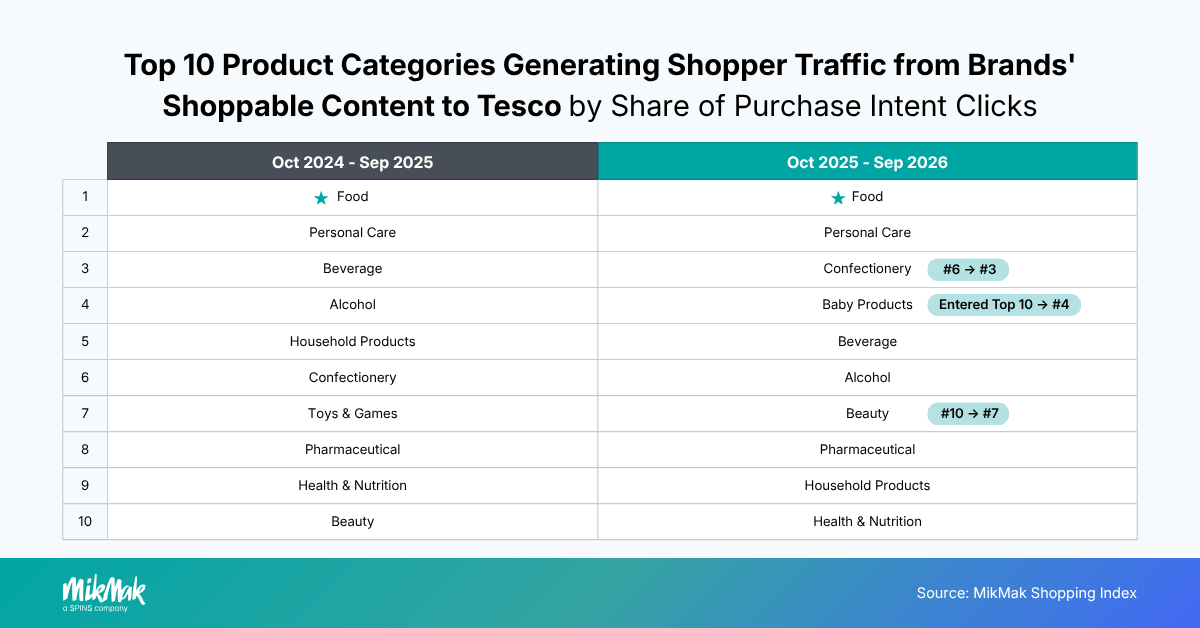
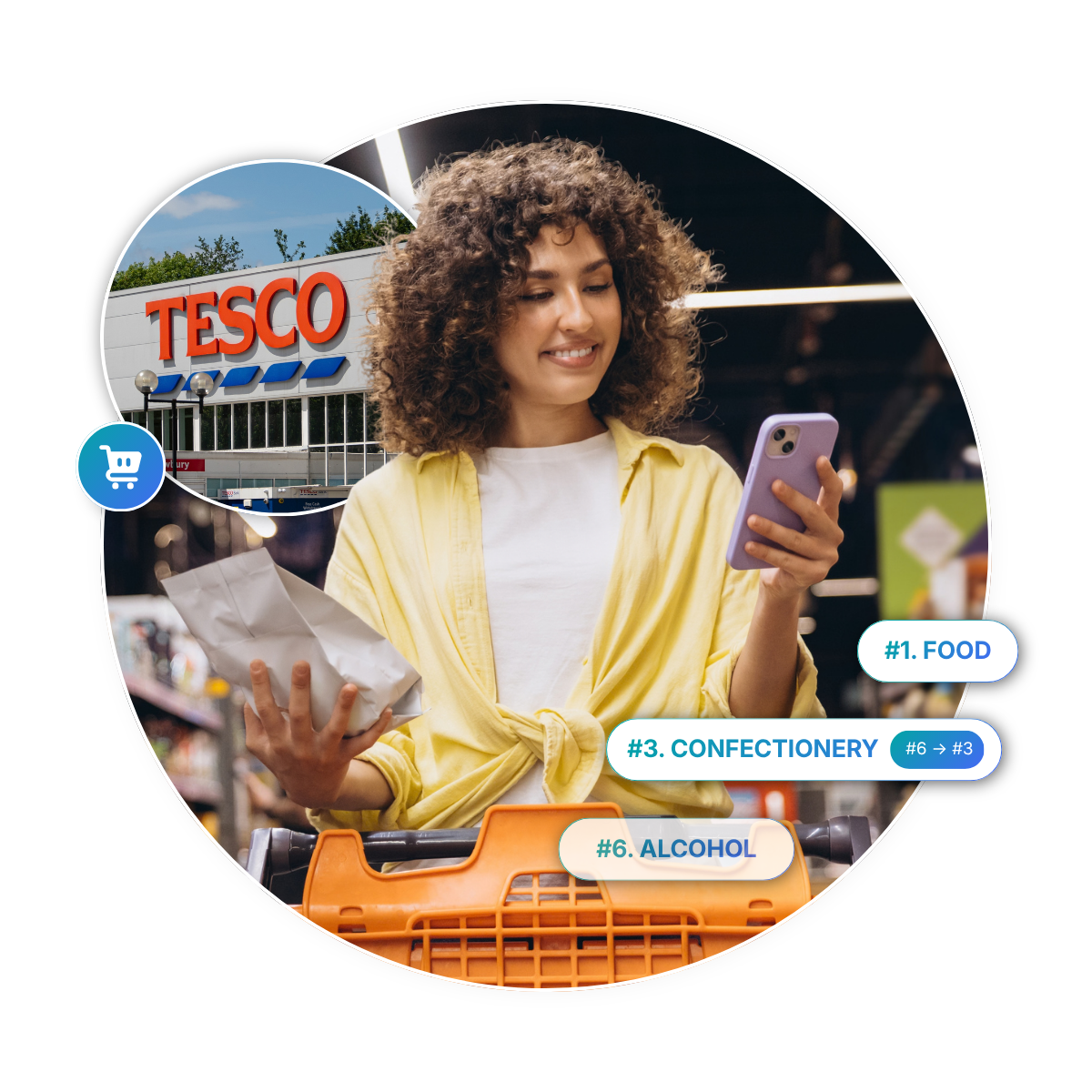
Further down the ranking, Confectionery moved from sixth to third in 2026, while Baby Products entered the top 10 at fourth place. Beauty also moved up, from tenth to seventh. Overall, the category mix remained relatively stable.
Shopper Traffic to Tesco Peaks Around Key Seasonal Moments
Shopper traffic to Tesco from brands’ shoppable content follows a clear seasonal pattern, with December and the summer months consistently among the stronger periods. However, the timing and intensity of activity varied between the two 12-month periods.
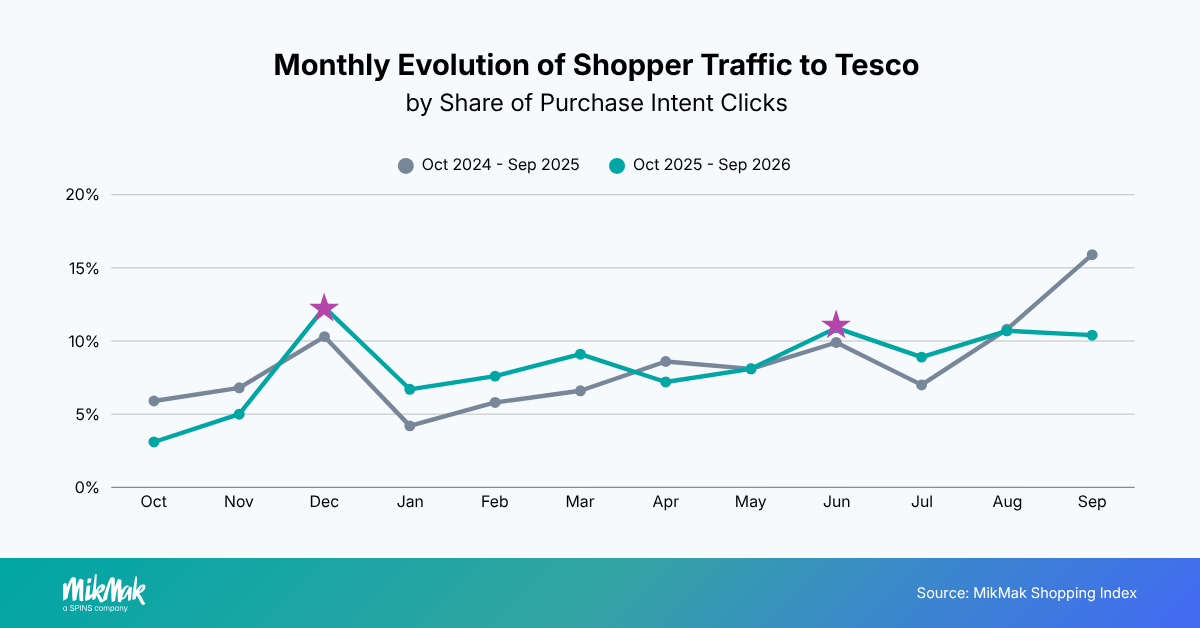
December remained a key peak, increasing its share from 10.3% to 12.3% of annual Purchase Intent Clicks. Shopper traffic was also higher year over year from January through March, with March rising from 6.6% to 9.1%.
The biggest change came towards the end of the year. September accounted for 15.9% of Purchase Intent Clicks in 2025, but 10.4% in 2026, while August remained almost unchanged at around 11% year over year. This suggests that shopper traffic was more evenly distributed from October 2025 to September 2026 than in the previous 12-month period.
Weekly Peaks Highlight Key Seasonal Shopping Moments
Looking at Purchase Intent Clicks by week adds more detail to the seasonal pattern. In the latest 12-month period, shopper traffic was highest in June, with the strongest week occurring on 10 June 2026. The surrounding weeks were also relatively high, suggesting a broader period of increased shopper traffic rather than a single spike.
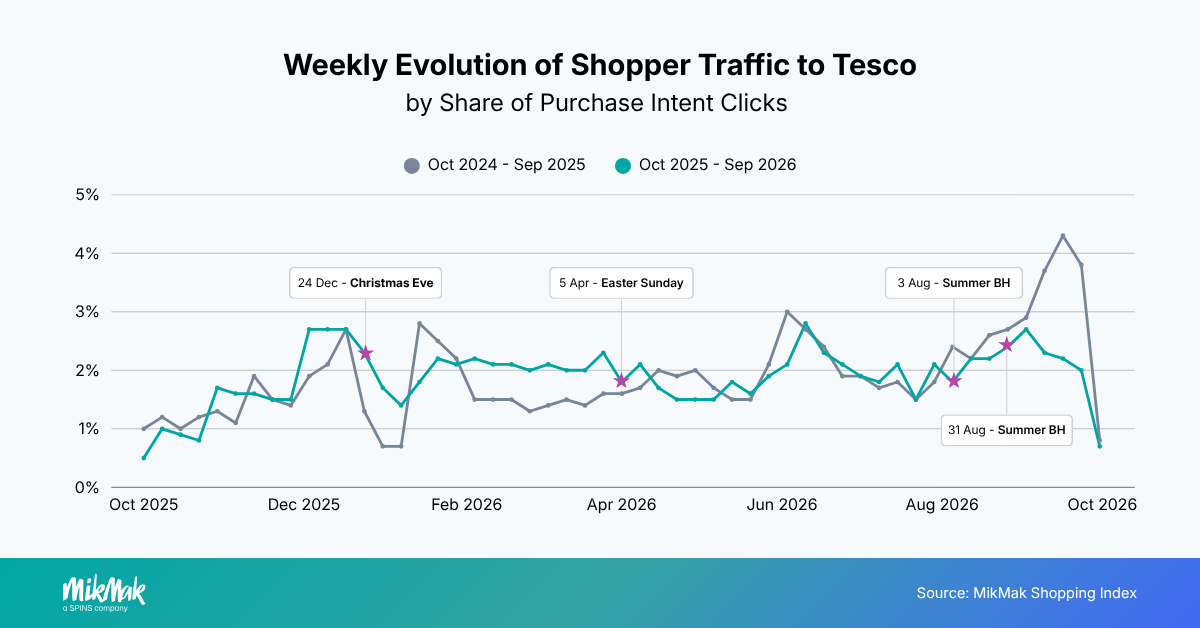
December showed the most consistent weekly peak, with three consecutive weeks of higher shopper traffic ahead of Christmas. Other peaks aligned with seasonal moments, including Easter in early April and the Summer Bank Holiday period in August.
The weekly data reinforces the broader seasonal pattern, while showing that the timing and intensity of peaks vary from year to year and week to week.
How Brands Can Turn Tesco Shopper Intent Into Action
The Tesco data highlights how shopper intent varies across media, categories, and seasons. For brands looking to strengthen their marketing and commerce strategy with Tesco, four areas stand out.
1. Bring Shopper Signals Into Retailer Conversations
Understanding where shoppers choose to buy online and in-store, which categories are generating interest, and when activity peaks gives brands a more detailed view of the shopper journey to Tesco. These commerce signals support brands in joint business planning conversations with retailers, helping marketers connect brand and media activity with retailer-specific shopper behaviour.
As Simon Vignon, Senior Digital & E-commerce Associate at Elanco, explains:
"When we go into our retail meetings [with MikMak data], it really elevates the level of conversation that we're able to have. We go from talking about, you know, brand-level awareness tactics to, now we can talk about purchase-level data and what the shopping journey looks like. It just kind of opens up a whole new conversation and strengthens the relationship.”
Simon Vignon, Senior Digital & E-commerce Associate

2. Plan Around Changing Shopper Behaviour
The year-over-year changes in Tesco traffic show why seasonal planning should go beyond fixed assumptions. December remains an important period, while summer and other retail moments can also generate higher shopper activity. Monitoring shopper intent over time allows brands to spot, in real time, when retailer consideration is building and adjust activation plans accordingly.
Glade’s UK winter campaign provides an example of how shopper engagement data can support a more connected approach across retailers.
Case Study: How Glade Connected Shopper Engagement Across Retailers
Working with Omnicom Media and MikMak, Glade used retailer data from Tesco, Sainsbury’s and ASDA to target relevant shopper audiences, then used MikMak Commerce shoppable technology across those activations to capture first-party engagement data, identify cross-retailer audience overlap and build a qualified retargeting pool.
Results:
- +13% growth at Tesco during peak trading
- +12% total sales uplift at Sainsbury’s, driven by a 5% increase in unique shoppers
- 74% higher revenue per user from shoppers exposed across multiple activations
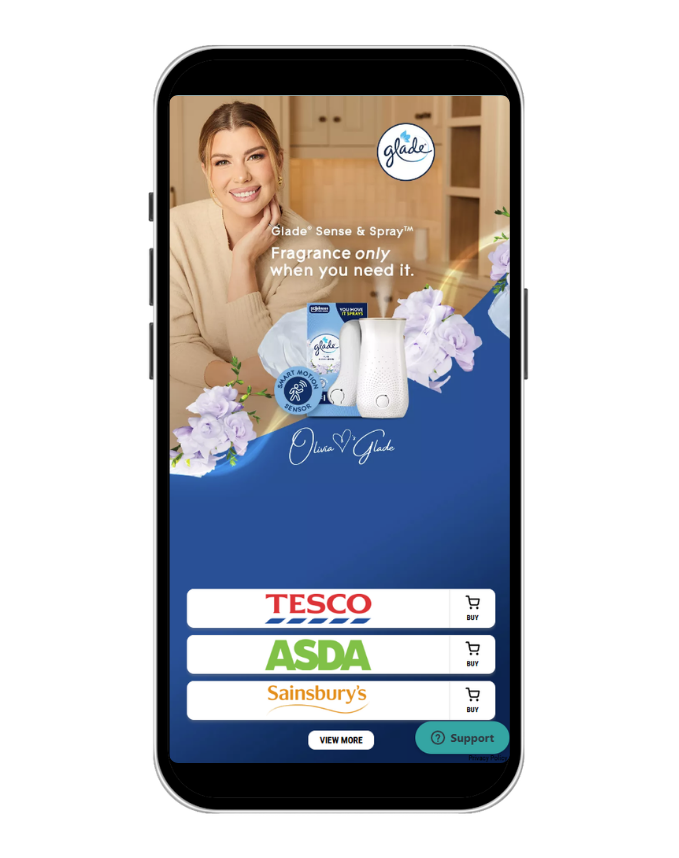
This example shows how brands can look beyond individual retailer campaigns and use shopper engagement data to connect activations across the wider retail landscape.
3. Identify Category Opportunities
Food and Personal Care continued to generate the largest share of shopper traffic to Tesco, while categories such as Confectionery, Baby Products and Beauty changed position in the latest period.
Tracking these signals helps brands notice where shopper interest is changing and where there may be new opportunities to explore with Tesco. Combining shopper intent data with category and campaign performance gives marketers a clearer view of where to focus.

Matthew Graham, CMO | 
4. Connect Media Planning to Retailer Outcomes
Paid social accounted for more than half of Purchase Intent Clicks to Tesco this year, while Meta and TikTok both gained share. Measuring these trends alongside shopper intent allows brands to understand how media activity contributes to commerce outcomes at their retailers.
What Changing Shopper Intent Means for Brands
Tesco is capturing a growing share of shopper traffic from brands' shoppable content, but the signals behind that growth aren't standing still. Paid social is gaining ground, category interest is shifting, and even familiar seasonal peaks can look different from one year to the next.
For brands, that makes shopper intent more than a performance metric. Tracking where demand is forming, what shoppers are looking for, and when consideration is rising helps teams make smarter media decisions and bring stronger evidence to retailer planning.
See how MikMak can help you understand the shopper signals shaping your brand’s commerce with Tesco.
