
For commerce growth, knowing which channels drive the most shopper traffic is only part of the challenge for Wellness and Nutrition brands. Brands also need to understand how shoppers engage after the first interaction, where they click through to retailers, when purchase intent is highest, and how that behaviour can change over time.
MikMak data from August 26, 2025 to August 26, 2026 provides insights into these different parts of the shopper journey, highlighting four key findings about how Wellness and Nutrition shoppers move from discovery to purchase.
1. Brand Websites Capture High Purchase Intent, while Media Creates Scale
Brand marketers often debate whether they should invest more in driving traffic to brand websites or offer shoppers retailer checkout options directly from digital media campaigns.
MikMak benchmarks show that these touchpoints work best together, forming a connected commerce ecosystem. Brand websites can provide a deeper environment for shoppers already considering a product, while shoppable media can connect a much larger audience directly to retailer purchase options.
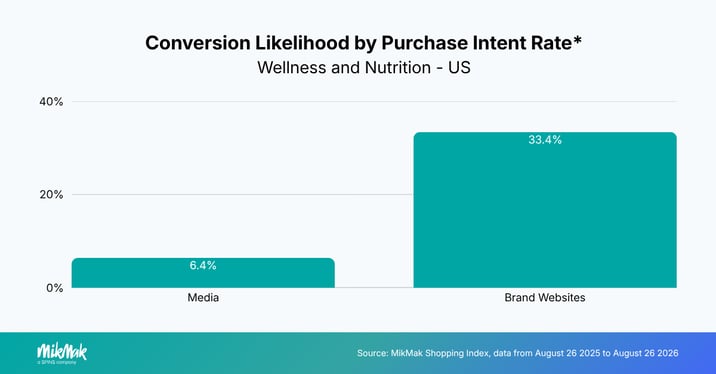
*Purchase Intent Rate: Measures the percentage of shoppers who click through to at least one retailer within MikMak Commerce-enabled brand content, signaling a strong conversion likelihood.
Media recorded an average Purchase Intent Rate of 6.4%. While this is lower than the rate for brand websites, media reaches shoppers at a much greater scale across social, search, video, and display. Making these experiences shoppable gives consumers a direct path from product discovery to a retailer, while giving brands a way to connect media engagement with downstream purchase signals.
The average Purchase Intent Rate on brand websites was 33.4%. They attract much less shopper traffic than media, but visitors are more likely to click through to a retailer. Shoppers may be looking for more information about a product, its ingredients, or benefits before deciding where to purchase.
Beyond creating more opportunities to convert, making both touchpoints shoppable gives marketers greater visibility into shopper behaviour, helping them understand how media and brand experiences contribute to commerce outcomes at retailers.
2. Paid Social Drives the Majority of Shopper Traffic, but Purchase Intent Varies by Platform
Paid social accounted for 88.1% of shopper traffic to retailers from MikMak Commerce-enabled brand content, measured by Purchase Intent Clicks. This is well ahead of paid search at 3.7%, organic search at 3.1%, paid video at 2.9%, and paid display at 1.3%.
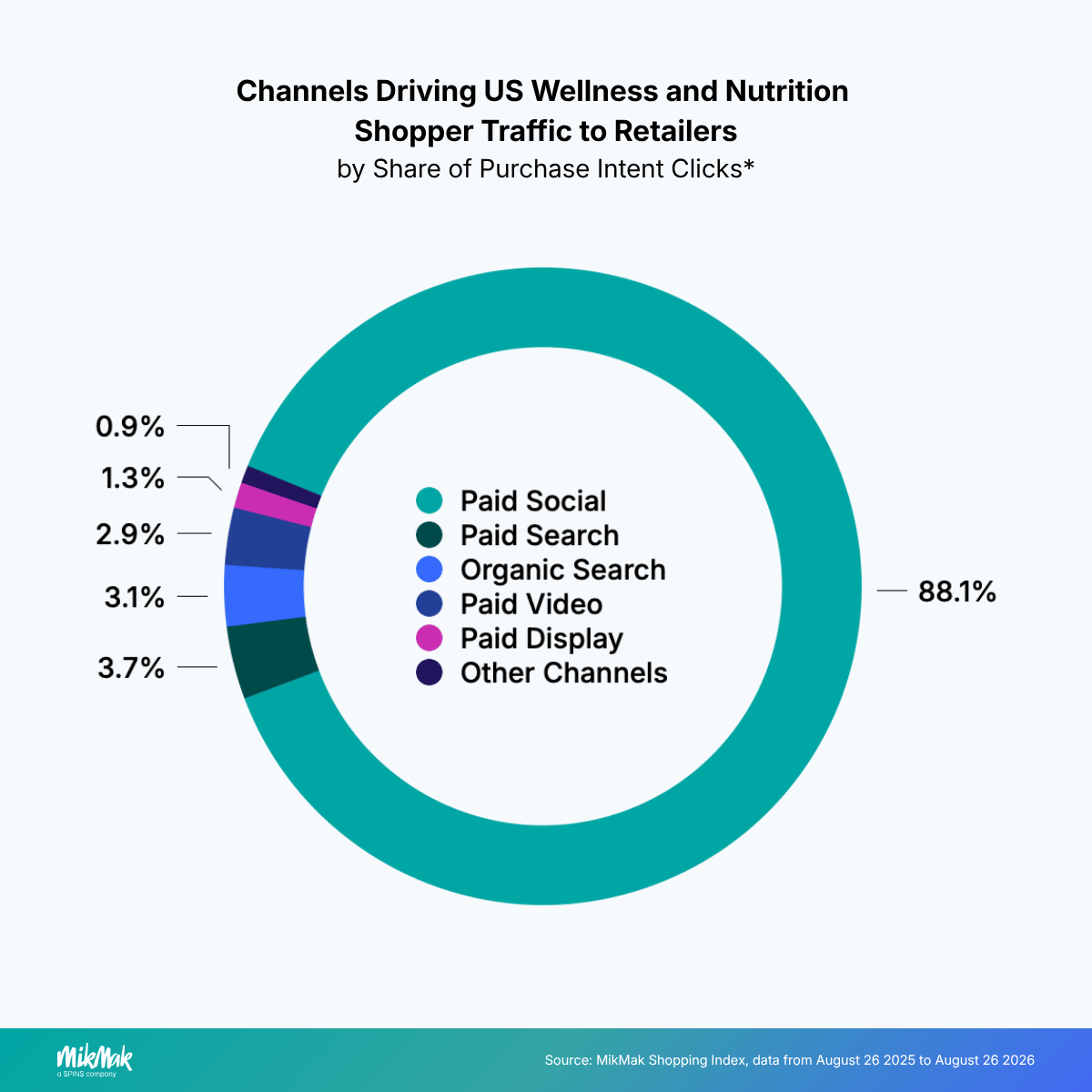
*Purchase Intent Clicks: Measures high-intent shopper traffic by counting the number of times a shopper clicks through to at least one retailer during a single session within MikMak Commerce-enabled brand content.
This distribution reflects a combination of factors, including media investment, channel mix, seasonality, product mix, and brand activation. However, looking at traffic volume alone does not tell the whole story.
TikTok Drives Volume While YouTube and Meta Show Stronger Purchase Intent Rates
TikTok accounted for 69.5% of Purchase Intent Clicks, followed by Meta at 17.6% and Google at 6.2%.
When we look instead at average Purchase Intent Rate across paid social platforms, the picture changes:
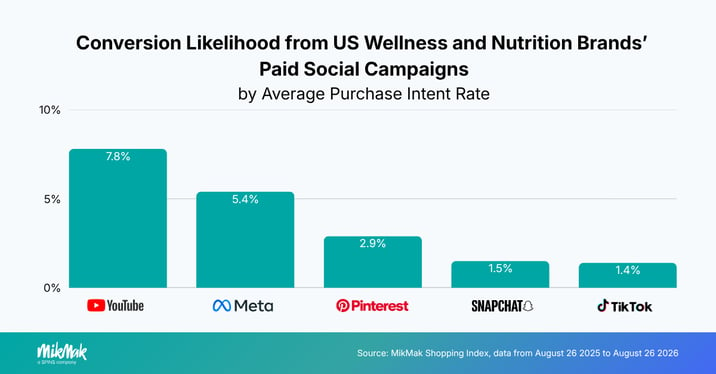
This highlights an important distinction for media planning: the platform generating the most shopper traffic is not necessarily the platform with the highest Purchase Intent Rate.
Campaign objectives and how campaigns are set up can also affect these results. Awareness, consideration, and conversion-focused campaigns may generate different patterns of shopper engagement, so platform performance should be considered in the context of the objective and campaign strategy.
For Wellness and Nutrition brands, looking at both measures provides a more complete picture: where shopper traffic is coming from and how likely that traffic is to click through to a retailer. These signals can then be considered alongside the specific objectives and setup of each campaign.
3. Where Wellness and Nutrition Shoppers Choose to Buy
Where do Wellness and Nutrition shoppers go when they’re ready to buy?
Across MikMak Commerce-enabled brand campaigns, Purchase Intent Clicks have been concentrated among major retailers and marketplaces in 2026:
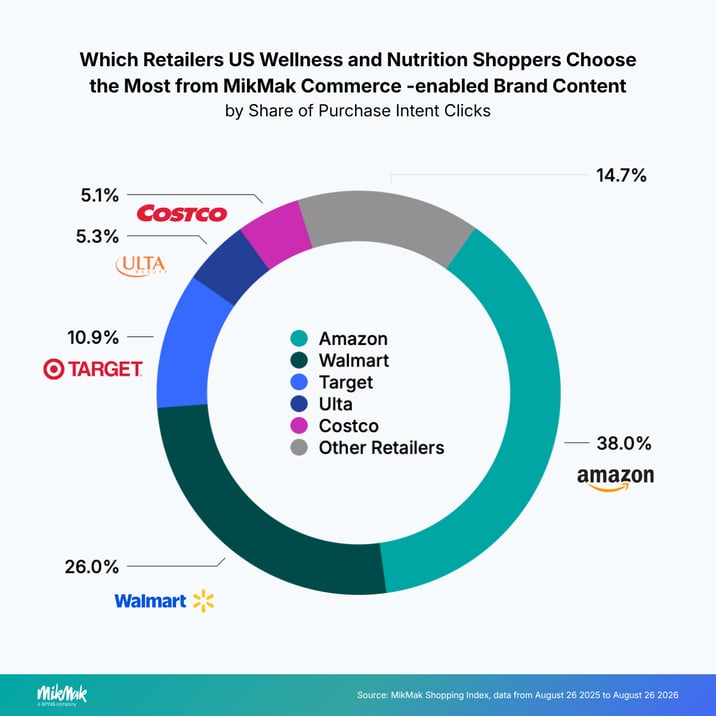
Amazon and Walmart together accounted for 64.0% of Purchase Intent Clicks.
At the same time, the remaining 36% was spread across Target, Ulta, Costco, and a wider range of retailers. This mix highlights the importance of giving shoppers choice rather than limiting them to a single destination.
A shoppable experience that connects consumers to relevant retailers creates a more seamless path from product discovery to purchase, while adapting to shopper preferences.
4. Purchase Intent Peaks in Spring and Early Summer
The largest shares of Purchase Intent Clicks in the measured period occurred in May (18.7%) and June (24.1%), which together represented 42.8% of total Purchase Intent Click volume. The lowest monthly shares were recorded at the beginning of the year, in January (1.9%) and February (2.7%).
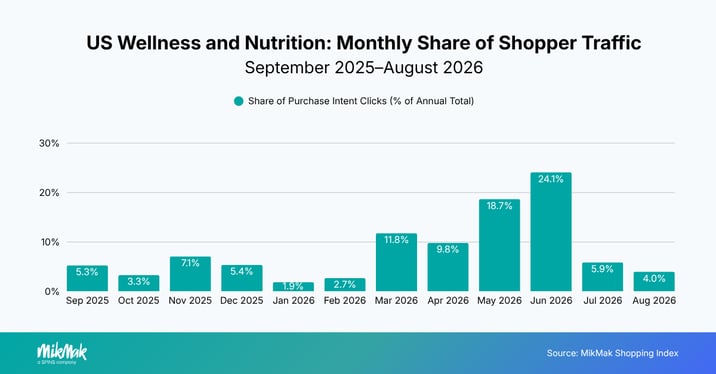 The data shows a noticeable increase in Purchase Intent Click volume from March through June, followed by a decline in July and August.
For marketers, the implication is less about following a fixed seasonal calendar and more about understanding when shoppers are showing stronger purchase intent, both historically and in the current market.
Use Real-Time Signals to Plan for Changing Demand
Historical commerce data can show when purchase intent has increased in the past, but it cannot capture everything happening in the market today. Predictive intelligence can bring current market signals into the picture, helping brands explore how changing conditions and different media scenarios could affect retailer sales.
For Wellness and Nutrition brands, this means looking beyond historical seasonality and using current signals to inform media planning as demand changes.
Connected Commerce Requires a View Across the Full Shopper Journey
Wellness and Nutrition shoppers move across multiple channels on their path to purchase.
A shopper might discover a product through TikTok, visit a brand website to learn more, use search to compare options, and ultimately click through to Amazon, Walmart, or another retailer. Looking at any one of these interactions in isolation can leave important gaps in the picture.
The data shows why brands need to understand:
- Where shopper traffic comes from
- Which channels generate stronger purchase intent
- How shoppers move from brand content to retailers
- Which retailers receive the resulting Purchase Intent Clicks
- When purchase activity changes throughout the year
Connecting these signals gives marketers a more complete view of commerce performance and a stronger foundation for making media and commerce investment decisions.
What Wellness and Nutrition brands can take from the data
The latest MikMak benchmarks point to four practical considerations for commerce and media teams:
✅ Connect media and brand experiences. Make it easy for shoppers to move from discovery and consideration to retailers with available stock whenever they are ready to buy.
✅ Give shoppers retailer choice. Connect shoppable experiences to the retailers consumers prefer, from major marketplaces and mass retailers to category-specific destinations.
✅ Plan around changing demand. Use historical purchase patterns alongside current commerce signals to identify changes in shopper behaviour.
✅ Move from insights to action faster. Use predictive intelligence and scenario planning to bring current market signals into media planning, rather than relying solely on historical models.
Ready to connect commerce signals to smarter decisions? Explore how MikMak can help.
